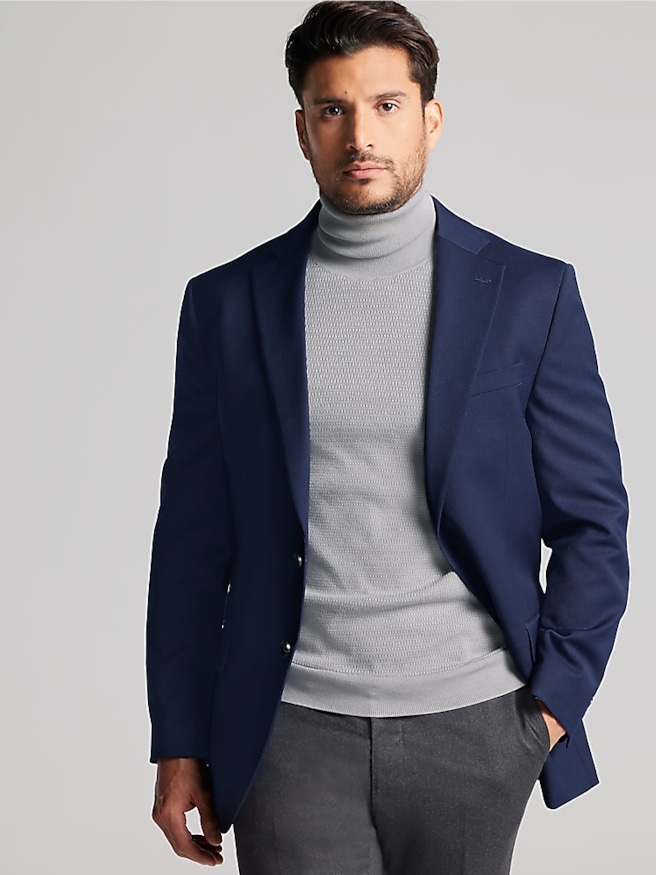
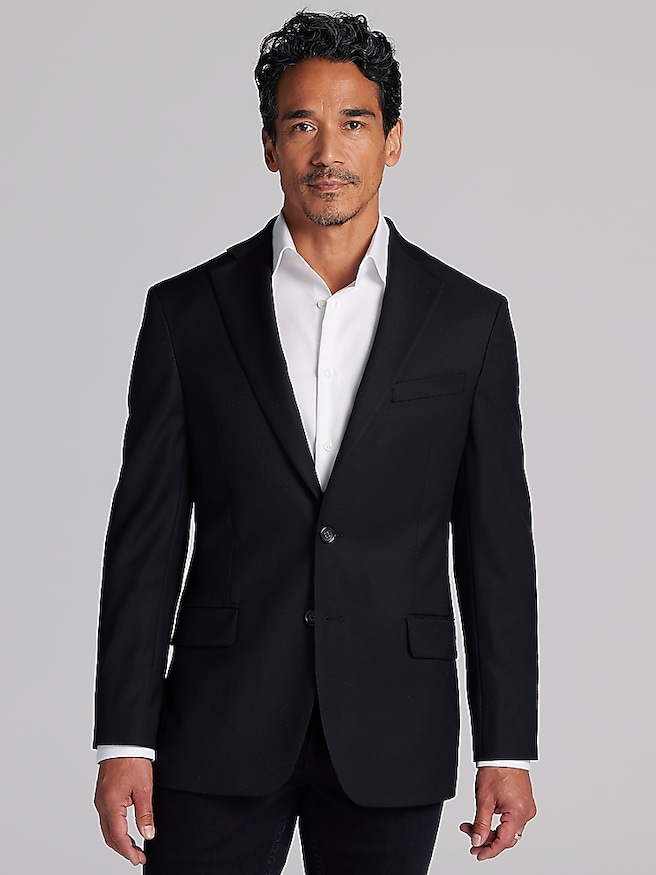
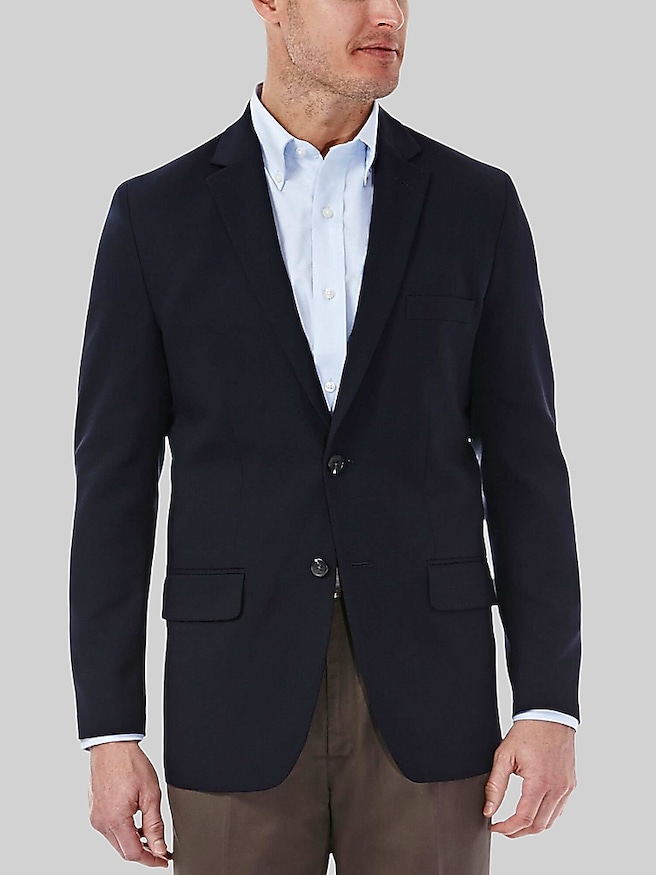
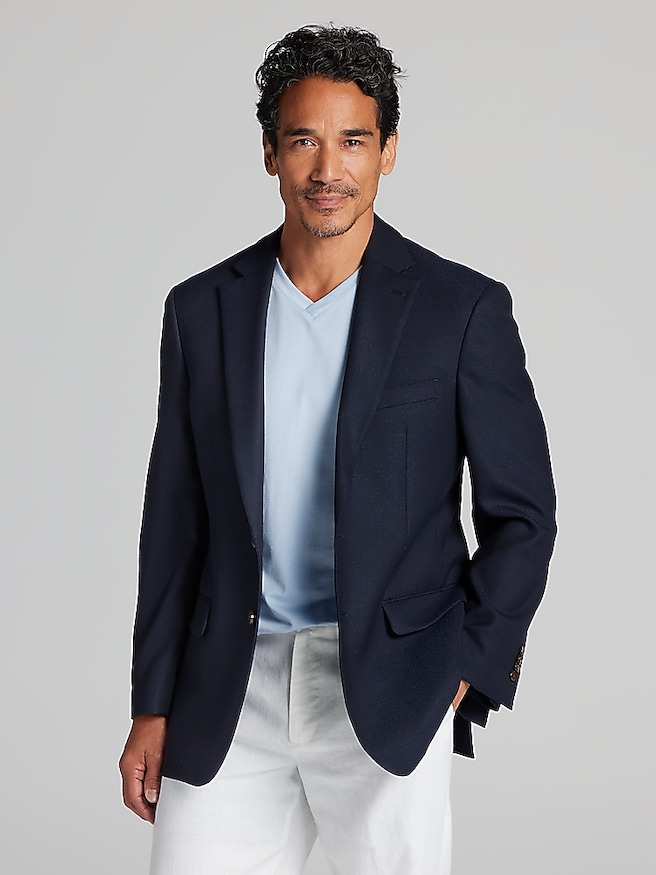
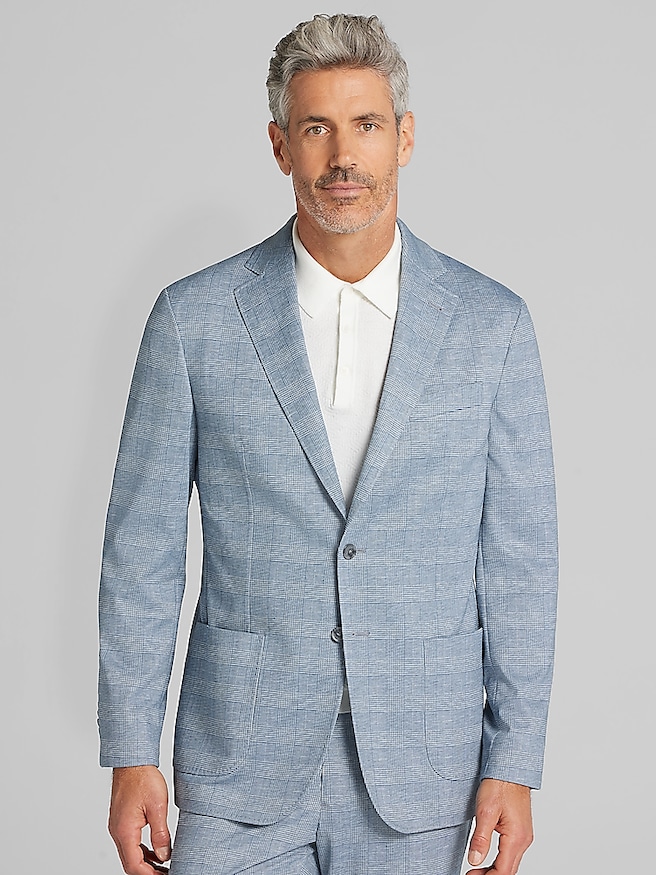
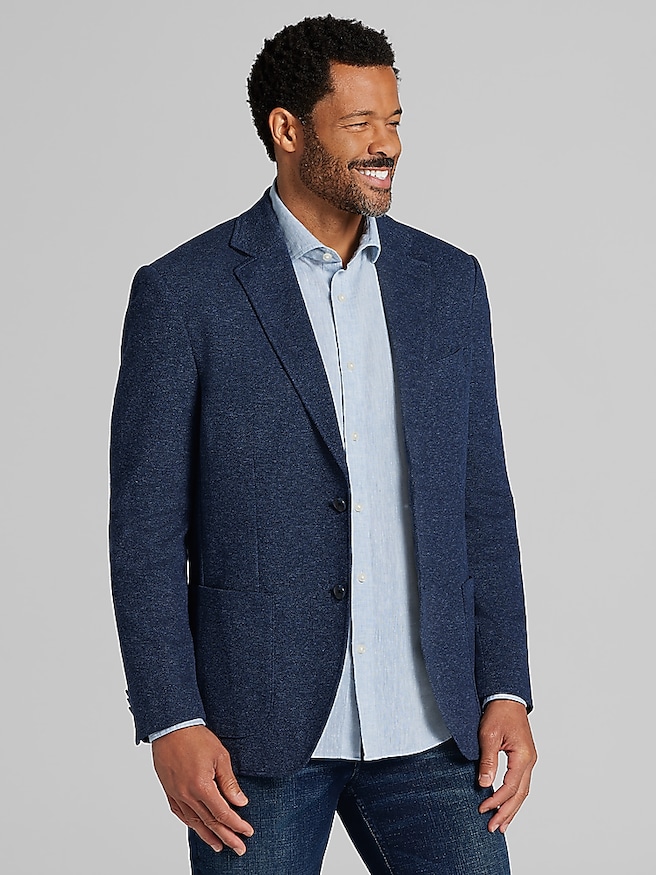
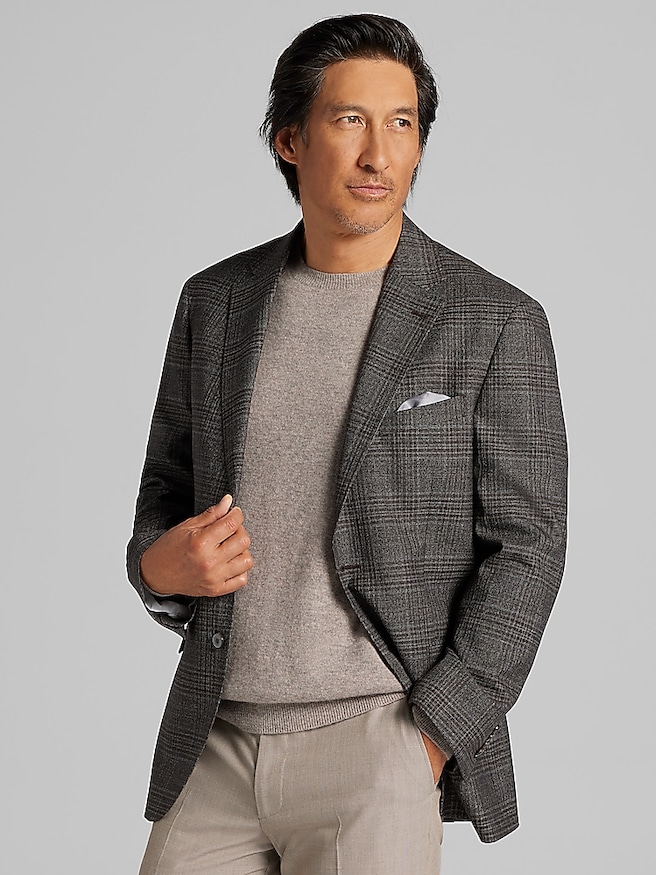
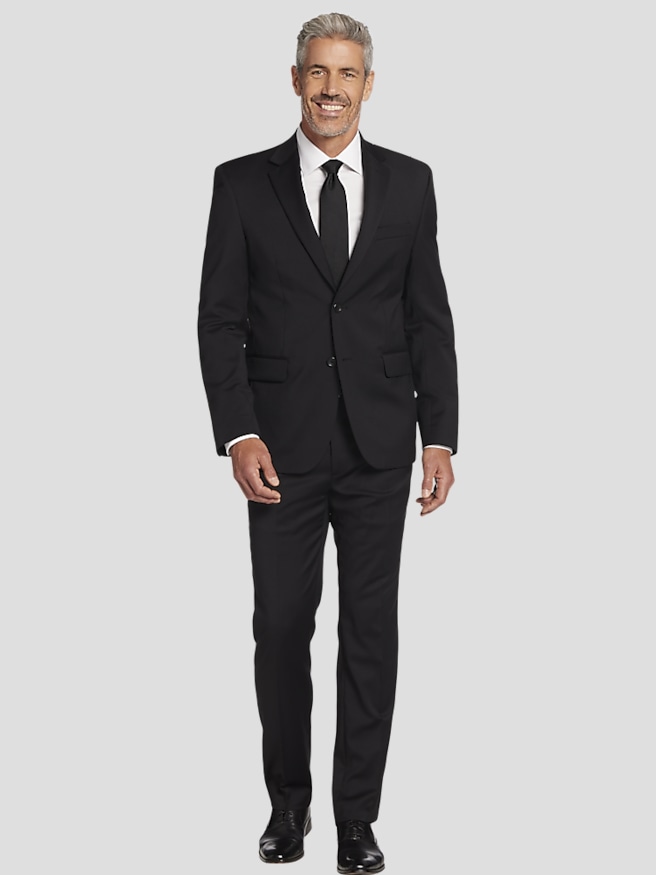
Cyber Monday blazers center on a wardrobe staple that can make an ordinary outfit feel more considered without turning it into formalwear. A blazer adds definition across the shoulders, creates a cleaner line through the torso, and gives a shirt and trousers a sense of purpose. Unlike a matching suit jacket, it is meant to work with separate pants, leaving plenty of room to vary texture, color, and formality. A navy blazer over a pale blue shirt with gray trousers suits a client lunch or an office presentation; the same general combination feels more relaxed with an open collar and loafers. For a dinner reservation or an evening gathering, a dark blazer with a fine-gauge knit and tailored pants offers polish without requiring a tie. Subtle texture can make that simple outfit especially effective, giving solid colors some depth without competing for attention. Charcoal, brown, and blue tones are useful foundations, while checks and more noticeable weaves give a blazer a stronger presence. When the jacket carries a pattern, a quiet shirt and uncomplicated trousers usually keep the outfit balanced. Blazers also work well for graduation celebrations, family photographs, and wedding-related gatherings when the invitation calls for something less formal than a suit. The important distinction is the dress code: a blazer can be versatile, but it does not replace a tuxedo or a matching suit when either is specifically expected. Whether exploring Cyber Monday blazers or Black Friday Blazers, the lasting consideration is how comfortably a jacket fits into the occasions already on the calendar. For someone who spends most days in casual clothing, one adaptable blazer can cover a wide range of moments that call for a little extra effort. For someone who wears tailored clothing regularly, differences in fabric, construction, and silhouette create useful variety without changing the basic formula of getting dressed.
Fabric and fit determine much of how a blazer looks after the first few minutes of wear. Wool is valued for its drape, resilience, and ability to release some everyday creasing between wears, although the feel and performance vary with the weave and weight. A smooth wool fabric often looks more refined, while a textured weave can soften the impression of tailoring and pair naturally with chinos. Cotton generally has a more casual character and can develop visible creases that become part of its relaxed appearance. Linen has a distinctive texture and an easy drape, with wrinkling that should be expected rather than treated as a flaw. Blended fabrics may combine these qualities or add stretch, but the fiber label alone does not explain how a jacket will move; the lining, cut, and internal structure matter, too. A softly constructed shoulder gives a less rigid outline, while additional structure can produce a sharper silhouette. Neither approach is automatically better. The right choice depends on the wearer's build, comfort preferences, and intended use. At the shoulders, the jacket should follow the body without pronounced overhang or pulling. Across the chest, the lapels should lie smoothly rather than bow outward when the jacket is buttoned. A strong X-shaped pull around the front button often suggests that the torso is too snug. Sleeves should allow a modest glimpse of a dress-shirt cuff, and the jacket's length should look balanced with the torso and legs rather than stopping at an arbitrary trend-driven point. A close fit still needs enough ease to sit at a desk, reach for a glass, or put on a seat belt comfortably. Trying a blazer over the type of shirt or knit intended for regular wear gives a more realistic sense of fit than judging it over a much thinner layer. Sleeve length and modest waist adjustments may be manageable through tailoring, while shoulder changes are more involved. Starting with a sound fit through the shoulders and chest usually makes the rest of the silhouette easier to refine.
The most useful blazer is often the one that works with clothing already worn and enjoyed. A textured jacket can bridge the gap between a button-down shirt and dark, clean-lined jeans, provided the occasion welcomes denim. A smoother, more structured blazer generally sits more comfortably alongside pressed trousers and leather dress shoes. Contrast helps separates look intentional: trousers in a clearly distinct shade or texture are usually easier to pair than pants that almost, but do not quite, match the jacket. Small details also affect the overall impression. Noticeable buttons can lend a traditional character, patch pockets tend to feel more relaxed, and a restrained pocket square can add interest without overwhelming the outfit. For gifting, a blazer is especially thoughtful for someone beginning a professional role, preparing for presentations, or attending more occasions that call for tailored clothing. Knowing the recipient's jacket size, usual fit, and preferred colors makes the choice more personal, while familiarity with the shirts and pants they reach for most helps establish whether the gift will become part of everyday life. Long-term usefulness also depends on care. Follow the garment's care label rather than assuming every blazer can be washed, steamed, or dry-cleaned in the same way. After wear, a broad, shaped hanger supports the shoulders better than a thin wire hanger, and a little space in the closet helps prevent crushing. Emptying the pockets keeps keys, phones, and other heavy objects from distorting the fabric. A clothing brush suited to the material can lift surface dust, while prompt attention to spills can prevent a small mark from becoming harder to address. Avoid aggressive rubbing, which may damage the surface, and seek professional cleaning when the care instructions require it. Secure buttons, sound seams, and an intact lining all contribute to durability, so small repairs are worth addressing early. With considered styling and appropriate upkeep, a well-fitting blazer can remain a dependable choice for workdays, dinners, and meaningful gatherings long beyond Cyber Monday.