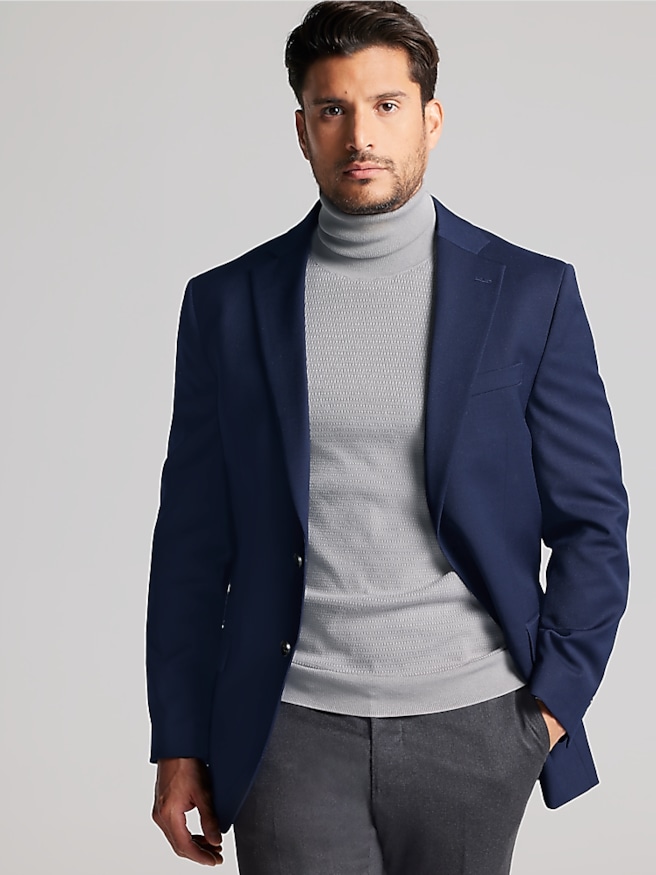
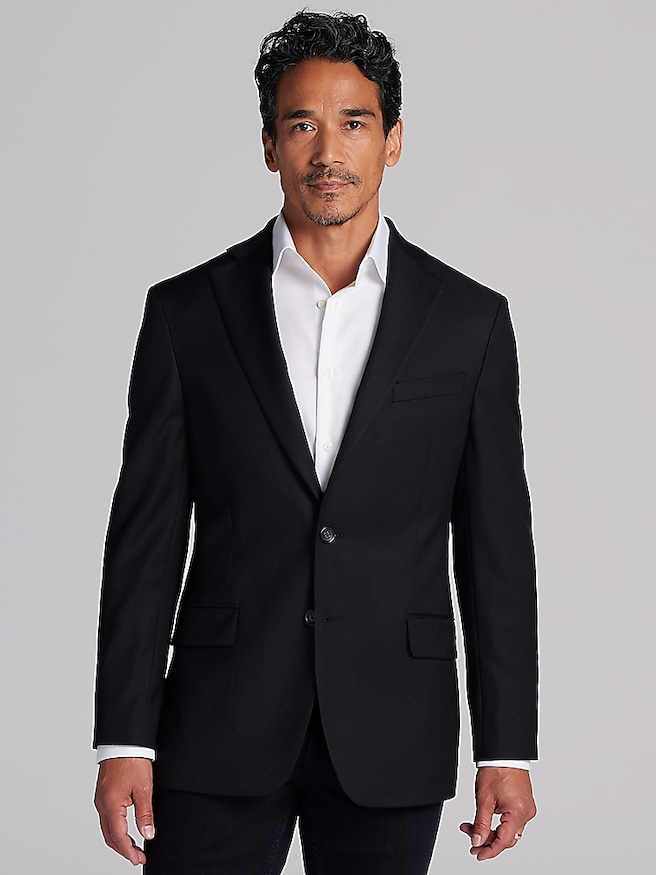
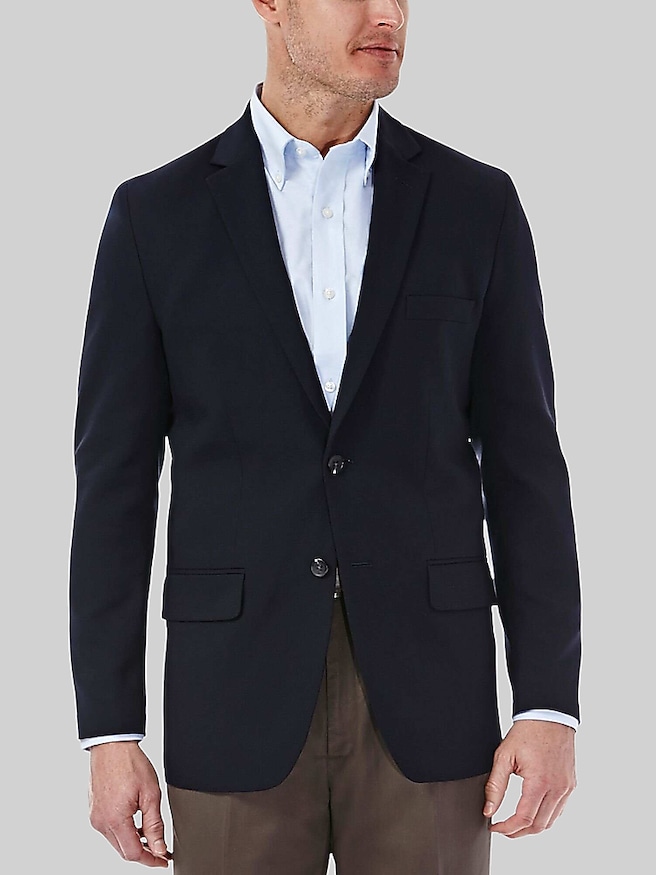
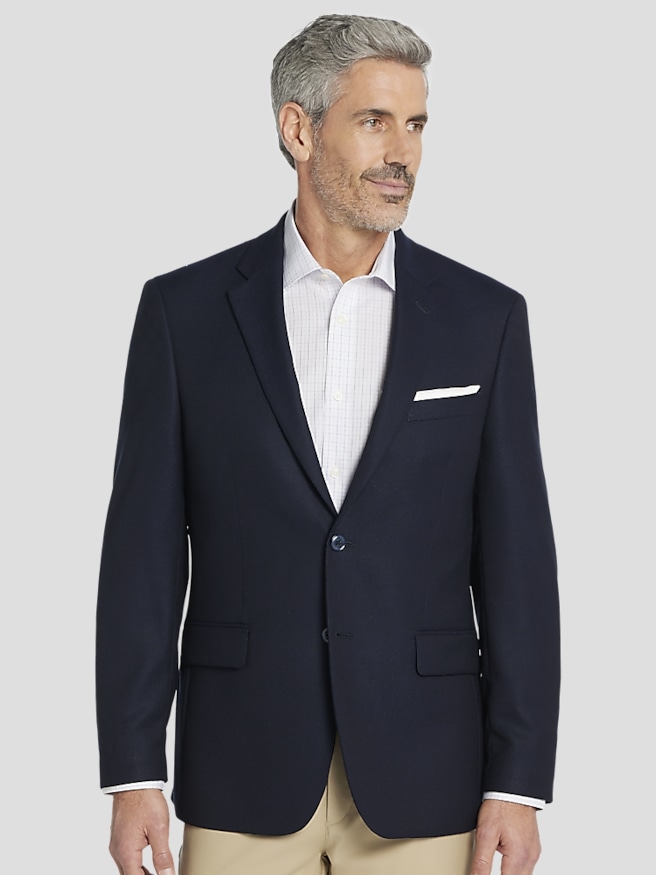
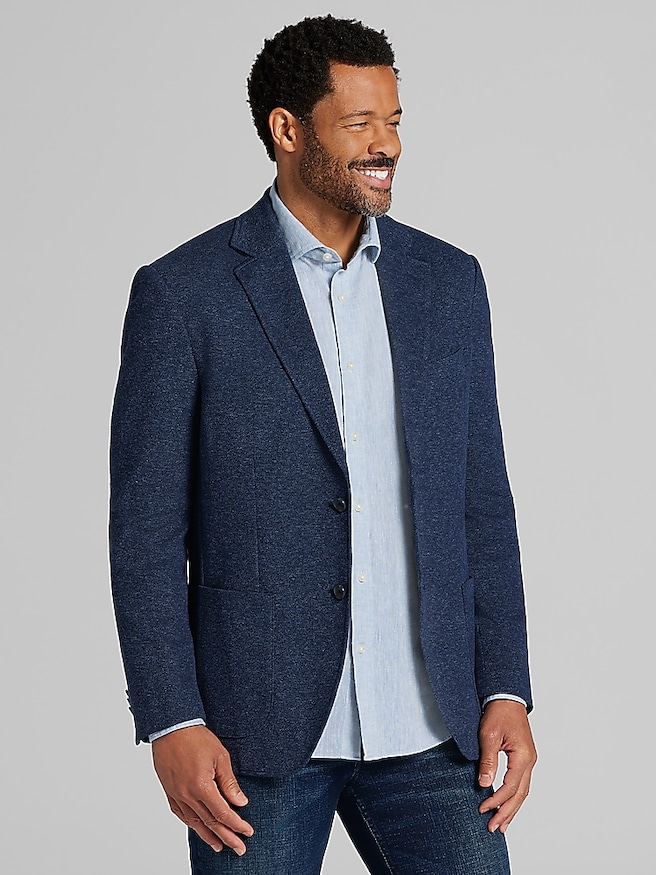
Cyber Monday knit blazers bring together the polished appearance of a tailored jacket and the ease of knit construction, making them a versatile category of men’s clothing for office days, dinners, and occasions that call for something sharper than a sweater. Unlike woven fabrics, which are made by interlacing yarns, knits use interconnected loops that can allow flexibility and give the cloth a softer drape. The result depends on the fiber, stitch, and internal construction: a densely knitted blazer may hold a defined silhouette, while a lighter jersey version can fall more loosely through the body. Piqué knits have a subtly raised texture that adds depth to solid colors without relying on a bold pattern. Jersey tends to have a smoother surface, and other textured stitches can give a jacket visual interest while remaining easy to coordinate with trousers and shirts. Cotton blends can offer a soft hand and familiar feel, while wool blends may provide resilience and help the fabric recover its shape. Synthetic fibers can contribute strength or shape retention, and a small amount of elastane may add stretch. Fiber percentages alone do not tell the whole story; fabric weight, stitch density, lining, and shoulder construction also influence how a blazer wears. An unlined or partially lined body often feels less structured, although lined sleeves can make it easier to slip the jacket over a shirt. Light padding can sharpen the shoulder line without creating the firm profile associated with more structured tailoring. These differences matter in everyday situations, from reaching across a conference table to settling into a restaurant booth. A knit blazer can soften the formality of a collared shirt while still framing the neckline and giving the outfit a finished shape. It is particularly useful for someone whose schedule moves between a desk, a client conversation, and an evening reservation without a full change of clothes.
Fit determines whether that balance looks intentional. A knit blazer should follow the body without depending on stretch to make a too-small size wearable. On most tailored styles, the shoulder seam should sit close to the point where the shoulder meets the arm, with the fabric lying smoothly rather than collapsing into folds or pulling across the upper back. When the jacket is buttoned, the lapels should rest against the chest and the front should close without pronounced creases radiating from the button. There should be enough room to sit comfortably and move the arms, but not so much extra fabric that the waist loses its shape. Sleeve length deserves the same attention: with a dress shirt underneath, a small amount of cuff showing creates a clean transition between jacket and hand. The hem should look balanced with the torso and trousers; an overly short body can make the proportions feel top-heavy, while excess length may overwhelm a smaller frame. Slim, modern, and classic fit labels can be useful starting points, but measurements and the intended layer underneath provide a more reliable picture. A blazer worn over a thin polo does not need the same room as one layered over a substantial sweater. Knit fabrics also vary in how readily they can be altered, so changes to sleeves, shoulders, or body length deserve an assessment from a tailor familiar with the material. For a business-casual setting, a navy or charcoal knit blazer with a pale blue shirt and tailored trousers offers a straightforward combination. With dark denim, a clean T-shirt, and simple leather sneakers, the same category of jacket takes on a more relaxed character. Chinos and a fine-gauge polo land between those two approaches. Anyone comparing this softer construction with a more traditional tailored option can also explore Cyber Monday suit jackets. The distinction is worth keeping in mind: a blazer is generally worn as a separate, while a suit jacket is designed to coordinate with matching trousers.
The most useful knit blazer is one that suits its wearer’s actual routine, including the care that routine allows. Someone who spends long stretches seated may appreciate fabric that recovers well at the elbows and back, while a frequent traveler may favor a construction that packs without excessive bulk. No knit is automatically wrinkle-proof, and even a flexible jacket benefits from being unpacked and allowed to hang after a trip. Durability depends on more than softness at first touch. Even stitching, neatly finished seams, securely attached buttons, and edges that lie flat all contribute to a jacket that keeps its appearance with repeated wear. Areas exposed to friction, including the underarms and the sides where a bag rubs, can develop pilling; its extent depends on the fibers, yarn, and use. A fabric shaver or sweater comb may help with some materials, but it should be used cautiously and only when appropriate for the fabric. The care label takes priority over assumptions about knit clothing. A blazer with cotton in its composition is not necessarily machine washable, because its lining, interfacing, and other components may require professional cleaning. If washing is permitted, follow the specified cycle, water temperature, and drying method rather than treating the jacket like an ordinary T-shirt. Avoid hanging a wet knit blazer unless the label directs it, since the added weight can stretch the shape. Between cleanings, empty the pockets, let the jacket air, and store it according to its construction; a supportive hanger can help a structured blazer, while a very soft knit may do better folded. Overfilled pockets can pull at the front, so a slim card case is often a better companion than a heavy wallet. As a gift, a knit blazer can suit a recent graduate building a work wardrobe, a partner who enjoys dressing for dinner, or a parent who prefers comfortable tailoring. Familiar colors and a known jacket size make a thoughtful starting point, with chest measurements and fit preferences providing useful confirmation. Whether chosen for a presentation, a family celebration, or a regular office rotation, a well-proportioned knit blazer earns its place through comfortable movement, adaptable styling, and a finish that feels considered rather than stiff.