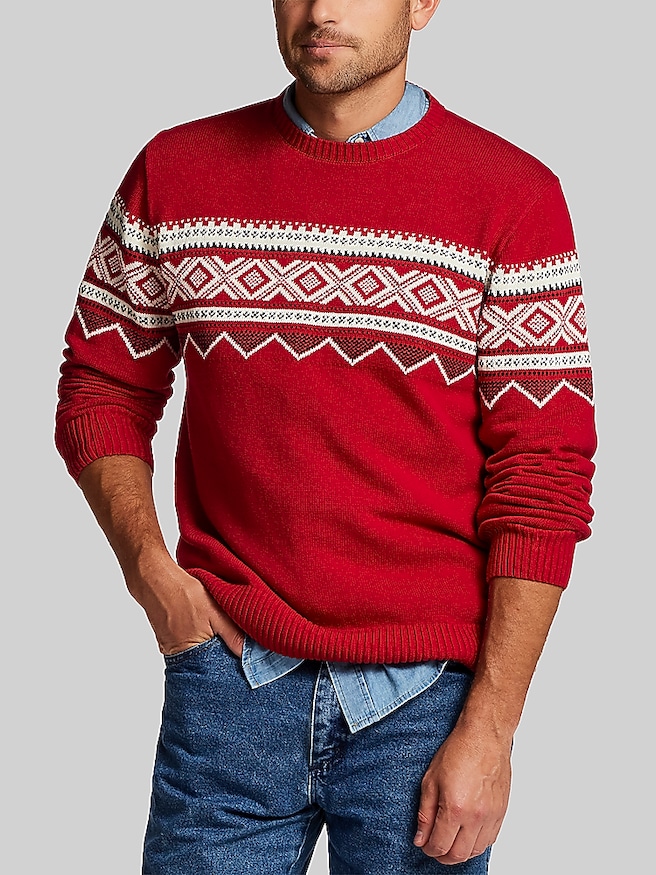
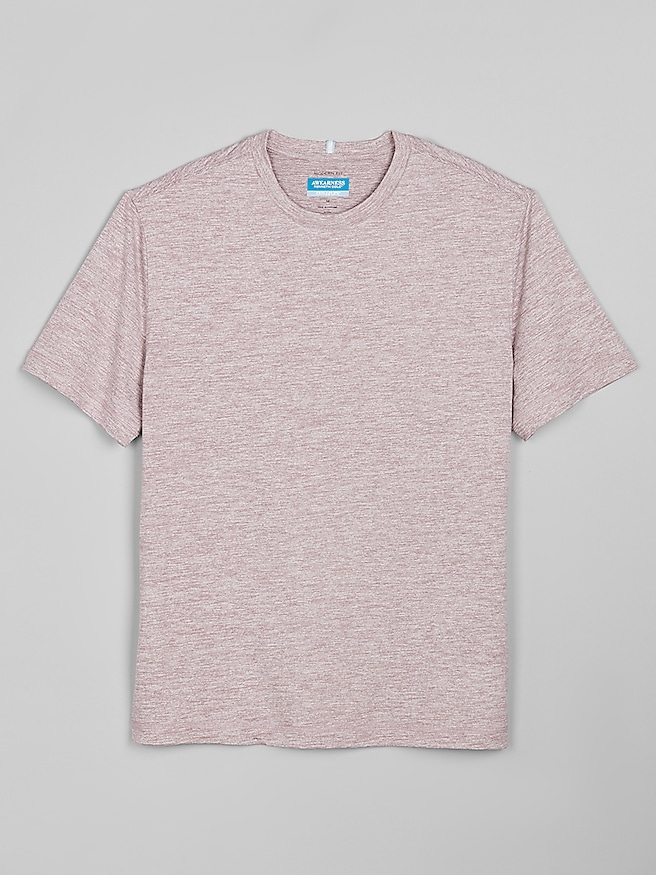
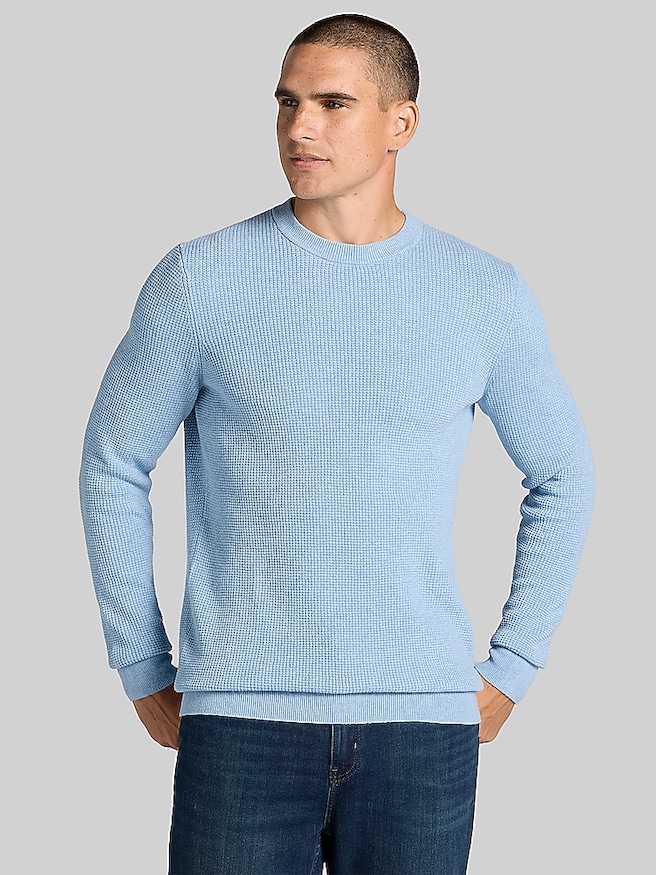
A crewneck sweater is a knitted pullover with a round neckline that sits close to the base of the neck, creating a clean shape without the open collar of a V-neck or the taller profile of a turtleneck. That simple construction makes men’s crewneck sweaters easy to wear on their own or layer over a shirt, with enough versatility for a relaxed office, a dinner reservation, or an afternoon spent catching up with friends. The neckline frames the face while leaving the rest of the outfit uncomplicated: a smooth knit with tailored trousers looks composed, while a textured sweater with straight-leg jeans feels more casual. Over a button-down shirt, the rounded opening lets the collar show without overwhelming it. A collar that lies flat inside the neckline tends to look neater than one crowded beneath a tight opening, and a shirt hem tucked into the trousers keeps the silhouette clean. Worn over a plain T-shirt, a crewneck has an easy, understated character, especially when the undershirt stays below the neckline. Color plays a practical role, too. Navy, charcoal, and other muted shades work comfortably with familiar wardrobe staples, while a richer color can give a simple combination of denim and leather shoes more personality. For a streamlined foundation, Black Crew Necks pair naturally with gray trousers, dark denim, or tan chinos, allowing texture and fit to carry the outfit. Fine-gauge knits have a smoother surface that works well beneath a sport coat; cable patterns, seed stitches, and more substantial ribbing bring visible dimension to casual outfits. The distinction is less about strict dress rules than the overall balance of the clothes. A sweater with a tidy neckline, an even hem, and a comfortable fit can look finished without requiring a tie, making the crewneck a useful option for settings where a full suit would feel more formal than necessary.
Materials influence how a crewneck sweater feels, drapes, and holds its shape. Cotton generally has a familiar, breathable feel and can provide a little more structure than a soft, loosely knitted fiber. A smooth cotton knit works well for everyday wear, while a heavier stitch creates a more substantial profile. Merino wool is valued for its fine fibers and smooth appearance, making it a strong option for a sweater that needs to sit neatly beneath a jacket. Wool also has natural elasticity, which helps a well-constructed knit recover after ordinary movement, although proper care remains important. Cashmere is known for its soft hand and light, supple drape; it can feel particularly comfortable at the neckline, where fabric comes into direct contact with the skin. Fiber blends may combine these qualities with added strength, stretch, or easier maintenance, depending on their composition. The fiber label tells only part of the story, since yarn thickness, stitch density, and finishing also affect the feel and performance of the sweater. A compact knit usually presents a cleaner surface, while a looser construction may have more movement and texture. Fit matters just as much as fabric. In a conventional set-in sleeve, the shoulder seam should sit near the edge of the shoulder rather than pulling inward or slipping far down the arm. The chest needs enough room for comfortable movement and, when intended, a shirt underneath, without excess fabric gathering beneath the arms. Sleeves that finish around the wrist allow the hands to move freely, and a hem that falls around the hip generally creates a balanced proportion with trousers. A close fit can look sharp with tailored separates, but visible pulling across the chest or a stretched neckline suggests too little room. A relaxed fit gives a more casual impression, particularly with denim, though it still benefits from sleeves and a hem that do not overwhelm the wearer. Sitting at a desk, reaching for a bag, and bending the elbows are useful everyday tests of whether the sweater’s shape feels comfortable beyond a moment in front of the mirror.
A crewneck sweater’s long-term appearance depends on both its construction and its care. Even stitching, neatly finished seams, and ribbing that returns to shape after gentle stretching are useful signs of thoughtful construction, though no single detail guarantees durability. Friction from a shoulder bag, desk edge, or repeated wear can cause small pills to form on knitted surfaces, particularly in softer fibers. Pilling does not automatically mean a sweater is poorly made; careful removal with a fabric comb or an appropriate sweater shaver can help refresh the surface without pulling at the yarn. The care label is the best starting point for washing, since cotton, wool, cashmere, and blended fabrics can require different treatment, and not every sweater made from the same fiber has the same instructions. When washing is permitted, a gentle process and suitable detergent help protect the knit. Sweaters that require reshaping are best supported while damp rather than left hanging, which can stretch the shoulders and lengthen the body. Drying flat, when directed, preserves the intended proportions, and folding for storage avoids the shoulder marks that hangers can leave. A snag deserves a careful repair rather than a quick snip, because cutting a pulled loop can damage the surrounding stitches. Those small habits help preserve the details that make a sweater look polished: a neckline that lies evenly, cuffs that stay tidy, and a hem that keeps its shape. Crewneck sweaters also make practical gifts for a father, partner, brother, or friend whose wardrobe leans toward straightforward, wearable pieces. A familiar color, a texture suited to the recipient’s style, and a size based on a sweater that already fits well are more useful considerations than an unusual design. Someone who spends much of the day in an office may appreciate a smooth knit that layers cleanly, while someone who favors jeans and casual shoes may prefer a more textured finish. With the right proportions and care, a crewneck can become a dependable part of getting dressed rather than a piece reserved for one particular occasion.