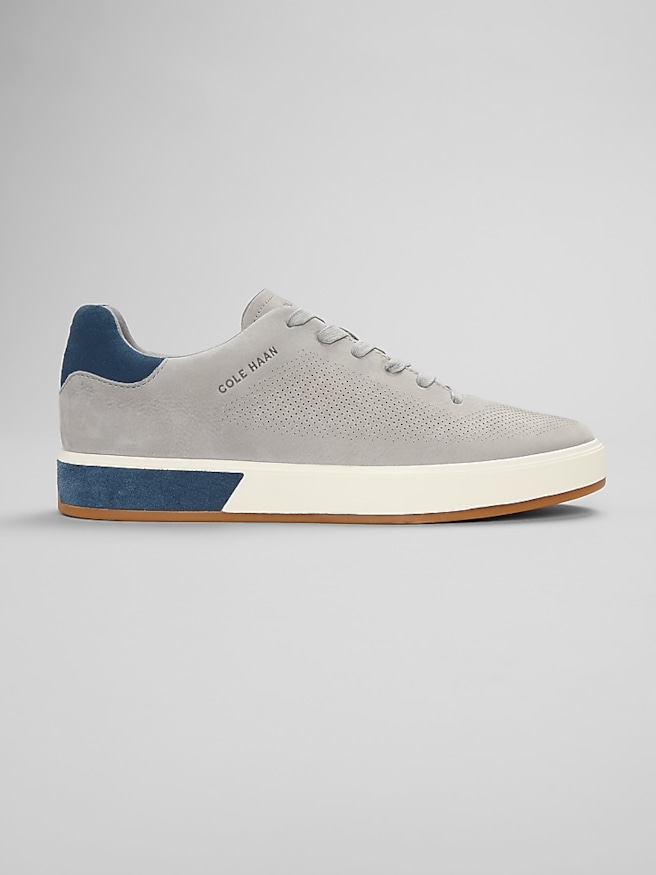
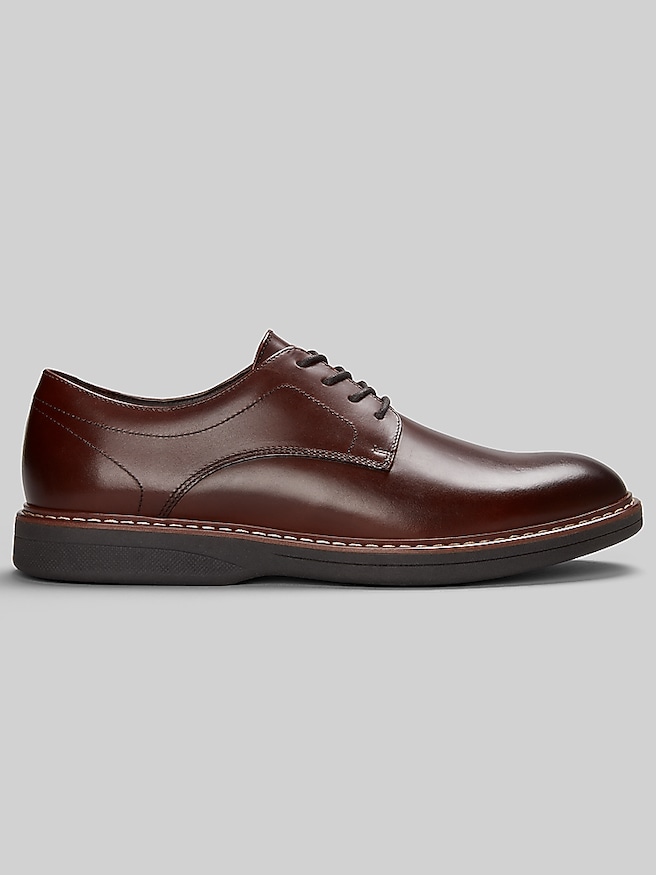
Court sneakers are athletic-inspired shoes defined by clean lines, a relatively low profile, and rubber outsoles, with design roots in tennis and basketball footwear. In everyday wardrobes, the term usually describes casual sneakers that borrow the look of traditional court shoes rather than footwear engineered for competitive play. Their appeal comes from that balance: a familiar sports silhouette with enough restraint to work alongside chinos, dark denim, and relaxed tailoring. A smooth upper, understated stitching, and a simple lace-up front can make a pair feel more polished than a running shoe without giving it the formality of a dress shoe. White and off-white court sneakers create a crisp contrast against navy trousers or indigo jeans, while black, brown, and other muted shades can blend more quietly into an outfit. A contrasting heel panel, textured leather, or slightly thicker sole changes the character without necessarily making the shoe difficult to coordinate. For an office with a casual dress code, a streamlined pair can sit comfortably beneath straight-leg chinos and an unstructured jacket. For dinner, a knit polo and neatly hemmed trousers keep the same shoes looking intentional. The relationship between the shoe and the pant opening matters, too: a narrow, low-profile sneaker can look overwhelmed by excess fabric, while a substantial sole often balances a fuller leg. Court sneakers also suit travel days, casual gatherings, and everyday errands when the priority is an adaptable shoe rather than specialized athletic performance. They are not automatically appropriate for every workplace or celebration, and an event’s stated dress code still takes precedence. Their versatility is most useful when the design stays in step with the rest of the outfit, whether that means a clean monochromatic look or a subtle contrast between tailored clothing and athletic heritage. Someone who prefers a small, dependable rotation of shoes may appreciate how easily this silhouette moves among familiar everyday outfits.
Materials play a large part in how court sneakers look, feel, and age. Smooth leather often has a structured appearance and can become more flexible with wear, although comfort depends on the construction and fit rather than the material alone. Suede brings a softer, more textured finish that works especially well with denim, twill, and knitwear, but its raised surface calls for more careful cleaning. Canvas and textile uppers tend to have a lighter visual character; actual breathability depends on the weave, lining, and other layers inside the shoe. Synthetic materials vary considerably, so a leather-like finish does not by itself indicate how flexible, breathable, or durable an upper will be. Inside, a smooth lining, a well-shaped heel, and cushioning under the foot can make a noticeable difference over several hours. Fit deserves attention beyond the size printed on the label. Toes need room to rest naturally without pressing against the front, the widest part of the foot should not feel pinched, and the heel should remain reasonably secure during a normal stride. Laces can fine-tune the hold across the instep, but they cannot correct a shoe that is fundamentally too short or too narrow. Trying sneakers with the socks intended for everyday wear gives a more useful sense of fit, especially for anyone who alternates between thin dress socks and thicker casual pairs. Removable insoles may be helpful for someone who uses an insert, provided the shoe has enough internal space to accommodate it without crowding the foot. Shoppers placing extra emphasis on underfoot comfort may also consider Support Sneakers, while comparing heel stability, cushioning, and fit for their own routines. A thick outsole is not proof of meaningful support, just as a soft footbed does not guarantee lasting comfort. Lifestyle court sneakers are best evaluated for their intended everyday use; tennis, basketball, and other sports call for footwear designed for the movements and demands of that activity.
Keeping court sneakers presentable usually comes down to small, consistent habits rather than aggressive cleaning. Surface dust is easier to remove before it settles into seams or textured panels, and a soft brush or cloth is often a sensible starting point when permitted by the care instructions. Smooth leather, suede, canvas, and mixed-material uppers need different treatment, so a cleaner intended for one surface may be unsuitable for another. Testing an appropriate cleaner on an inconspicuous area helps reduce the risk of discoloration. Rubber sidewalls can collect dark marks from everyday contact, but cleaning them separately and carefully helps prevent residue from spreading onto the upper. Excessive soaking, harsh scrubbing, and direct heat can damage finishes, affect adhesives, or distort a shoe’s shape; machine washing is best avoided unless the manufacturer specifically permits it. Allowing shoes to air out between wears and storing them away from direct sunlight can help preserve their condition. Durability depends on the combination of materials, construction, walking habits, and care. High-contact areas such as the toe, heel lining, and outsole tend to reveal wear first, while repeated creasing across the forefoot is a normal part of many leather shoes developing character. An outsole worn unevenly or a heel lining rubbed through deserves more attention than a superficial scuff. For gifting, court sneakers can be a thoughtful choice for someone whose wardrobe centers on casual trousers, denim, and simple layers, especially when their usual size, preferred width, and color preferences are already known. A recipient who keeps footwear understated may appreciate a quiet tonal design more than bold contrast details. Someone who spends much of the day walking may place greater value on fit and cushioning than on a particular finish. The strongest choice connects the silhouette’s easy styling with the wearer’s actual routine, creating a pair that feels at home by the front door and earns its place through repeated use.