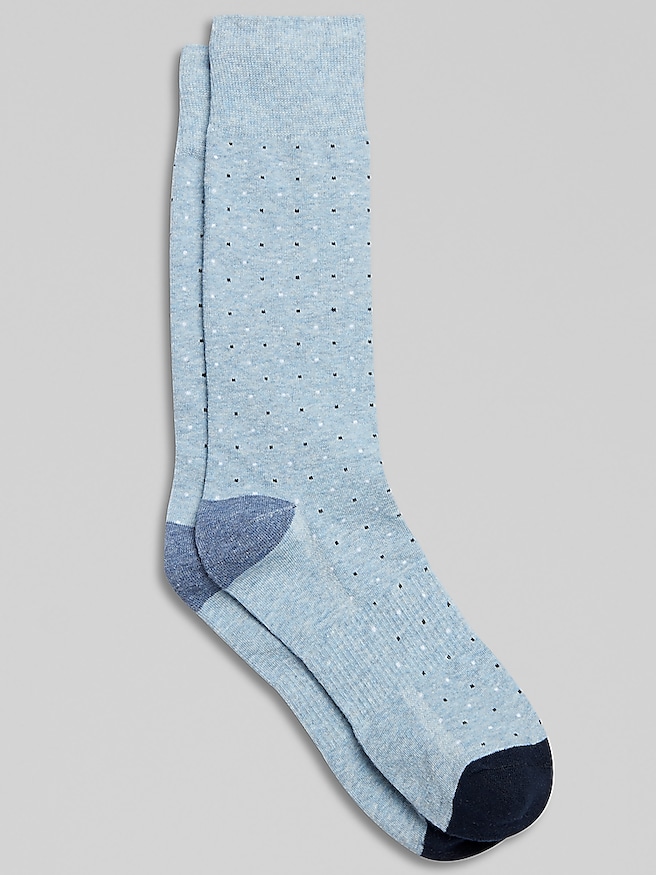
Cotton cushioned socks pair a cotton-rich fabric with extra padding underfoot, creating a soft layer between the foot and the shoe for everyday wear, work, and light activity. That cushioning often comes from small terry loops knitted into the sole, heel, or toe, although its placement and thickness depend on the construction. A padded footbed can soften the feel of routine steps without making the entire sock equally thick. The distinction matters during a long commute, an afternoon of errands, or a workday that moves between a desk and time on foot: comfort comes from both the fabric against the skin and the way the sock sits inside the shoe. Cotton contributes a familiar softness and absorbs moisture, while blended fibers can add stretch, help the sock retain its shape, or reinforce areas exposed to friction. Nylon and polyester are common partners for durability, and a small amount of spandex or elastane can help the fabric recover after stretching over the heel. Fiber percentages alone do not tell the whole story; knit density, yarn quality, cushioning placement, and finishing also influence how a sock feels after several hours of wear. Cotton absorbs moisture but does not necessarily move it away from the foot or dry as quickly as performance-focused synthetic fabrics. For everyday walking and less demanding activity, a cotton blend can offer a balance of softness and structure. More strenuous exercise may call for greater attention to moisture management rather than padding alone. Cushioned construction also varies from a light layer beneath the forefoot to a fuller padded sole, so a substantial feel does not have to mean a bulky leg or cuff. The most useful distinction is between softness and thickness: a sock can feel gentle against the skin while remaining relatively streamlined, or provide a noticeably plush footbed for shoes with more interior space. Neither construction is automatically more comfortable; the better match depends on the shoe, the amount of walking involved, and the wearer’s preference for a close or cushioned feel.
Fit determines whether that padding stays comfortable throughout the day. A well-fitting cotton cushioned sock follows the foot without loose folds, with the heel pocket seated around the heel rather than pulled beneath the arch or stretched up the back of the ankle. Extra fabric at the toes can bunch inside a shoe, while an overly tight fit can pull across the forefoot and make a toe seam more noticeable. Sock sizing may be expressed as a shoe-size range, so that range is more useful than assuming every adult sock fits the same way. Stretch helps accommodate the contours of the foot, but it cannot fully compensate for the wrong size. Cuff construction matters, too: a secure top helps limit slipping, while a comfortable opening avoids an unnecessarily restrictive feel. Length changes both coverage and appearance. Crew socks extend up the lower leg and work naturally with many everyday outfits; longer lengths provide more coverage beneath tailored trousers, particularly when seated. Lower cuts create a less visible look with casual footwear, provided the heel stays in place during walking. Shoe fit remains part of the equation. A dense cushioned sole takes up more room than a thin dress sock, which can be noticeable across the toes or over the instep in close-fitting leather shoes. A sneaker or a roomier lace-up may accommodate that extra substance more easily, but cushioning should not be used to correct a poorly fitting shoe. For a polished outfit, a smooth visible knit and a color that relates to the trousers can keep the transition from pant hem to shoe understated. Navy, charcoal, black, and subtle patterns each create a distinct effect without requiring a bulky texture above the shoe. For a broader look at color and pattern, Stylish Cotton Socks offers a related perspective on an everyday essential. A padded footbed can remain discreet beneath a clean, refined exterior, making comfort and a put-together appearance compatible rather than competing priorities.
Lasting comfort also depends on construction and care. The heel and toe experience repeated friction, while the sole compresses with each step, making those areas especially useful places to assess knit density and reinforcement. Reinforced sections can help a sock withstand regular wear, though no fabric is immune to abrasion from rough shoe linings, poorly maintained toenails, or repeated use without washing. A smooth, low-profile toe seam may be less noticeable in a close-fitting shoe, and resilient stretch fibers help preserve the fit as the sock moves through repeated wear and wash cycles. Care instructions on the label should take priority because cotton blends, dyes, and elastic components do not all respond identically to laundering. Turning socks inside out can help expose the interior to washing and reduce rubbing against the outer surface. Washing with similar colors, avoiding unnecessarily aggressive cycles, and following the recommended drying method can help preserve appearance and shape. Excessive dryer heat may contribute to shrinkage or damage stretch fibers, while putting socks away before they are fully dry can leave them unpleasant to wear. Keeping pairs together also makes it easier to notice when one sock has developed a thinning heel, a rough seam, or a cuff that no longer holds its shape. Those small changes often matter more to daily comfort than a sock’s initial plushness. Cotton cushioned socks can be a practical gift for a father, partner, graduate, or anyone building a dependable everyday wardrobe, especially when the size, preferred length, and usual footwear are known. Someone who spends much of the workday standing may appreciate underfoot padding, while a frequent traveler may value a comfortable fit that works with familiar walking shoes. For a recipient who dresses in tailored clothing, a restrained color and a less bulky construction may be more useful than maximum thickness. Thoughtful choices center on real routines: the walk from the parking garage, the hours spent moving between meetings, and the final stretch of errands before heading home. Soft fabric, well-placed cushioning, a stable fit, and sensible care together make this everyday layer worth considering as carefully as the shoes worn over it.