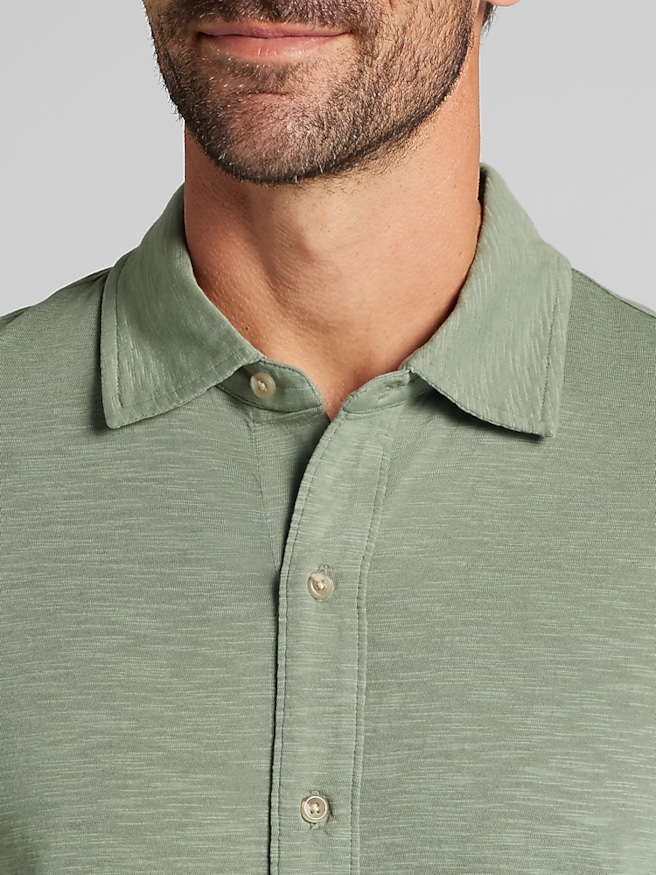
Cotton-blend sharkskin dress shirts combine cotton with other fibers in a finely textured fabric known for subtle two-tone depth and a quiet sheen. The sharkskin effect typically comes from closely woven yarns in contrasting tones, creating a surface that looks nearly solid from a distance and more dimensional up close. The name describes the fabric’s appearance, not an animal-derived material. That understated texture gives these shirts a distinctive place between crisp, plain shirting and more noticeable patterns: there is visual interest, but not necessarily a bold stripe or check competing with a jacket and tie. A shirt can look smooth beneath a suit jacket, then reveal its woven detail at the collar, cuffs, and chest when the jacket comes off. Cotton contributes softness and moisture absorption, while the other fibers influence how the fabric feels, moves, and holds its shape. Polyester may improve wrinkle resistance and help a shirt dry more quickly; a small amount of elastane may add stretch for reaching, sitting, or moving through a full workday. Those benefits depend on the actual fiber percentages and fabric construction, so the cotton-blend label alone does not establish stretch, easy-care performance, or a particular level of softness. A higher cotton percentage also does not tell the whole story: yarn quality, weave density, finishing, and fabric weight all affect the experience against the skin. Compared with a flat, solid-colored shirt, sharkskin can give a familiar color more depth without making an outfit feel busy. Its restrained luster works particularly well when the rest of the outfit has a matte finish, allowing the shirt to provide a small, deliberate contrast. For business meetings, presentations, dinners, and wedding dress codes that call for a suit, that balance offers a polished appearance without relying on a conspicuous pattern.
Fit determines whether that polished fabric looks comfortable and composed throughout the day. A well-proportioned cotton-blend sharkskin dress shirt follows the shoulders cleanly, allows movement across the back, and leaves enough room through the chest for the placket to lie flat. Pulling between the buttons can interrupt the fabric’s smooth appearance, while too much room at the waist may create bunching beneath a jacket. A closer cut can suit someone who prefers a defined outline, but stretch is not a substitute for adequate room, especially during long stretches at a desk or a seated event. Fuller cuts offer more ease through the torso and may feel better for broader builds or anyone who favors a less fitted shirt. Collar comfort matters just as much: a collar worn with a tie should close without pressing into the neck, and its points should sit neatly rather than curl away from the shirt. Sleeve length is best judged with the arms relaxed and then bent, since cuffs that look correct while standing still can pull back noticeably when reaching forward. For shirts intended to be tucked in, sufficient body length helps the hem remain in place when sitting down or lifting an arm. These details become especially noticeable beneath a suit, where excess fabric can gather at the waistband or push against the jacket sleeves. Styling can remain straightforward. A solid tie gives the woven texture room to show, while a restrained patterned tie can work when its scale is clearly distinct from the shirt’s fine surface detail. Smooth wool trousers create a clean pairing; tailored chinos and an open collar bring the same shirt into a less formal office setting. When a jacket or tie already has a strong pattern, a subtle shirt color keeps the combination balanced. The goal is a shirt that contributes depth to the outfit without drawing attention away from the person wearing it.
Care and construction help preserve the qualities that make sharkskin shirting appealing: an even surface, a comfortable hand, and a collar that frames the face neatly. The care label remains the most reliable reference because cotton blends can respond differently to washing, drying, and ironing. Machine washing may be appropriate for some fabrics, while others call for different treatment; wrinkle-resistant finishing does not automatically mean that every shirt can follow the same laundry routine. Excessive dryer heat can encourage shrinkage in cotton-containing fabrics and may affect stretch fibers, so the permitted temperature matters. Prompt removal after drying can reduce deep creases, and hanging a shirt with the collar and placket smoothed helps it settle into shape. If pressing is allowed, the recommended heat setting helps protect the surface from unwanted shine or marks. Everyday durability also depends on details beyond fiber content, including secure buttons, even stitching, stable seams, and collar and cuff construction that holds its shape through repeated wear. Friction at the neck and wrists is normal, making those areas useful places to check as a shirt ages. Rotating shirts between wears and addressing marks according to the care instructions can support a neat appearance without unnecessary treatment. For someone building a work wardrobe, cotton-blend sharkskin offers an alternative to repeating the same plain weave every day, while keeping the overall look appropriate for professional settings. It can also make a thoughtful gift for a graduate starting a first office role, a partner who regularly wears suits, or a father who appreciates understated texture. Accurate neck and sleeve measurements, along with a familiar fit preference, make a dress shirt a more considered gift than a general size guess. For more relaxed dress codes, Cotton Short Sleeve Shirts offer another cotton-focused option. Sharkskin dress shirts bring their particular appeal to occasions where a tucked-in silhouette, a structured collar, and quiet woven detail feel right.