Cotton blend chinos are casual trousers made with cotton and one or more additional fibers, combining the familiar feel of cotton with qualities that can include stretch, shape retention, or easier wrinkle care. Their appeal lies in that balance: a smooth, understated appearance with enough everyday practicality for a desk, a dinner reservation, or a day spent moving between appointments. Chino fabric is typically a twill, recognizable by its subtle diagonal weave, which gives the surface a little texture without making it look busy. Cotton contributes softness and breathability, while the other fibers influence how the finished trousers move, drape, and respond to repeated wear. Polyester can help fabric retain its shape and resist wrinkles; elastane, also called spandex, adds stretch. A cotton blend does not automatically stretch, however, and the fiber percentages are only part of the story. Fabric weight, yarn, construction, and finishing also affect how a pair feels. A small amount of stretch can make sitting at a desk or stepping into a car more comfortable without giving the trousers the appearance of athletic clothing. Blends without stretch can still feel comfortable when their cut provides enough room through the seat and thighs. Some fabrics have a crisp, structured hand, while others feel softer and fall more fluidly along the leg. Neither is inherently better; each creates a different impression. A more structured fabric can give a simple shirt-and-trouser combination a defined outline, while a softer fabric lends itself to relaxed dressing. Common chino details, including angled front pockets, discreet back pockets, and a clean front, help bridge the space between jeans and dress trousers. That versatility makes cotton blend chinos useful for men building a business-casual wardrobe, students dressing for presentations, and anyone who prefers an easy alternative to denim. Their relatively quiet texture also gives patterned shirts, textured knitwear, and leather accessories room to stand out without competing for attention. The result is a category of trousers that can look intentional without feeling overly formal.
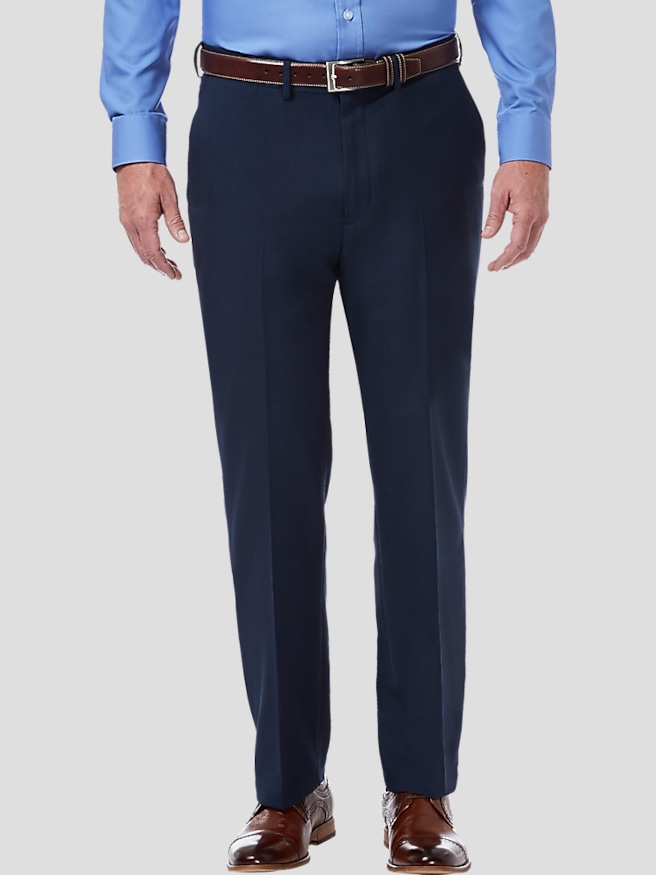
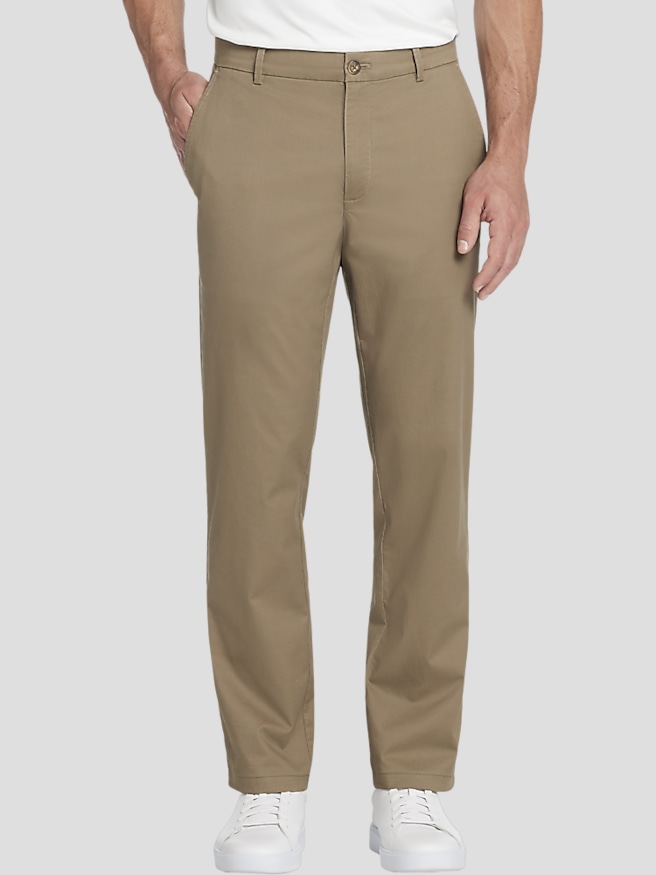
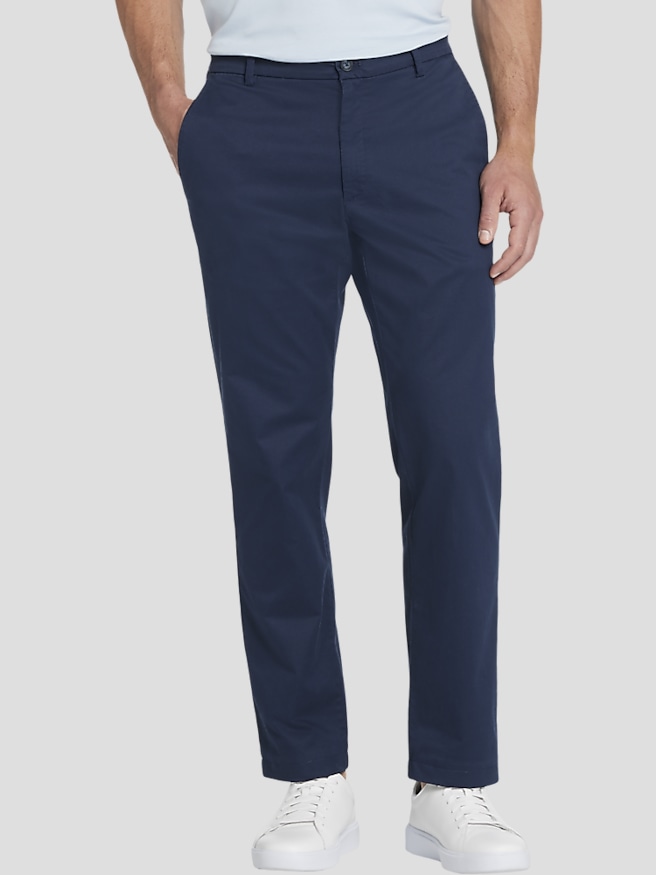
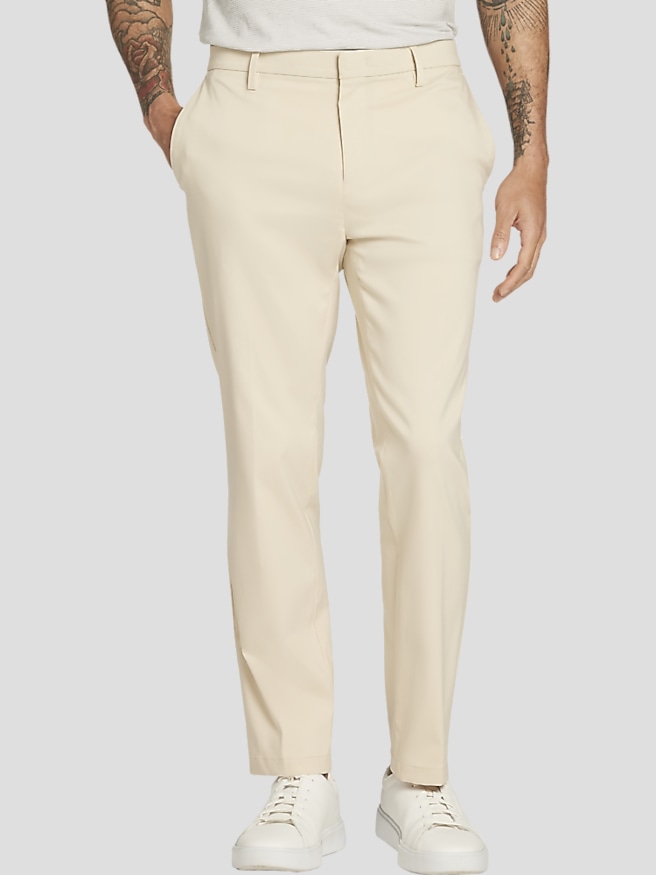
Fit gives cotton blend chinos much of their character, from a narrow, streamlined leg to a straight silhouette with more room to move. A slim fit generally follows the body more closely, while a straight fit maintains a more consistent width down the leg. Tapered cuts narrow toward the ankle but may provide additional room above the knee, depending on the design. Those distinctions matter more than a fit name alone: two trousers with similar labels can sit differently through the waist, seat, and thigh. A comfortable waistband rests securely without digging in, and front pockets should lie reasonably flat rather than pull open when standing. Stretch can make movement easier, but it does not replace adequate room through the hips and thighs. The rise also affects comfort and proportion. A higher rise sits closer to the natural waist, while a lower rise sits farther down; either can work when it suits the wearer’s build and the way shirts are worn. Length changes the overall impression just as noticeably. A hem that lightly meets the shoe creates a clean line, while a little more length produces a modest break across the upper. Excess fabric bunching at the ankle can obscure the shape of an otherwise well-fitting pair. These details make chinos adaptable to recognizable everyday outfits. Navy trousers with a pale blue button-down and brown loafers feel composed for an office with a business-casual dress code. Olive or stone shades pair naturally with a solid polo and understated sneakers for a casual meal or an afternoon gathering. Darker colors can look more understated, while lighter neutrals make the contrast with a shirt or jacket more noticeable. A textured sport coat adds polish without turning chinos into formal attire; occasions requiring a suit or tuxedo still call for a different category of clothing. For casual settings suited to a shorter length, Cotton Blend Shorts offer another way to bring cotton-based fabric into an everyday wardrobe.
Care and construction help determine how cotton blend chinos hold up beyond the first few wears. Cotton can shrink, synthetic fibers respond differently to heat, and stretch fibers benefit from treatment that follows the garment’s care label. Machine washability, drying methods, and ironing instructions vary, so a blend description alone is not enough to establish the right routine. When washing is permitted, separating similar colors and turning trousers inside out can help limit visible abrasion and color transfer. Prompt removal after washing or drying can reduce the time creases have to set, while smoothing the waistband, pockets, and legs helps preserve a neat appearance. Excessive heat can affect fit or damage stretch fibers, making the recommended dryer and iron settings especially important. Wrinkle resistance is a useful convenience rather than a promise that fabric will never crease; long periods of sitting, crowded packing, and storage can still leave marks. Hanging chinos neatly by the waistband or folding them along a consistent line helps keep them ready for regular wear. Durability depends on more than fiber content, too. Secure stitching, well-finished seams, firmly attached buttons, and reinforcement around frequently used pockets all contribute to everyday performance. Areas such as the inner thighs, pocket edges, and hems naturally receive more friction, particularly when trousers fit tightly or drag against the ground. A comfortable cut and an appropriate hem length can reduce unnecessary strain in those places. Cotton blend chinos also make a practical gift for a graduate starting an office role, a partner who favors uncomplicated outfits, or someone adding more polished casual options to a wardrobe. Familiar waist and inseam measurements provide a useful starting point, though preferred rise and leg shape deserve equal attention. A color that coordinates with shirts and shoes already in regular use is often more useful than an unfamiliar shade. With a suitable fit, fabric feel, and care routine, chinos can become the trousers reached for when jeans feel too casual and dress trousers feel more formal than the occasion requires.