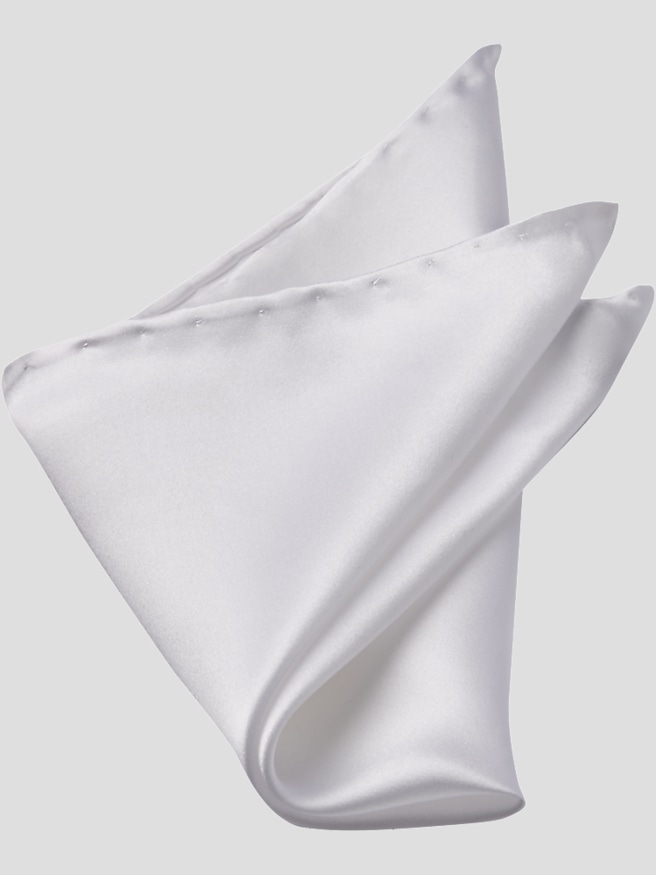
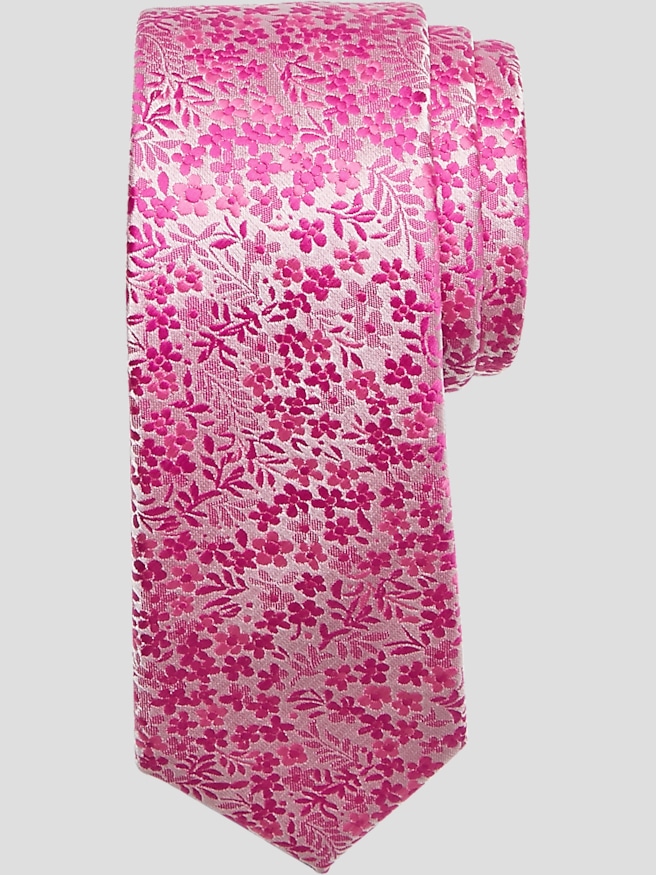
Coordinating ties and pocket squares give tailored clothing a sense of intention without requiring every detail to match. A tie anchors the center of an outfit, while a pocket square adds a smaller note of color and texture at the chest. Their relationship can be subtle: a burgundy tie beside a pocket square with a fine burgundy border, or a navy tie paired with a print that includes just a trace of blue. The result feels connected rather than uniform. Against a white shirt and charcoal suit, these details stand out clearly; with a patterned shirt or textured jacket, they become part of a richer combination. Color matters, but so do proportion, contrast, and the amount of pattern visible above the pocket. A broad stripe on a tie can sit comfortably beside a small geometric print because the two patterns operate at different scales. Two equally bold patterns, especially in similar sizes, tend to compete for attention. Solid ties offer a quieter foundation for expressive squares, while a simple white square gives a patterned tie room to remain the focal point. Exact matching has its place when a deliberately uniform appearance is desired, but related shades and complementary textures often create more depth. A rust accent can soften the formality of navy, while silver-gray details keep a black suit restrained. Even a small change in undertone can affect the overall impression: creamy whites feel softer beside brown tailoring, while crisp whites provide a sharper contrast against dark blue. For an expressive finishing touch, Stylish Pocket Squares can carry a secondary color from the tie rather than repeat its entire design. That small connection is often enough to make the pairing feel deliberate. The most convincing combinations also leave some breathing room, allowing the shirt and jacket to serve as a backdrop instead of asking every element to make an equally strong statement. A restrained pairing can be just as distinctive as a colorful one.
Fabric changes how these accessories look, feel, and behave throughout a day. Silk ties often have a smooth surface and a gentle sheen that catches the light along the knot and blade, making them a natural companion to polished tailoring. Textured silk, woven patterns, and knit constructions create a less glossy effect, useful when a jacket has a more relaxed character. Linen and cotton pocket squares generally offer a drier, more matte appearance, while silk squares tend to drape into softer curves. Wool and blended fabrics can bring additional texture, although thickness and weave matter as much as the fiber name. Pairing a lustrous tie with a matte square can add dimension without introducing another strong color. A linen square with a crisp edge, for example, creates a different impression from a silk square arranged in a loose puff, even when both are white. Construction also influences how comfortably the accessories wear. A tie’s interlining helps determine its body, the fullness of its knot, and how readily it returns to shape after use. Balanced construction allows the blade to hang cleanly rather than twist, while a neatly finished pocket square edge looks considered when part of the border remains visible. Proportion is another practical consideration. Tie width generally looks most balanced when it relates to the jacket’s lapels and the wearer’s frame, rather than following an isolated measurement. Length depends on height, torso proportions, and knot size; the finished tip typically sits near the waistband. A larger knot uses more fabric and needs enough space within the shirt collar to avoid looking crowded. Pocket square dimensions affect the finished shape, too. A thin square may need more fabric to stay securely positioned, while a thick square folded repeatedly can create an unwanted bulge. The best fit looks comfortable as well as composed, with the jacket pocket lying naturally and the tie sitting smoothly beneath the collar.
Different occasions call for different levels of expression, and coordinated accessories can adapt without changing the entire outfit. In a client meeting, a small-scale tie pattern and a restrained pocket square can convey attention to detail while keeping the emphasis on the conversation. At a wedding, richer color or a more fluid fold can give a suit a celebratory character. For a groom and wedding party, a shared color can establish continuity without requiring every tie and square to be identical. An anniversary dinner or an awards reception may invite a more personal pairing, perhaps a textured tie with a square that reveals an unexpected accent along its edge. Formal dress codes still take priority: a pocket square complements the required neckwear rather than replacing it, and an understated white square remains a classic companion to black-tie attire. Ties and pocket squares also make thoughtful gifts for someone building a professional wardrobe, marking a graduation, or enjoying more opportunities to dress up. Familiar jacket colors and an existing preference for bold or restrained patterns provide useful clues to the recipient’s taste. Lasting enjoyment depends partly on care. Fiber content and construction determine the appropriate cleaning method, so the care label deserves attention before washing, pressing, or treating a mark. Silk can react poorly to moisture and rubbing, and structured ties may lose their shape with unsuitable cleaning. Prompt attention from a qualified cleaner is often preferable to aggressive spot treatment. After wear, loosening the knot completely rather than pulling the narrow end through helps limit stress on the fabric. Ties benefit from storage without tight creases, and pocket squares keep their appearance better when clean, dry, and protected from snagging. Thoughtful handling preserves the details that make these accessories distinctive: a clean edge, a smooth knot, a clear pattern, and fabric that still falls naturally when worn again.