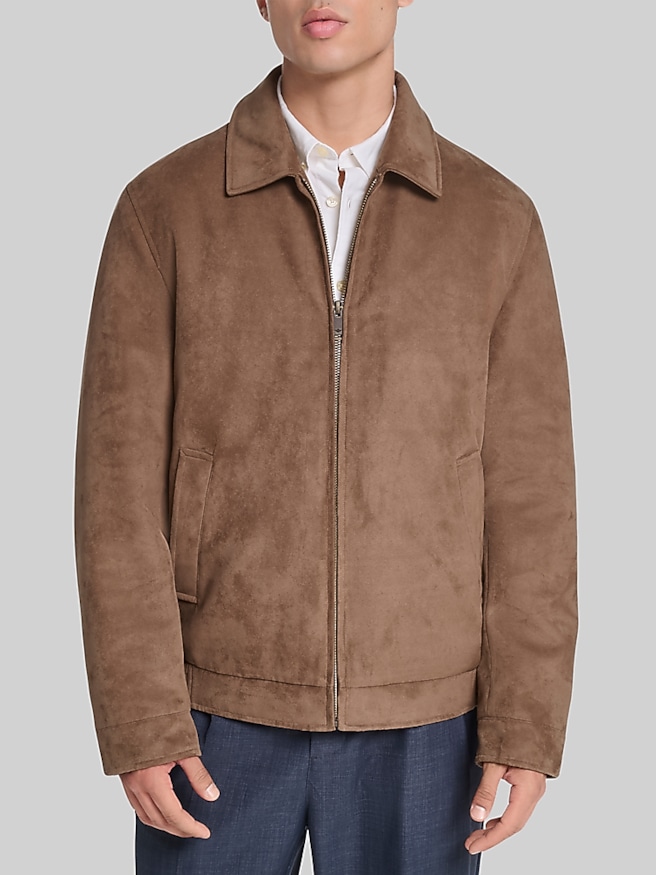
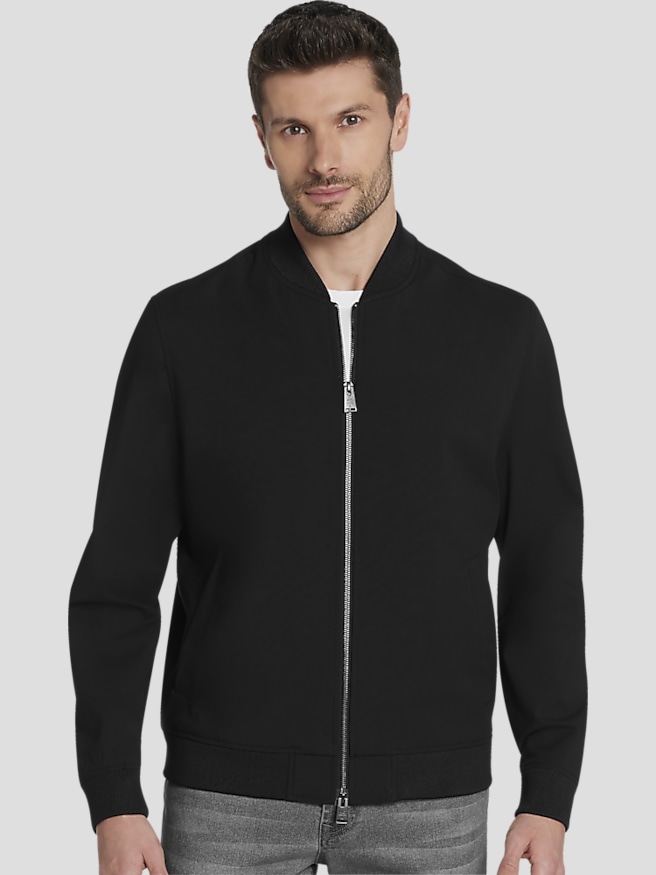
Cool bomber jackets combine the recognizable shape of a flight jacket with fabrics, finishes, and proportions that work with everyday clothing. The defining details are a short body, a front zipper, and a fitted hem and cuffs, often finished with ribbed knit trim. Originally associated with aviation clothing, the bomber has become a familiar part of men’s casual style because it brings structure to an outfit without the formality of a blazer. Its appeal comes from contrast: a relaxed body above a neat waistband, a smooth shell beside textured trim, or a clean front paired with practical pockets. Nylon gives the silhouette a classic utility character, often with a subtle sheen that looks distinct against cotton tees and denim. Polyester shells can offer a similarly streamlined appearance, although the feel and finish depend on the fabric’s construction. Cotton twill has a more matte surface and a substantial hand, while knit fabrics create a softer, more flexible interpretation. Leather adds weight, texture, and a defined outline; suede offers a quieter look with a soft nap that changes slightly as it catches the light. These materials are not interchangeable in feel or upkeep, even when the jackets share the same basic shape. A smooth leather bomber can make a plain crewneck and straight-leg jeans look more deliberate, while a matte fabric version blends easily with chinos and sneakers. Quilting, sleeve pockets, contrasting linings, and pronounced zipper hardware emphasize the jacket’s utility roots. Minimal hardware and understated stitching shift the effect toward a cleaner, more refined look. Color matters just as much as detail. Black, navy, olive, and shades of brown coordinate easily with familiar wardrobe staples, while a brighter color becomes the focal point of a simple outfit. The most convincing style usually comes from a few well-chosen details rather than a crowded combination of patches, trim, and hardware. Fabric, construction, and proportion give a bomber its character long before accessories enter the picture.
Fit determines whether that character reads as sharp, relaxed, or oversized. A traditionally proportioned bomber ends around the waist or upper hip, allowing the waistband to define the silhouette rather than hanging like a longer coat. The shoulder seam should sit close to the shoulder’s edge in a standard fit, while deliberately dropped shoulders create a roomier shape. Across the chest and back, there should be enough space to reach forward, sit comfortably, and close the zipper without pulling the fabric tight. Sleeves typically finish at the wrist, with cuffs that stay in place without leaving a deep impression on the skin. Some fullness above the waistband is part of the design; excessive bunching at the lower back or sleeves can make the jacket look too large. A close fit works well over a T-shirt or fine-gauge sweater, while a more generous cut gives a hoodie room without compressing its sleeves. For a long torso, checking the body length is especially useful, since an overly short hem can expose more of the shirt underneath than intended. For broader shoulders, space through the upper back matters more than simply choosing a wider waistband. Styling follows the same attention to balance. Straight or tapered pants give the bomber’s rounded upper shape a clear foundation, while wider pants pair naturally with a roomier jacket when the overall proportions remain intentional. Dark denim, a plain knit shirt, and low-profile sneakers suit a casual dinner or a Saturday spent around town. Chinos, a button-down shirt, and leather shoes give a clean-lined bomber a more polished role in a casual workplace. A hooded sweatshirt makes the outfit feel more relaxed, but a bulky hood can crowd a smaller collar. Keeping shirt hems tidy and pocket contents light helps preserve the jacket’s outline. For a related take on this familiar silhouette, explore Fall Bomber Jackets. Across variations, the best fit leaves room for movement while keeping the cuffs, collar, and hem comfortably settled.
Construction and care make a noticeable difference in how a bomber wears over time. A lining should lie smoothly inside the sleeves and body, without twisting or creating uncomfortable folds. Zippers should travel evenly, pocket openings should feel secure, and seams around the shoulders and underarms should hold their shape when the jacket moves. Ribbed cuffs and waistbands deserve particular attention because they receive frequent stretching and friction; dense, resilient knit trim generally retains its shape better than trim that already feels loose. Fabric weight alone does not establish durability. Closely woven shells, reinforced stress points, and neatly finished seams are more useful signs of thoughtful construction. Intended use also matters. A jacket worn for commuting and errands benefits from comfortable movement and pockets that keep everyday essentials from bouncing around, while one chosen for dinners or social gatherings may place more emphasis on texture and a crisp silhouette. Care should always follow the garment label, since shell fabrics, linings, and trim can require different treatment. Some fabric bombers allow machine washing, but leather and suede often need specialized cleaning. High heat can affect synthetic shells, shrink trim, or alter the feel of leather, so drying instructions are especially important. Small marks are best addressed promptly with a method approved for the material rather than aggressive scrubbing. Suede calls for tools designed for its nap, and leather conditioners should be compatible with the particular finish. A supportive hanger helps maintain the shoulders, while emptying pockets before storage prevents unnecessary stretching. Bomber jackets can also make thoughtful gifts for a partner, father, brother, or friend whose wardrobe leans casual. A familiar neutral color and a silhouette similar to jackets the recipient already wears make the choice more personal. Checking the recipient’s usual jacket measurements and care preferences helps narrow the material and fit. Whether worn with well-used jeans or neatly pressed chinos, a well-chosen bomber brings texture, shape, and an easy sense of purpose to everyday dressing.