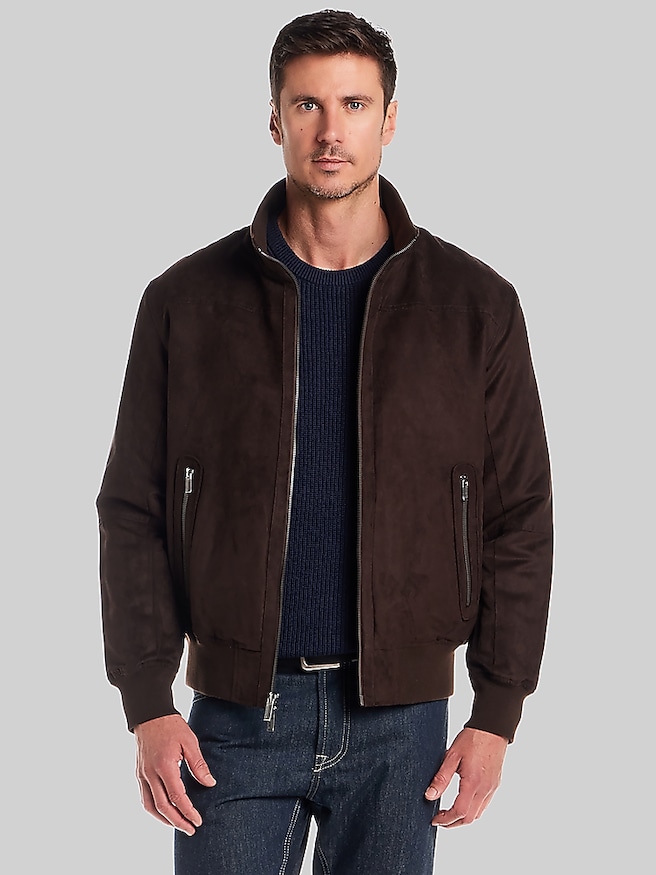
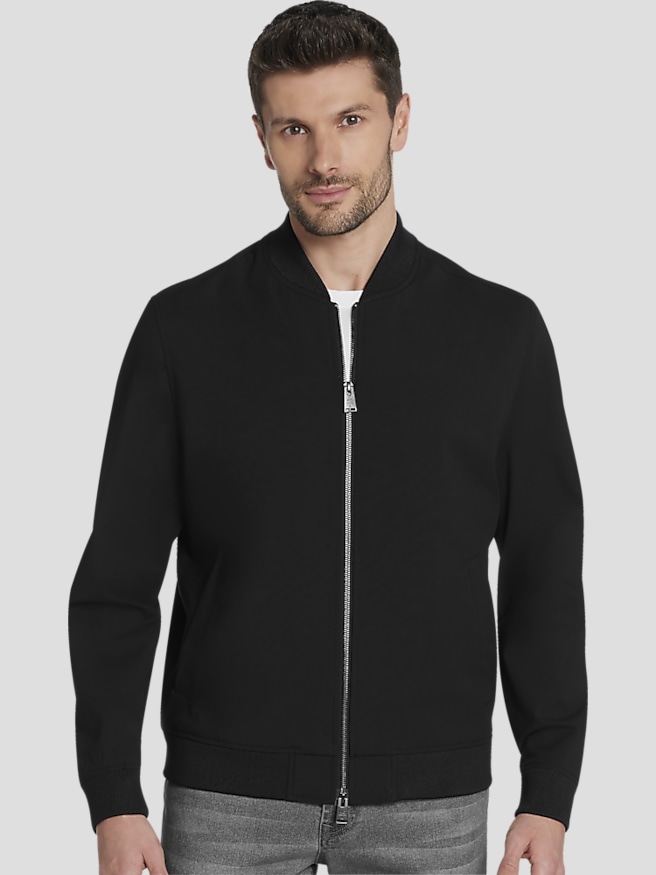
Fashion bomber jackets bring a recognizable shape to everyday dressing: a shorter body, a zip front, and a defined hem that gives the silhouette structure without the length of a coat. Rooted in military flight clothing, the bomber has become a versatile part of modern menswear, with designs ranging from streamlined and understated to roomy and expressive. Traditional versions often feature rib-knit collars, cuffs, and waistbands, while contemporary interpretations may use cleaner edges, broader shoulders, cropped proportions, or more substantial collars. Those details change the character of the jacket. A low collar keeps the neckline uncluttered over a crewneck shirt, while a shearling collar creates a stronger focal point around the face. A cropped cut emphasizes the waist and works especially well with higher-rise pants; a relaxed silhouette gives the body more room and makes a simple outfit feel less restrained. Fabric is equally important to the overall impression. Smooth leather gives a bomber a defined surface that can develop character with wear, while suede offers a softer, matte texture. Satin and other lustrous fabrics catch the light and give the familiar shape a more expressive finish. Nylon and polyester shells often create a lightweight, sporty appearance, although their performance depends on the fabric and construction. Cotton offers a less reflective look, and wool blends can lend the shape a tailored quality. Quilting, lining, and padding affect the jacket’s volume and drape, so two bombers with similar measurements can look quite distinct when worn. Details such as tonal zippers, contrast ribbing, sleeve pockets, and understated stitching can shift the balance between utility and polish. The appeal of a fashion bomber jacket lies in that range: the basic form remains recognizable, but its texture, proportions, and finishing details allow it to feel minimal, athletic, refined, or deliberately bold. A plain front lets the material do most of the work, while visible hardware or contrasting panels make the jacket a more prominent part of the outfit.
The most natural-looking bomber jacket fit balances shoulder placement, sleeve length, and the way the hem sits against the body. On a streamlined cut, shoulder seams generally sit near the shoulder edge, sleeves allow comfortable movement, and the front closes without pulling across the chest. A deliberately oversized bomber follows a different proportion, with dropped shoulders, fuller sleeves, or a wider body that should look intentional rather than simply too large. The waistband matters because it controls how the fabric gathers above the hips. A snug ribbed hem can create the rounded profile associated with the classic bomber, while a straighter finish produces a more relaxed line. Comfort also depends on what sits underneath: a close fit over a T-shirt may feel restrictive over a substantial knit or a hooded sweatshirt. Movement through the upper back and arms is particularly useful for commuting, driving, or spending an afternoon moving between plans. Outfit proportions help the jacket feel integrated rather than added as an afterthought. A compact bomber pairs naturally with straight-leg jeans or tailored trousers, while a fuller jacket often benefits from pants with enough shape to balance its volume. Dark denim, a plain knit, and clean leather shoes create an easy combination for dinner or a casual evening out. Chinos and a polo bring a more composed feel without making the outfit formal. For occasions that call for a sharper interpretation, Dressy Bomber Jackets connect the familiar silhouette with more refined styling. Smooth finishes, restrained hardware, and a neat fit tend to complement pressed trousers and understated footwear. A bomber can also work in a relaxed office when the dress code permits, particularly in a quiet color with minimal decoration. It is not a substitute for a suit jacket where traditional business or formal attire is expected. Black, navy, brown, and gray offer straightforward starting points, while richer colors or contrasting textures give an otherwise simple outfit more personality without requiring additional accessories.
Long-term satisfaction with a bomber jacket depends as much on construction and care as on its initial appearance. Even stitching, securely attached pocket openings, a zipper that moves smoothly, and ribbing that returns to shape all contribute to a jacket that feels dependable in regular use. Lining should allow the arms to move comfortably without twisting or bunching, and pockets should be useful without distorting the front when filled. Heavy hardware can add visual character, but its weight should suit the fabric rather than pull it out of shape. Material choice also brings practical considerations. Leather may develop creases and a patina, which can be part of its appeal, but appropriate conditioning depends on the finish and the maker’s instructions. Suede has a distinctive nap that can show pressure marks and requires care suited to its surface. Satin can be vulnerable to snags or abrasion, especially where a bag strap repeatedly rubs the shoulder. Woven synthetic fabrics vary in toughness, and a sleek appearance alone does not establish water resistance or other performance features. The care label remains the best starting point for cleaning, drying, and storage, particularly when a jacket combines several materials. Some washable constructions require gentle handling, while leather, suede, and certain lined designs may need professional attention. A supportive hanger helps preserve the shoulder shape, and closing zippers before storage can help keep hardware from catching nearby fabric. For someone who travels frequently, lining comfort, pocket placement, and ease of care may matter more than decorative details. For someone building a smaller wardrobe, a restrained design that works with familiar pants and shoes can earn repeated use. Bomber jackets can also make thoughtful gifts for a partner, parent, sibling, or friend whose size and style preferences are well understood. The most useful choice reflects how the recipient actually dresses: clean-lined and subtle for an understated wardrobe, or textured and generously cut for someone who enjoys making outerwear the focal point.