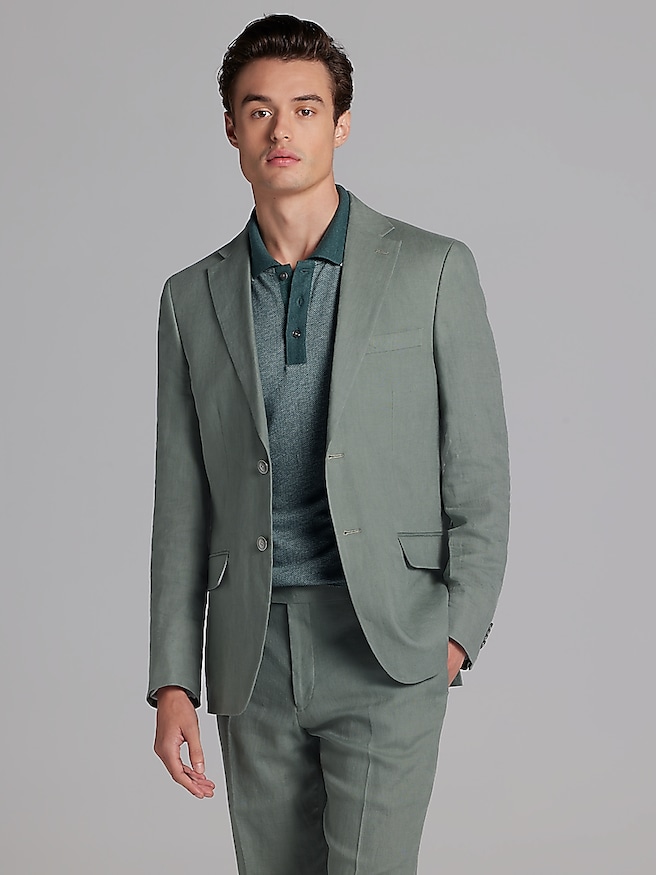
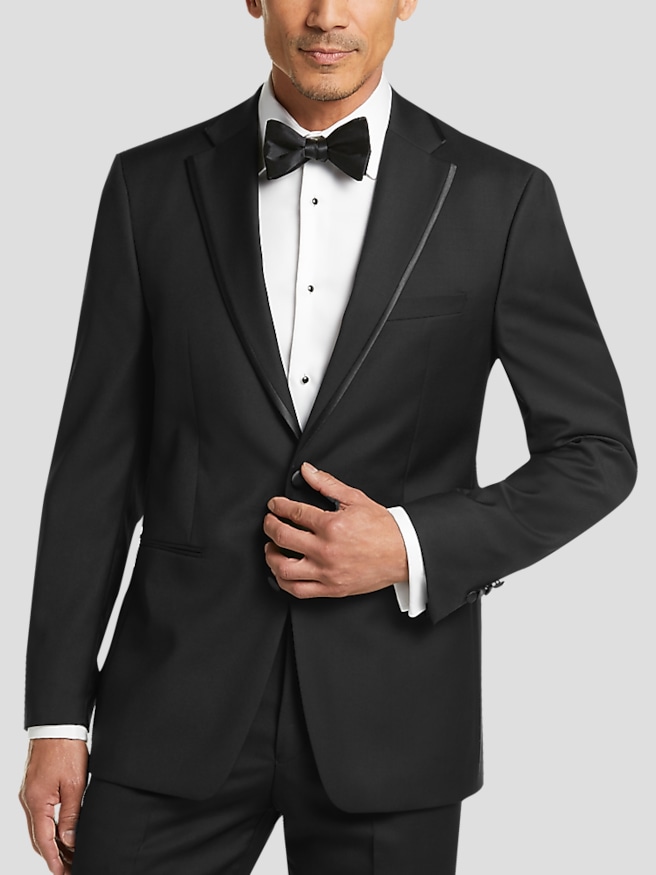
Complete green tuxedos bring distinctive color to formal dressing while keeping the coordinated structure of a traditional tuxedo. A two-piece tuxedo consists of a jacket and trousers, while a three-piece ensemble adds a vest. Shirts, neckwear, shoes, and other accessories complete the outfit, but the word “complete” does not mean that every set includes those finishing pieces. The defining details are usually in the tailoring: satin or grosgrain lapel facings, covered buttons, and, on some trousers, a coordinating stripe along the outside leg. These elements distinguish a tuxedo from a standard green suit, even when both share a similar silhouette. Forest and hunter green create a deep, understated effect, especially alongside black lapels and polished black footwear. Emerald offers a more saturated expression, while sage gives the same formal framework a softer appearance. Shade names alone cannot fully describe a fabric’s character; a brushed surface can make green look muted, while a smooth weave or velvet pile can give it greater depth. Under reception lighting, a dark green jacket may look almost black until movement reveals the color. That subtle contrast can appeal to a groom who wants to stand apart without overwhelming the wedding party, or to a prom attendee looking for an expressive alternative to conventional black. Green tuxedos also suit galas, formal celebrations, and other occasions where distinctive eveningwear fits the invitation. Traditional black-tie expectations vary, however, and a colored tuxedo works best when it aligns with the host’s dress requirements. For coordinated group attire, consistency involves more than choosing the same color name: fabric texture, lapel finish, and the balance between jacket and trousers all affect how cohesive the group looks in person and in photographs. Matching pieces create an uninterrupted line, while a green dinner jacket with deliberately contrasting formal trousers produces a more defined separation between the upper and lower half of the outfit.
Fabric and construction influence how a green tuxedo feels through a ceremony, dinner, and several hours of conversation or dancing. Wool and wool-blend cloth can provide a clean drape, natural resilience, and a surface that works well with contrasting formal trim. Polyester blends may contribute durability and wrinkle resistance, while viscose can add softness and fluidity; the final result depends on the weave, fabric weight, and overall construction rather than fiber content alone. Velvet has a raised pile that gives green particular richness, with highlights and shadows changing as the wearer moves. Its plush appearance creates a stronger textural statement than a smooth woven cloth, and it benefits from careful handling to prevent crushing. Stretch fibers can add flexibility, but they do not replace a well-proportioned fit. A jacket should sit smoothly across the shoulders, with the collar resting close to the shirt rather than pulling away at the back of the neck. Lapels should lie flat, and the front should close without pronounced pulling around the button. Slim silhouettes follow the body more closely, while roomier cuts leave additional space through the chest, waist, seat, and thighs. Neither needs to look loose or restrictive when the proportions suit the wearer. Sitting through dinner is a useful real-life measure of comfort: the waistband should remain comfortable, the trousers should not bind across the thighs, and the jacket should allow natural arm movement. Trouser length also changes the overall effect. A slight break gives a familiar tailored finish, while a cleaner hem with little or no break emphasizes the shoe and creates a sharper line. Jacket sleeves generally leave a small amount of shirt cuff visible. Adjustments to sleeve length, trouser hems, or waist shaping can refine the silhouette, though a sound fit through the shoulders and chest provides the strongest starting point. Balanced proportions let the green fabric stand out without making the tailoring itself a distraction.
The most convincing finishing details give a green tuxedo a clear visual center rather than competing for attention. A crisp white formal shirt creates contrast around the face, while a black bow tie can connect naturally with black lapels and trousers. A conventional fold-down collar offers a familiar foundation; pleated fronts or textured bibs add formality without introducing another strong color. With a lower-cut jacket, a vest or cummerbund can create a more finished transition at the waist, depending on the ensemble’s design. A vest should meet the trouser waistband comfortably so that shirt fabric does not interrupt the line when the jacket opens. A pocket square adds a small point of contrast, and restrained cuff links keep the attention on the tuxedo’s color and texture. Black patent leather or highly polished leather shoes reinforce an eveningwear appearance, with dark dress socks maintaining continuity when seated. For celebrations that call for tailoring without tuxedo detailing, Men's Green Suits offer a related direction with broader shirt, tie, and footwear possibilities. Preserving a tuxedo’s appearance between occasions depends on fabric-appropriate care. The garment’s care label should govern cleaning and pressing, especially when contrasting lapel fabrics, covered buttons, or velvet surfaces require extra attention. Airing the pieces after wear and using a broad, supportive jacket hanger help maintain their shape. Trousers benefit from careful hanging that protects the crease, and breathable storage helps keep the ensemble ready for its next outing. Velvet should not be flattened beneath other garments or pressed directly with a household iron. Spills and marks are best addressed promptly with care appropriate to the fabric, rather than aggressive rubbing that can alter its surface. As a gift, a complete tuxedo is most successful when the wearer’s measurements, preferred fit, and occasion are part of the choice. Whether intended for a wedding, prom, or recurring formal events, a well-fitted green ensemble combines personal expression with the familiar polish of evening tailoring.