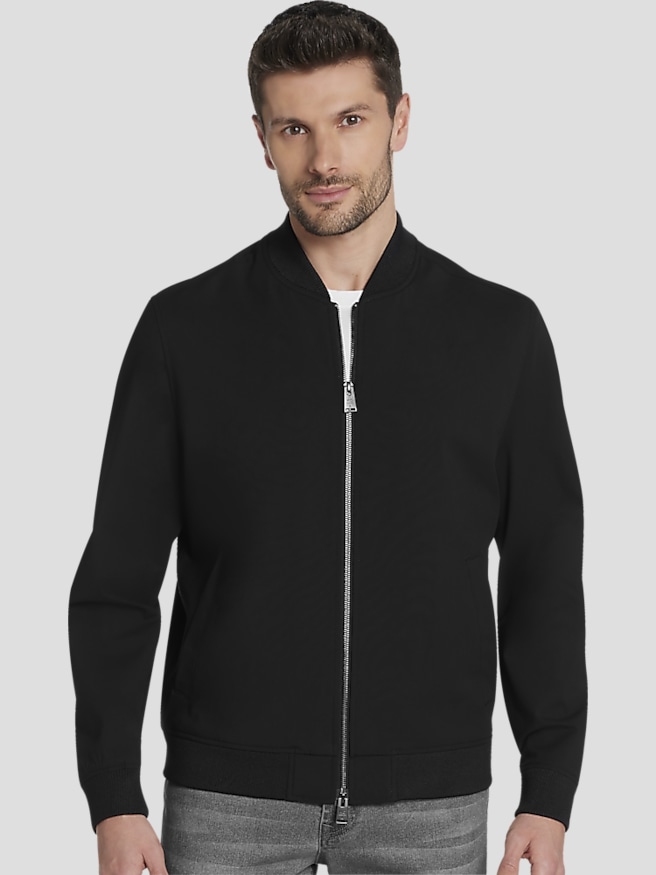
A college bomber jacket brings a familiar campus look into everyday dressing: a compact silhouette, a defined collar, and ribbed cuffs that give casual outfits a finished edge. Its appeal comes from the meeting of two traditions. The bomber contributes a practical, waist-length shape, while collegiate styling draws on the athletic heritage of varsity lettering, contrast sleeves, striped trim, and school-inspired colors. Those details can be bold or understated, so the look does not have to depend on a large emblem across the chest. A simple body with contrast ribbing can suggest the same spirit with less visual weight. For students heading from a lecture hall to lunch, alumni returning for a campus visit, or anyone drawn to classic American sportswear, the result is an easy outer layer with a recognizable identity. It works especially well with familiar wardrobe staples: a plain T-shirt, straight-leg jeans, and clean sneakers keep the outline relaxed, while an Oxford shirt and chinos give it a more composed feel. When the jacket has prominent lettering or several colors, quieter pieces underneath help the design stand on its own. A more restrained jacket leaves room for a patterned shirt or textured pants without making the outfit feel crowded. Proportion matters as much as color. A waistband that sits near the hips preserves the bomber’s characteristic shape, and pants with a clean line balance the slight fullness through the chest and sleeves. The style also fits occasions where a sport coat would feel too formal but a sweatshirt would not quite capture the mood, such as a casual alumni gathering, a campus performance, or dinner after a game. Collegiate inspiration is an aesthetic, not necessarily a statement of school affiliation; when a particular institution matters, the actual lettering, emblem, and colors deserve a close look rather than an assumption based on the overall design.
Materials influence how a college bomber jacket hangs, feels, and fits into a regular routine. A wool-blend body can provide a substantial, textured appearance associated with traditional varsity styling, while cotton-rich fabrics tend to create a softer, more casual impression. Nylon and polyester shells often have a smoother surface and a lighter feel, although fabric weight, weave, and lining all affect the finished garment. A satin-like finish catches the light and emphasizes contrast details; a matte finish usually feels more understated. Leather sleeves add structure and develop character with use, while synthetic alternatives have their own care requirements and should not be treated as interchangeable with leather. The lining deserves attention, too. A smooth interior can help the jacket slide over a shirt without pulling the sleeves out of place, and bulky internal seams may be noticeable during a long stretch at a desk. Fit is best judged with the kind of clothing likely to sit underneath. Over a T-shirt, the body should have enough ease to close comfortably without excess fabric collapsing above the waistband. Over a sweatshirt, there should still be room to reach forward, bend the elbows, and sit without tension across the upper back. Shoulder seams should generally sit close to the shoulder edge unless the cut intentionally uses a dropped shoulder. Cuffs should meet the wrist comfortably rather than covering the hand or pulling up noticeably with every movement. Ribbing should hold its shape without gripping so tightly that the hem rides up. Practical details become more important with frequent wear: pocket openings should be comfortable to reach, closures should operate smoothly, and stitching around pocket corners should look secure. A backpack can create repeated friction across the shoulders and back, making fabric resilience and firmly attached decorative details worth considering. Large patches, raised embroidery, and sleeve accents bring personality, but their placement can also affect comfort beneath bag straps. The strongest choice for everyday use balances that visual character with freedom of movement and a shape that feels natural both standing and seated.
Caring for a college bomber jacket starts with its care label, particularly when the body, sleeves, trim, and decoration use multiple materials. A cleaning method suited to the main fabric may not suit a leather accent, embroidered patch, or contrast panel. Machine washing is appropriate only when the label permits it, and recommended settings matter for preserving shape and color. High heat can affect ribbing, finishes, and decorative applications, so drying instructions deserve the same attention as washing instructions. For a small mark, use only a cleaning approach approved for the material, testing in an inconspicuous area when appropriate rather than scrubbing the visible surface aggressively. Leather sections may need a suitable specialist product or professional attention, and a garment marked for professional cleaning should be handled accordingly. Between cleanings, empty the pockets and give the jacket space on a broad, supportive hanger; narrow hooks can concentrate weight at the collar and distort the shape. Avoid leaving a heavy phone or packed wallet in one pocket for long periods, since uneven weight can pull at the lining and alter how the front hangs. These small habits help preserve the crisp outline that makes the style appealing. A college bomber jacket can also make a thoughtful gift for a student celebrating an academic milestone, a graduate who enjoys campus-inspired clothing, or an alumnus with a lasting connection to school traditions. The most useful clues are often in the recipient’s existing wardrobe: preferred colors, usual shirt layers, favored jacket length, and comfort with visible lettering. Checking the garment’s measurements against a jacket that already fits can be more helpful than relying on a size label alone. For a wardrobe that leans toward tailored trousers, fine-gauge knits, and polished footwear, Dressy Bomber Jackets offer a related direction with a more refined emphasis. The collegiate version keeps its distinct appeal through athletic references and an easygoing shape, whether worn on campus or far beyond it. Thoughtful fabric, comfortable proportions, and well-chosen details make that character feel personal rather than like a uniform.