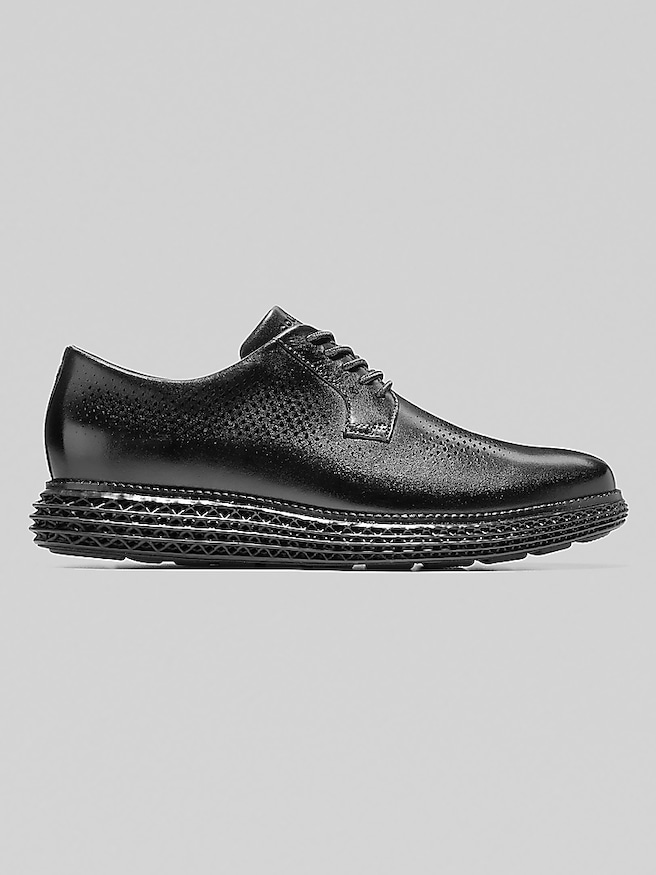
Black shoes bring a clean, grounded finish to a wardrobe, whether the rest of the outfit is a tailored suit, a pair of pressed trousers, or dark denim with a button-down shirt. Their appeal comes partly from simplicity: a consistent dark color lets the shape of the shoe, the texture of the upper, and the finish of the leather do the talking. A smooth, lightly polished surface creates a sharper impression, while a matte finish or textured upper can feel more relaxed without losing that sense of polish. For an office presentation, an interview, or a wedding reception, black footwear helps keep the overall look composed and intentional. Outside those settings, a less formal silhouette can work comfortably with chinos and a knit polo, giving everyday clothes a more finished appearance. Shape matters as much as color. A streamlined toe tends to complement slim or tapered trousers, while a slightly fuller profile can balance a straight-leg cut. The decorative detailing associated with Cole Haan Black Wingtip Shoes adds visual interest through the familiar wing-shaped toe pattern and perforated trim, offering a distinctive alternative to an unadorned upper. That detail can sit naturally alongside textured tailoring or a simple navy suit, where the shoes provide contrast without competing with the rest of the outfit. Black also pairs easily with charcoal, gray, and deeper blue tones, making it a practical foundation for dressier combinations. A black leather belt with a similar level of sheen creates continuity, though the two finishes do not need to be identical. The most convincing combinations feel balanced rather than overly coordinated: clean trouser hems, an appropriate sock color, and shoes suited to the occasion often make a greater difference than adding extra accessories. For someone moving between professional and social settings, that versatility can make black footwear a useful part of a thoughtfully chosen wardrobe, especially when the silhouette feels equally at home beneath a suit jacket or a more casual layer.
Materials and construction influence how black shoes feel through a full day, not just how they look when first put on. Leather uppers can offer a smooth appearance and gradually adapt to the foot, although their flexibility and feel depend on the leather, lining, and overall construction. Suede has a softer, more textured character, while textile panels or mixed-material uppers can give footwear a more casual expression. None of those materials alone guarantees comfort or durability; the way the upper, footbed, and sole work together matters just as much. A cushioned footbed may soften the sensation of standing on hard floors, and a flexible sole can make walking feel less restrictive. More structured construction may appeal to someone who prefers a stable, dress-oriented feel. The balance is personal. A shoe intended for several hours at a desk may face different demands from one worn through a commute, a conference, and an evening event. Fit deserves attention across the whole foot: the heel should feel secure, the widest part of the foot should sit comfortably within the shoe, and the toes need room without sliding forward. Slight softness in the upper is different from a fit that requires the wearer to tolerate pinching. Leather may relax with wear, but that does not make a shoe that is too short a sound choice. Socks also affect the fit, particularly when moving between thin dress socks and a more substantial everyday pair. Lace-up designs allow some adjustment over the instep, while slip-on shapes depend more closely on the relationship between the opening, heel, and foot. Underfoot, outsole materials influence flexibility, traction, and the overall profile. A substantial sole can give a shoe a more casual presence, whereas a lower-profile sole often looks cleaner beneath tailored trousers. Even small details, such as a smooth lining, neatly finished seams, and a heel that does not rub, can shape the wearing experience. These considerations become especially noticeable during ordinary moments: walking from a parking garage, standing through a reception, or taking the stairs between meetings.
Keeping black footwear looking its best is largely a matter of matching care to the material and allowing the shoes to recover between wears. Smooth leather generally benefits from having surface dust removed before any appropriate conditioner or polish is applied. Products intended for leather should be used according to their directions, with particular attention to whether the finish needs conditioning, color restoration, or simply a light buff. Too much buildup can obscure the texture rather than improve it, and a heavy shine is not necessary for every setting. A restrained finish often works well for everyday professional wear, while a more polished surface can complement dressier clothing. Suede and textile uppers call for different treatment; a brush or cleaner designed for the material is a better match than conventional leather polish. Following the care directions for the shoe helps preserve its intended appearance. Storage matters, too. Letting footwear air out, keeping it away from direct heat, and using suitable shoe trees can help maintain shape and reduce the creasing that comes from repeated wear. Rotating pairs gives materials time to dry naturally after a long day. Durability also depends on what happens beneath the upper, so worn tread, uneven heel wear, or changes in support are worth noticing rather than judging condition only by the shine on the toe. Black shoes can make a thoughtful gift for a graduate beginning a professional role, a partner building a more versatile wardrobe, or a family member who regularly dresses for meetings and celebrations. Size is only part of that choice: preferred width, usual sock thickness, and the recipient’s tolerance for a structured or softer feel are equally useful details. Familiarity with the kinds of clothes the recipient wears helps narrow the style, whether the goal is understated tailoring or a more relaxed everyday combination. For personal wear or gifting, the lasting appeal lies in footwear that looks appropriate, fits comfortably, and earns its place through regular use. A well-chosen black pair can support many outfits without demanding attention, leaving the wearer looking put together from the first handshake to the last conversation of the evening.