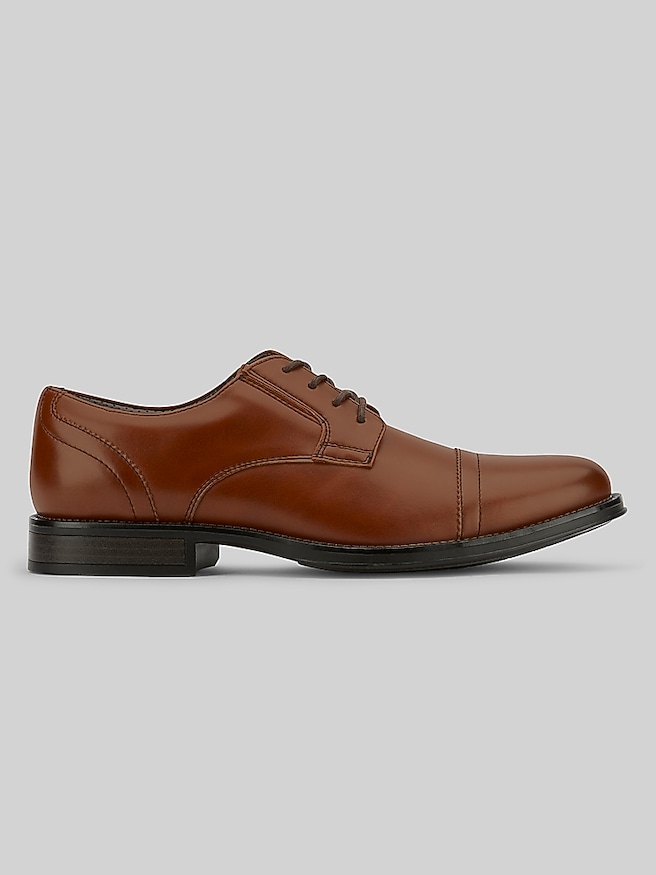
Men's shoes in US size 8.5 share a length designation, but their fit also depends on width, toe shape, and construction. Two pairs marked 8.5 can feel noticeably different, especially when one has a tapered dress profile and another has a rounder, more relaxed shape. A comfortable fit leaves room for the toes to move without allowing the foot to slide forward, while the heel feels secure rather than squeezed. The broadest part of the foot should align comfortably with the broadest part of the shoe, and the upper should hold the foot without creating pressure across the instep. For someone who usually wears size 8.5, those details matter as much as the number printed inside. Width deserves particular attention: extra length is not a reliable substitute for enough room across the forefoot. Lace-up construction allows some adjustment over the instep, while a slip-on fit depends more closely on the relationship between the foot and the shoe's shape. Socks also affect the feel, whether the intended pairing is a thin dress sock beneath tailored trousers or a slightly more substantial sock with chinos. Trying footwear with the socks it will actually accompany gives a more useful impression of everyday comfort. Both feet need consideration, since small differences in size or shape are common. A little space beyond the longest toe is helpful, but excess movement can lead to rubbing and a less controlled stride. Leather may soften with wear, yet an uncomfortable pressure point should not be dismissed as something that will necessarily disappear. The strongest foundation for a dependable size 8.5 fit is a shoe that feels balanced from the start: secure through the heel and midfoot, comfortable across the toes, and flexible where the foot naturally bends. Those qualities become especially noticeable on days that move from a desk to a meeting, a restaurant, or several blocks on foot.
The appeal of Men's Cole Haan Dress Shoes fits naturally into a wardrobe built around clean tailoring and versatile footwear. In size 8.5, as in any size, proportion helps determine the overall effect. A sleek toe and restrained detailing can create a continuous line beneath suit trousers, while a fuller shape or more textured finish gives chinos and an unstructured jacket a more relaxed character. Black footwear creates a crisp pairing with charcoal tailoring and many formal business outfits. Brown tones add warmth beside navy, gray, olive, and denim, with darker shades generally appearing more understated than lighter ones. The finish matters, too: smooth leather reads differently from softly textured suede, even when the silhouette is similar. Smooth leather can develop creasing and character through regular wear, while suede's raised surface creates a softer visual impression. Textile components may lend a lighter, more casual appearance, depending on their placement and construction. Underfoot, cushioning, flexibility, and sole design influence how the shoe feels through a full day. A padded footbed can soften contact underfoot, but softness alone does not establish good fit or lasting comfort. Some wearers prefer a firmer, more stable feel, particularly when standing for extended periods; others value greater flexibility for frequent walking. Rubber outsoles often bring a more forgiving feel and added traction compared with smooth leather soles, although performance depends on the design and the surface underfoot. Leather soles contribute a traditional dress appearance and have their own care needs. These distinctions are useful when matching footwear to actual routines rather than appearance alone. A pair intended mainly for seated office work serves a different rhythm from one worn between appointments across a large campus. For a wedding guest, presentation may carry more weight; for someone who walks between meetings, ease of movement may be equally important. The most versatile choice balances the level of polish an outfit needs with the way its wearer spends the day.
Materials and regular care play a substantial role in how well size 8.5 footwear holds its shape and appearance over time. Smooth leather benefits from having surface dust removed with a soft brush or cloth before an appropriate conditioner or polish is applied according to the material's care directions. Using too much product can leave buildup, so a light, even application is generally more useful than a heavy coating. Suede calls for a different approach, including a suitable suede brush and treatments specifically intended for that surface; ordinary leather polish can flatten its texture or alter its appearance. Textile sections, linings, and mixed-material uppers should be cleaned according to their own instructions rather than treated as though every part of the shoe were the same material. After wear, allowing shoes to air out helps moisture dissipate, and rotating between pairs gives each one time to dry naturally. Properly fitted shoe trees can help preserve shape, while a shoehorn reduces the repeated crushing of the heel counter when getting dressed. Storage away from direct heat and strong sunlight helps protect finishes and adhesives. Durability also depends on how footwear is used: repeated scraping at the toe, dragging at the heel, and forcing the foot into a fastened shoe can shorten its useful life. Checking tread and heel wear periodically makes it easier to recognize when maintenance or professional repair may be appropriate, although repair options depend on construction. These practical details matter for anyone building a reliable work wardrobe, preparing for interviews, or choosing shoes for milestone celebrations. Footwear can also make a thoughtful gift for a graduate, a partner, or someone stepping into a new professional role, provided the recipient's usual size, preferred width, and everyday style are understood. A familiar size 8.5 is a helpful starting point, not a guarantee that every shape will fit alike. Lasting usefulness comes from the combination of comfortable proportions, suitable materials, and a look that feels natural with the clothing already in regular rotation.