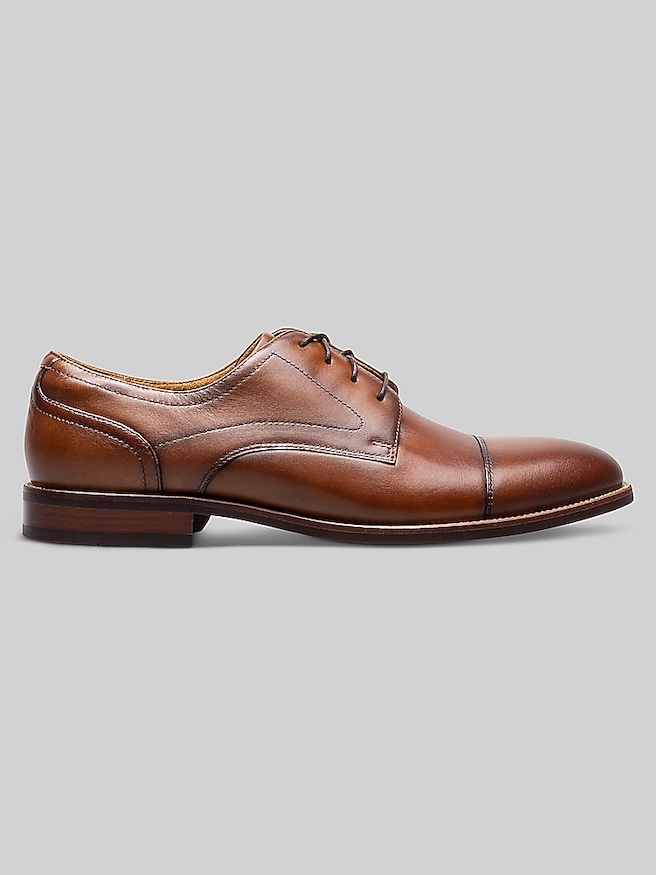
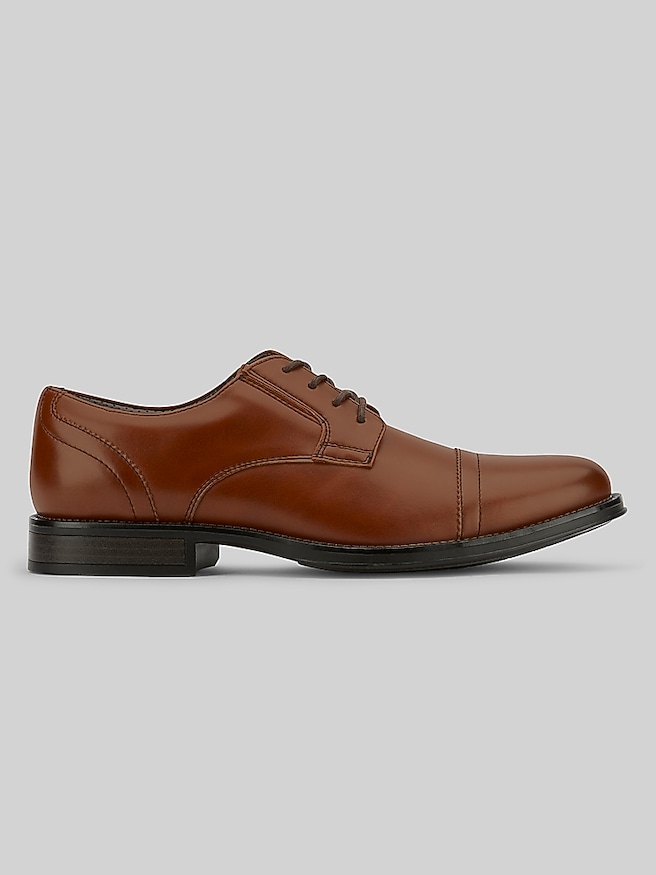
Cognac oxfords are lace-up dress shoes in a rich, reddish-brown shade that brings depth to tailored clothing without the darker look of black footwear. The color can range from golden brown to a deeper amber tone, sometimes with subtle shading at the toe and heel. A true oxford has closed lacing, with the eyelet sections stitched beneath the vamp, creating a neat profile across the top of the foot. That streamlined construction makes cognac oxford shoes a natural companion to suits, dress pants, and other polished outfits. Against a navy suit, the leather provides a clear contrast that feels distinctive without distracting from the tailoring. With medium gray or charcoal trousers, cognac adds a brighter accent, while tan clothing benefits from a shoe shade deep enough to remain visually separate from the fabric. A brown leather belt in a similar tone helps connect the outfit; an exact color match is less important than a consistent level of formality and finish. Toe detailing also shapes the overall impression. A plain toe keeps attention on the leather and silhouette, a cap toe adds a defined seam across the front, and a wingtip introduces decorative perforations and a more detailed appearance. Those details make it possible to suit the setting, whether that means a client presentation, a wedding reception, or a dinner with a jacket and open-collar shirt. Smooth, minimally decorated oxfords generally look dressier than heavily brogued versions. Cognac is especially effective when the occasion calls for tailoring with some personality, although black formal footwear remains the more appropriate choice for a strict black-tie dress code. With a less formal outfit, textured trousers or clean, dark denim can give the same shoes a relaxed context. Keeping the trouser hem tidy allows the shape of the shoe to show, rather than hiding the lacing and toe beneath excess fabric. The result is a shoe color that can support a thoughtfully coordinated wardrobe rather than being reserved for a single outfit.
Materials and construction influence how cognac oxfords feel, age, and hold their shape. Smooth leather gives the color a clear surface on which natural grain and subtle tonal variation can show. Full-grain leather retains the hide’s outer surface, while other leather finishes may create a more uniform appearance; neither the color alone nor a glossy finish establishes overall quality. Supple uppers, neatly finished seams, a comfortable lining, and a stable heel are more useful details to consider together. Leather can develop creases and a gradual patina with wear, giving cognac footwear character, but deep cracking or a separating finish should not be mistaken for desirable aging. Sole construction deserves similar attention. Leather outsoles offer a traditional appearance and can feel sleek under dress trousers, while rubber outsoles may provide more traction and flexibility, depending on their tread and composition. A cushioned footbed can make standing through a reception or walking between meetings more comfortable, though cushioning cannot correct a shoe that is too narrow or too short. Proper fit leaves the toes room to move without allowing the foot to slide forward. The widest part of the foot should sit comfortably within the widest part of the shoe, and the heel should feel secure rather than rubbing with every step. Because an oxford’s closed lacing offers less adjustment across the instep than an open-laced design, instep height matters as much as length. A pronounced V-shaped gap between the lacing sections, pressure across the top of the foot, or numbness can indicate that the shape or width is unsuitable. Trying dress shoes with the socks intended for regular wear gives a more realistic sense of fit. Leather may soften, but a painful fit is not a reasonable break-in plan. For frequent use, durable stitching, secure sole attachment, and a construction that permits professional repair can matter more than decorative details. Whether a pair can be resoled depends on how it is made, not simply on whether the outsole is leather.
Regular care helps preserve the color and clean lines that make cognac dress shoes appealing. Loose dirt can be removed with a soft brush or cloth before it works into creases and seams. Leather conditioner, used according to the leather finish and care directions, helps prevent excessive dryness, while an appropriate cream polish can refresh color and soften the appearance of minor surface scuffs. Testing any conditioner or polish on a small, inconspicuous area is especially important with cognac, since some treatments can darken the finish. A close color match or a suitable neutral product is preferable to assuming that every brown polish will blend naturally. Heavy layers of dark polish can obscure the depth that gives this shade its appeal. A light buff with a soft brush creates a maintained finish without requiring a mirror shine. Unfinished cedar shoe trees help support the uppers between wears and absorb some residual moisture; they should fit without forcing the leather outward. Allowing shoes to rest between uses gives the interior time to dry, and keeping them away from direct heat reduces the risk of damaging the upper or adhesive. For travel, separate shoe bags protect polished leather from buckles, zippers, and other belongings inside a suitcase. These habits make sense for someone wearing cognac oxfords throughout the workweek as well as someone saving them for important occasions. They can also make a thoughtful gift for a graduate building a professional wardrobe, a partner who enjoys tailored clothing, or a groom preparing an outfit beyond the ceremony itself. A known shoe size, an understanding of preferred width, and a sense of the recipient’s everyday clothing help make that choice more personal. For a similar color with a slip-on silhouette, Cognac Loafers offer another way to complement tailored separates. Cognac oxfords retain their own distinct appeal: secure lacing, a clean outline, and a leather tone that works especially well with navy, gray, and earth-toned clothing. Their usefulness comes from that balance of polish, practical fit, and character that develops with attentive wear.