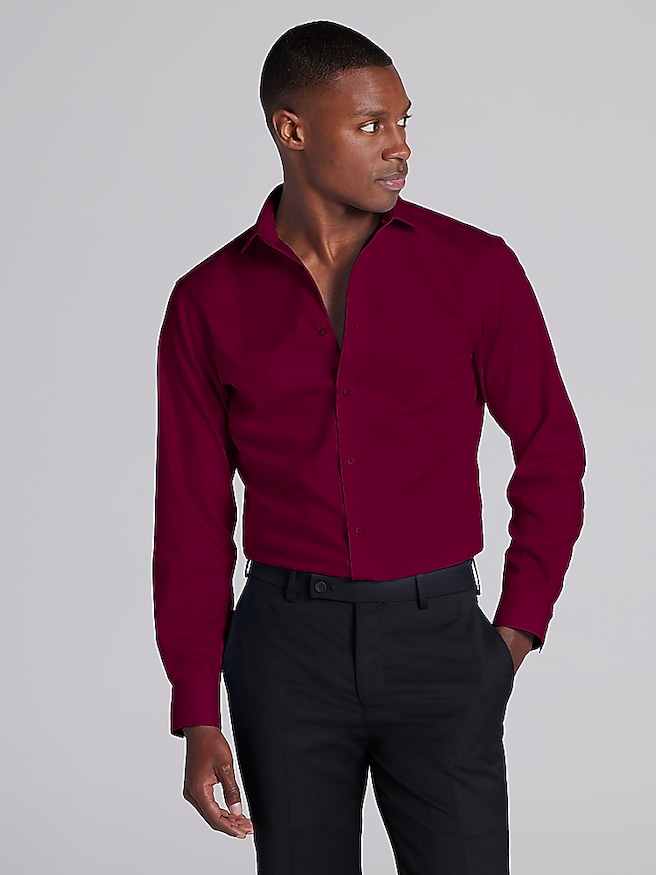
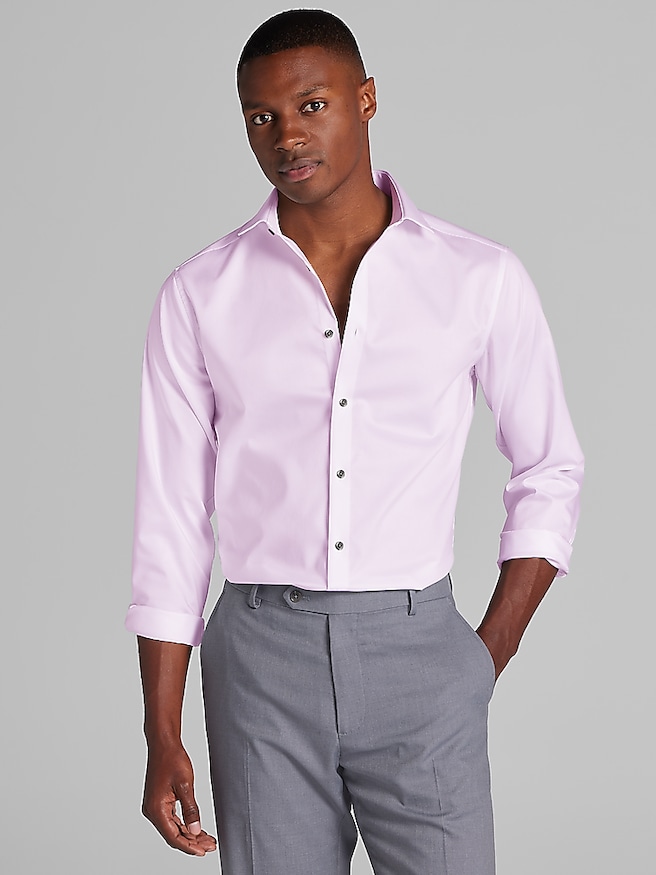
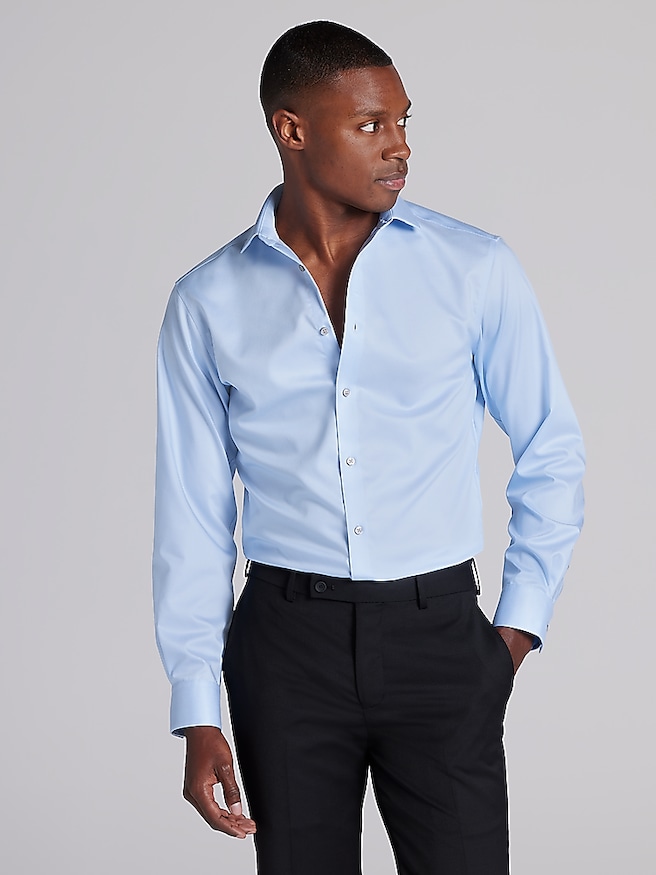
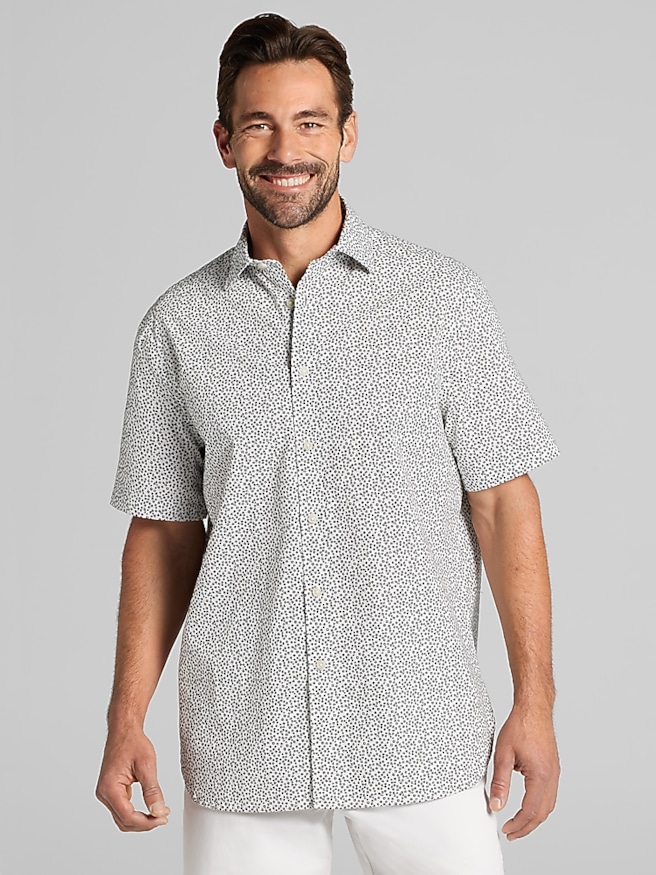
Classic style shirts are men's wardrobe staples defined by clean lines, familiar collar shapes, balanced proportions, and colors or patterns that work across many settings. Their appeal comes from looking appropriate without drawing attention away from the person wearing them. A crisp collar above a jacket, a neatly finished cuff at the wrist, and a smooth front create a composed appearance for a business meeting, wedding reception, or dinner reservation. White and light blue are traditional foundations because they coordinate easily with navy, gray, brown, and other common tailoring colors. Fine stripes and small checks add visual interest while keeping the overall effect restrained. Solid shirts can provide a quiet backdrop for a patterned tie, while a subtle stripe brings definition to an outfit worn without one. Collar shape also influences the impression: a point collar creates a narrower frame, a spread collar leaves more space for a tie knot, and a button-down collar has a relaxed character that pairs naturally with chinos or denim. The distinction between classic style and classic fit matters, too. Classic style describes the shirt's design; classic fit usually describes a roomier cut through the chest and waist. A shirt can have traditional details and still feature a closer-fitting shape. That flexibility makes the category useful for established office wardrobes, first professional outfits, and everyday dressing that calls for more structure than a T-shirt. Long sleeves offer cuff coverage beneath tailoring, while Men's Classic Short Sleeve Shirts provide another expression of the same straightforward aesthetic for casual workplaces, lunches, and informal gatherings. Formality depends on more than sleeve length, however. Fabric, collar construction, pattern scale, and the way a shirt fits all help determine where it belongs. An understated shirt with a well-proportioned collar can move comfortably between several occasions, especially when its hem and cut suit the way it will be worn. This adaptability is a large part of what gives classic designs their lasting place in a wardrobe.
Fabric gives a classic shirt much of its character, affecting its drape, surface texture, care needs, and feel against the skin. Cotton is a familiar choice for its softness and ability to absorb moisture, though the weave can make two cotton shirts feel noticeably distinct. Poplin generally has a smooth, closely woven surface that suits a clean, dressier appearance. Oxford cloth has a more visible basket weave and a substantial hand, giving it an easygoing quality beneath a sport coat or alongside chinos. Twill is recognizable by its diagonal weave and often has a soft drape with a slight sheen. Cotton blends may offer easier maintenance or added resilience, while fabrics containing stretch can allow more movement through the shoulders and torso. Fiber content alone does not determine quality or durability; yarn, weave, finishing, and construction also influence how a shirt wears. Even stitching, securely attached buttons, and neatly finished seams are useful construction details because shirts experience repeated movement and laundering. Fit deserves the same attention as fabric. A collar should close comfortably without pressing into the neck, and shoulder seams should sit near the shoulder's natural edge rather than drooping onto the upper arm. Across the chest, a smooth button placket is a better sign than fabric pulling into gaps between buttons. Sleeves need enough room for bending an elbow, while cuffs should feel secure without restricting the wrist. A fuller cut can offer ease for a broader build or a preference for extra room; a more shaped cut reduces fabric around the waist. Neither is inherently more classic. The best proportions support comfortable movement while preserving a tidy outline. For shirts worn tucked in, sufficient hem length helps keep the fabric in place when sitting or reaching. Shirts intended to be worn untucked generally need a shorter, balanced hem. These details become especially noticeable during a long meeting, a seated dinner, or a day that includes both desk work and time on the move.
Thoughtful care helps classic shirts retain the details that make them look good: a collar that lies neatly, cuffs that keep their shape, and fabric that hangs smoothly rather than twisting along the seams. The care label is the starting point because cotton, blends, finishes, and collar components may require distinct washing, drying, or pressing methods. Excessive heat can contribute to shrinkage or damage some stretch fibers, and leaving a shirt tightly packed in a dryer can set wrinkles that take more effort to remove. When the label permits, removing the shirt promptly and smoothing the collar, placket, and sleeves before hanging can simplify the next wear. Pressing or steaming should also follow the fabric's care requirements; a crisp finish suits many business settings, while a softer finish can look natural with textured cloth and casual trousers. Collar points, cuffs, and underarms benefit from regular attention, since residue and soil can become harder to address when left untreated. Allowing shirts to dry fully before storing them and avoiding an overcrowded closet help preserve a clean appearance between wears. Durability also comes from choosing a shirt for its intended job. A lightweight, smooth dress fabric has a distinct purpose from a more substantial casual weave, even when both share a traditional pattern. For gifting, classic shirts can be useful for a recent graduate building a professional wardrobe, a partner who appreciates familiar designs, or a family member with regular dress occasions. Reliable sizing information matters more than guessing from appearance, especially when neck and sleeve measurements are involved. Familiar colors, preferred collar shapes, and known care habits can make the choice feel personal without relying on a bold pattern. Whether worn beneath a suit, paired with tailored trousers, or dressed down with clean denim, a well-chosen classic shirt earns its place through comfortable proportions, practical fabric, and details that remain easy to coordinate.