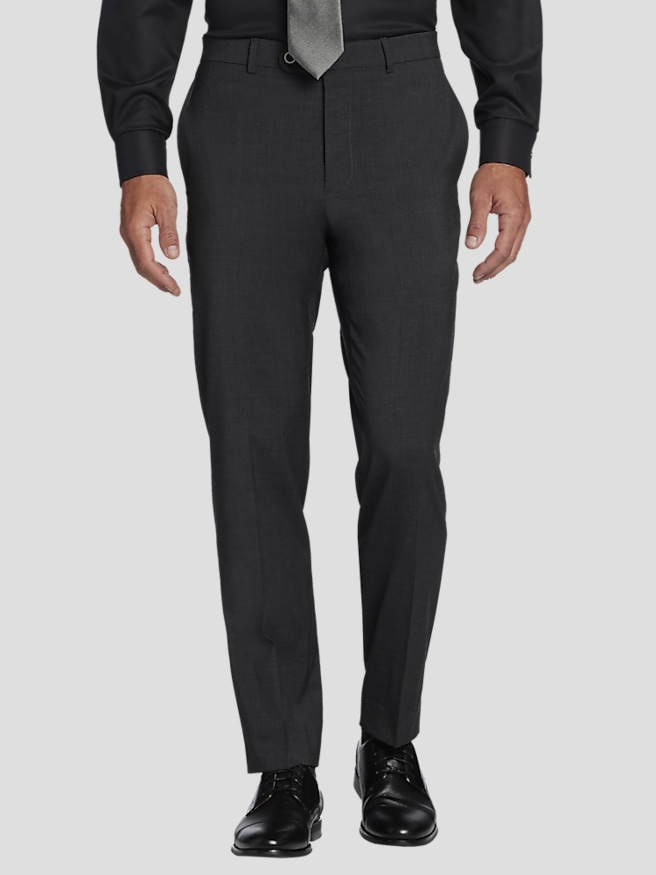
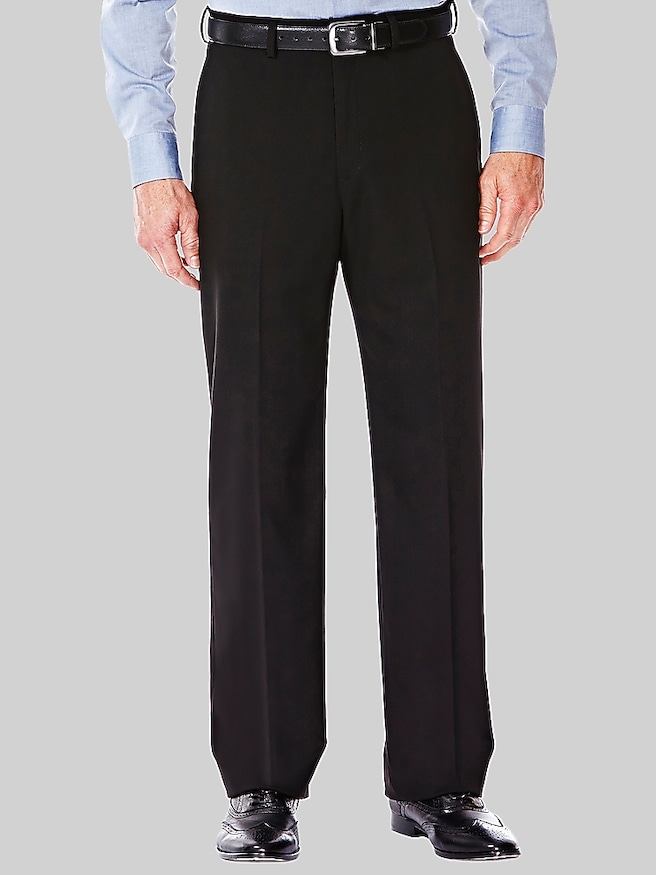
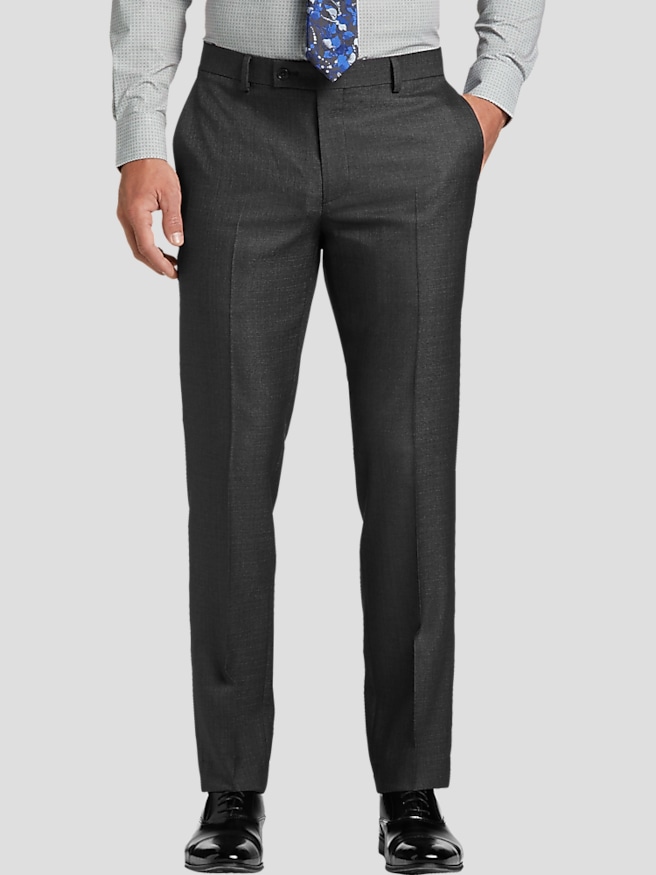
Charcoal trousers are dark gray pants that bring a polished, versatile foundation to a dress wardrobe. Deeper than medium gray but softer in appearance than black, charcoal works comfortably with crisp dress shirts, tailored jackets, and more relaxed knitwear. The color has enough presence for a business meeting without competing with a patterned tie or textured sport coat, making it useful for men who move between professional settings and social occasions. A white shirt and black leather oxfords create a clean, straightforward combination for an interview or presentation. Light blue adds subtle contrast, while soft pink brings a little warmth without overwhelming the dark neutral base. Small checks and restrained stripes also sit naturally against charcoal, especially when the rest of the outfit stays simple. For a business-casual office or dinner reservation, an open-collar shirt and dark brown loafers can feel composed without looking overly formal. Navy jackets offer a particularly dependable pairing because the blue and gray remain distinct while sharing a subdued character. A lighter gray sport coat creates more visible contrast; differences in texture help the combination look intentional rather than like an unmatched suit. Black jackets can also work, provided the fabrics and shades are clearly differentiated. Black footwear gives charcoal trousers a sharper, more formal finish, while medium-to-dark brown leather introduces a softer contrast. Very light tan shoes draw more attention to the feet, so darker leather is often easier to integrate into a restrained outfit. A belt in a similar leather tone keeps that transition cohesive. Charcoal dress trousers can suit many weddings when the invitation calls for separates or business attire, but they do not replace a matching suit or formal eveningwear when the dress code specifies either. Their appeal lies in that balance: polished enough for important appointments, understated enough for repeated wear, and adaptable enough to support several distinct outfits without making every combination feel identical.
Fabric and fit determine how charcoal trousers look and feel throughout the day. Wool often provides a smooth drape and a refined surface, with natural resilience that helps fabric recover from ordinary creasing. A subtle weave can add depth to the color, allowing charcoal to look rich rather than flat under office lighting. Wool blends combine that character with other fibers, though their feel, weight, and care requirements depend on the particular composition. Cotton trousers generally have a more relaxed appearance, making them a natural companion to an unstructured jacket, a button-down shirt, or a fine-gauge sweater. Some synthetic blends are designed to resist wrinkles, while fabrics containing stretch fibers can provide additional give through the seat and knees. For shoppers who spend long stretches seated at a desk, travel between appointments, or simply prefer more flexibility, Charcoal Stretch Pants offer another way to explore this versatile color. Stretch should complement a good fit rather than compensate for trousers that are too tight. A comfortable waistband stays in place without digging in, and the front pockets lie relatively flat instead of pulling open. Through the seat and thighs, the fabric should allow natural movement without sagging or forming pronounced horizontal tension lines. Slim fits create a closer silhouette, classic fits generally allow more room, and straight legs maintain a consistent line toward the shoe; the actual proportions vary by cut. Pleated fronts can provide additional room through the upper leg and bring a traditional tailored character, while flat fronts offer a simpler visual line. Neither detail determines formality on its own. Rise matters just as much: trousers should sit comfortably at their intended position without needing constant adjustment. At the hem, little or no break produces a crisp finish, while a slight break gives a more traditional appearance. Excess fabric pooling over the shoes can obscure an otherwise good fit. The strongest silhouette looks balanced from waist to hem and remains comfortable when sitting, walking, and climbing stairs.
Durability depends on more than fabric thickness. Consistent stitching, neatly finished seams, secure buttons, and a smooth-operating closure all contribute to trousers that hold up to regular use. Pocket openings and the seat are common points of stress, so a fit that avoids constant pulling can help reduce unnecessary strain. Lining may improve the way trousers move over the legs and help limit friction, although construction varies. The care label remains the best starting point for cleaning because wool, cotton, and blended fabrics do not all respond to the same treatment. Trousers labeled for dry cleaning should be handled accordingly; washable pairs need the water temperature and drying method specified by the manufacturer. High heat can affect some fibers and stretch components, making careful laundering particularly important when maintaining shape. Between cleanings, airing trousers and gently brushing appropriate fabrics can remove surface dust. Emptying pockets before hanging helps prevent unnecessary distortion, and a supportive trouser hanger keeps the legs aligned. Pressing or steaming should follow the fabric’s care directions, with attention to avoiding shine on dark surfaces. A pressing cloth can help protect suitable fabrics when ironing is permitted. Rotating trousers between wears also allows them to air out and recover their shape. These practical details matter whether charcoal trousers anchor a regular office wardrobe or come out for presentations, celebrations, and dinners that call for a more considered outfit. Someone who regularly wears collared shirts may appreciate a clean, flat-front silhouette that works across several jackets, while someone who prefers traditional tailoring may favor pleats and a slightly fuller leg. As a gift for a professional milestone, trousers are most useful when the recipient’s measurements, fit preferences, and care habits are known. With the right proportions and fabric, charcoal offers a dependable foundation that feels purposeful rather than repetitive, leaving room for personal style in the shirt, jacket, shoes, and finishing details.