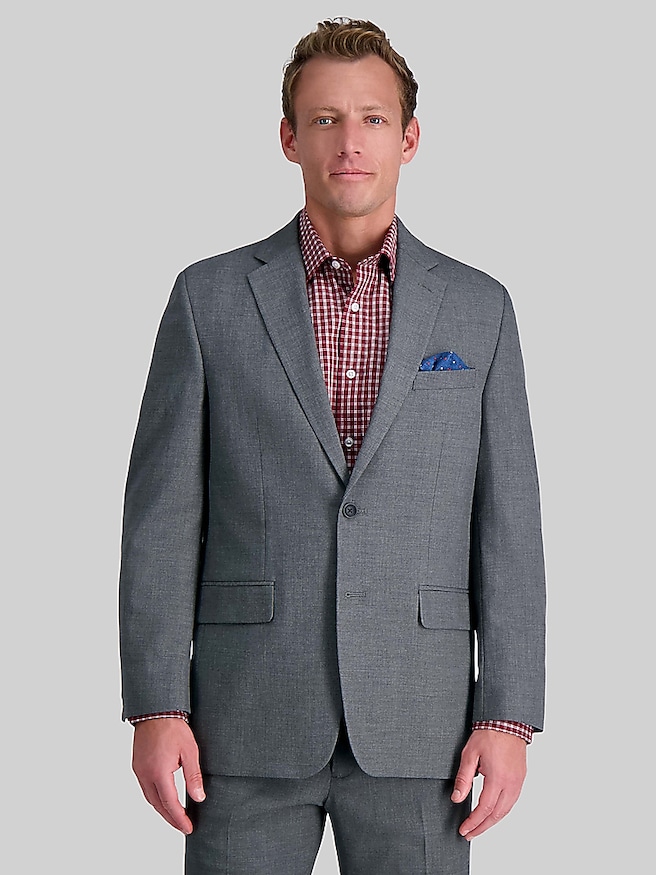
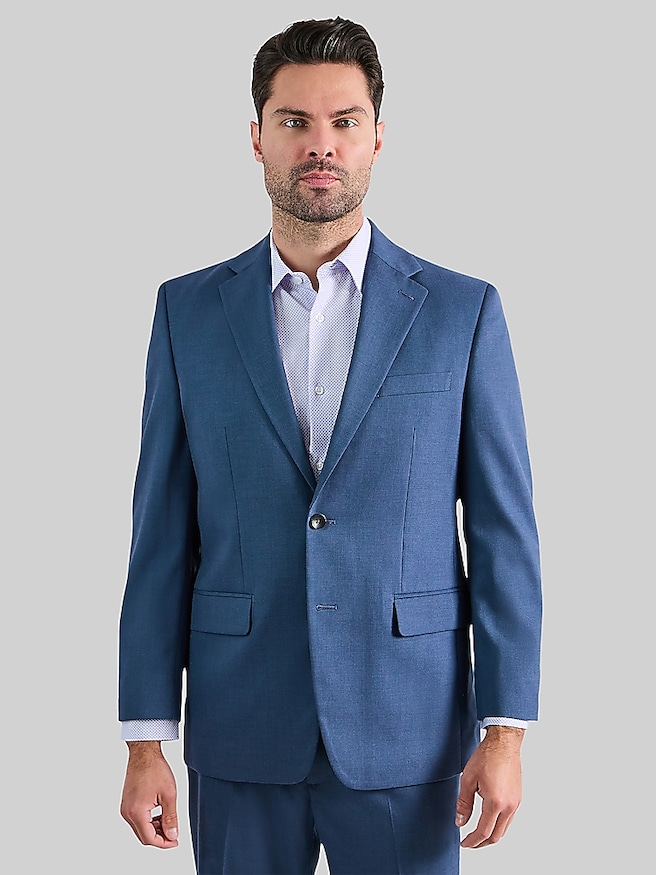
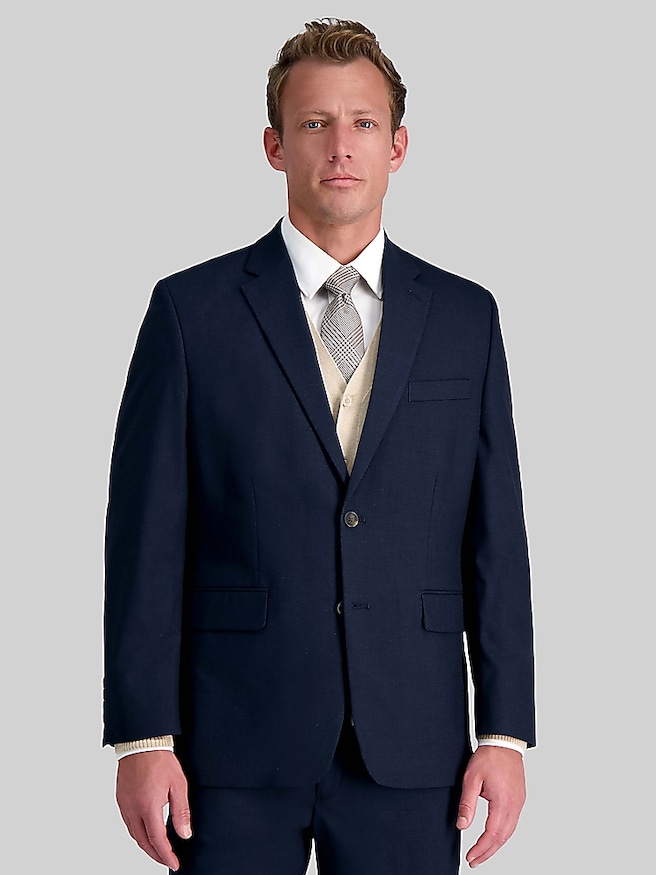
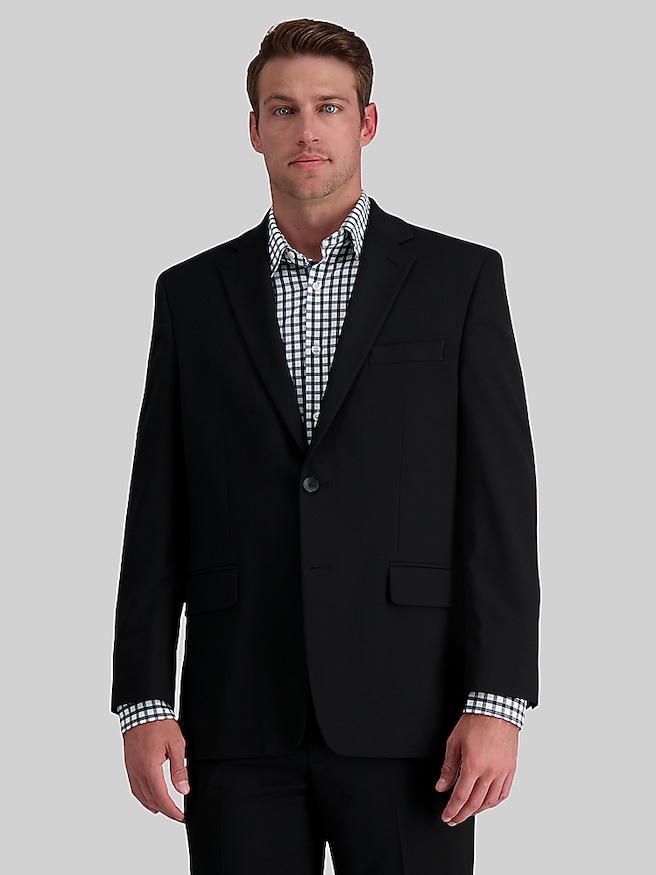
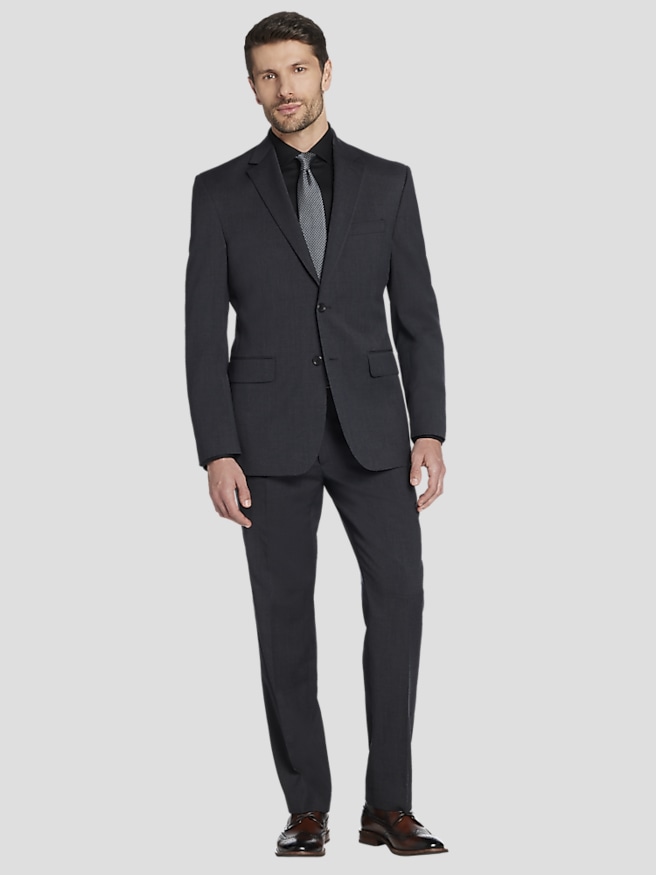
Charcoal suit separates bring the polished appearance of a coordinated suit to a wardrobe that needs flexibility in sizing. With the jacket and trousers selected individually, the chest and shoulder fit does not have to dictate the waist size. That makes separates especially useful for someone with broad shoulders and a narrow waist, a fuller midsection, or proportions that fall outside a standard suit pairing. The result can be a more balanced starting point for alterations, rather than a promise of a made-to-measure fit. Charcoal itself is a deep gray with enough depth for business settings and enough softness to work with a wide range of shirt colors. Against a crisp white shirt, it looks clean and assured; with pale blue, it feels approachable without losing its professional character. A burgundy tie adds richness, while a navy tie keeps the combination understated. These qualities make charcoal suit separates a practical foundation for interviews, client presentations, wedding guest attire, and dinners that call for more than everyday clothing. For someone building a first professional wardrobe, the shade offers a useful middle ground between lighter gray and black. For someone who already wears tailoring regularly, it provides a dependable option that can take on a new character through shoes, shirts, and accessories. Black leather shoes emphasize the suit’s sharper side, while dark brown leather brings a little warmth when the occasion allows it. During the cooler months, charcoal also sits naturally alongside navy outerwear, textured scarves, and fine-gauge knitwear. The overall effect depends on coordination: a matching suit jacket and trousers should share the intended fabric, shade, and pattern, not simply carry the same color description. Two charcoal fabrics can look close on separate hangers yet reveal contrasting undertones under daylight. Choosing pieces designed to belong together helps preserve the uninterrupted line that makes a suit look considered, whether it is worn for a full workday or a single important evening.
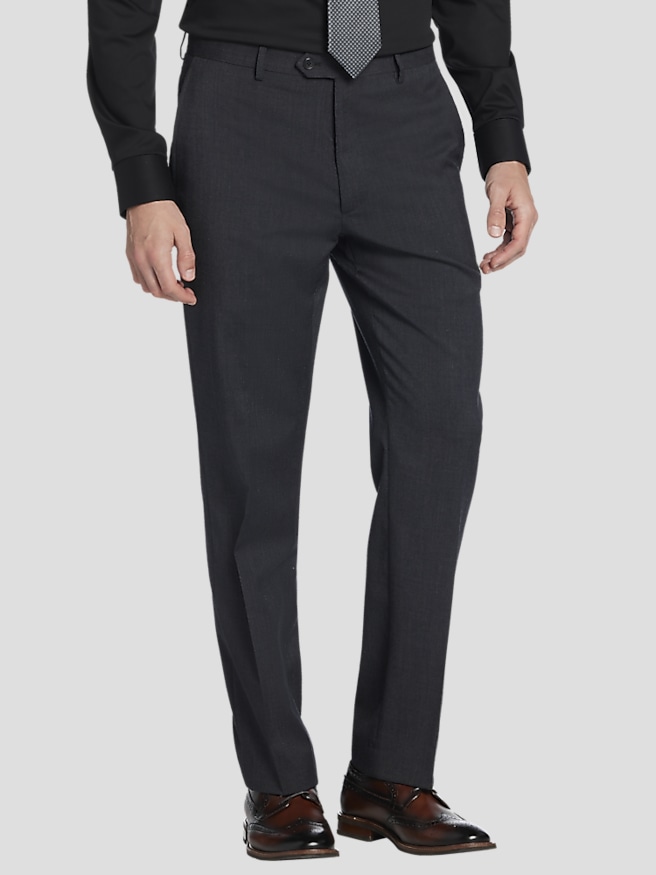
Fabric and construction shape how charcoal suit separates feel just as much as their silhouette. Wool is valued for its breathability, drape, and natural resilience, making it a strong choice for tailoring that needs to look composed through hours of sitting and standing. Wool blends can combine those qualities with other fibers that affect texture, weight, and ease of care. Fabrics containing stretch may offer extra give through the seat, knees, or elbows, although stretch is not a substitute for enough room in the garment. A smooth, tightly woven cloth tends to look crisp and businesslike, while a subtly textured weave can give the deep gray surface more dimension. Fabric weight matters, too: lighter cloth may feel more comfortable in a heated office, while a more substantial weave can provide a firmer drape during cooler weather. Lining, seam construction, and reinforcement at pockets also influence comfort and durability. When assessing fit, start with the jacket’s shoulders, which should sit neatly without extending conspicuously beyond the natural shoulder line or pulling inward. The collar should rest close to the shirt collar, and the buttoned front should lie smoothly rather than forming a pronounced X-shaped crease. Slim fits generally sit closer through the torso and legs; classic fits usually leave more room, though measurements vary by maker. Neither label guarantees the right proportions. Trousers should sit comfortably at the intended waist position, with enough space through the seat and thighs to sit down without strain. A clean leg line and a hem that meets the shoe neatly often matter more than an aggressively narrow cut. Sleeve length, trouser length, and modest waist adjustments can refine the finish, but major shoulder corrections are more involved. For anyone focusing on the lower half of the outfit, Charcoal Trousers provide another way to explore this versatile shade. Coordinating the cut and fabric with the jacket remains essential when the goal is a complete suit.
The usefulness of charcoal suit separates extends beyond wearing both pieces together, although some fabrics adapt to mixed outfits more naturally than others. Charcoal suit trousers can anchor a light blue button-down and a navy sweater for an office day without a jacket. A fine merino crewneck worn over a shirt adds warmth without much bulk, keeping the outline neat beneath an overcoat. A charcoal suit jacket may also work with contrasting trousers when its texture and construction suit the combination; very smooth, formal cloth can look less convincing away from its matching pants. Clear contrast is helpful here, since nearly matching gray pieces may appear accidental rather than intentional. For weddings, charcoal works well when the invitation calls for a suit, with a white shirt, restrained tie, and polished shoes providing a reliable foundation. It should not be treated as a replacement for a tuxedo when black tie is required. For presentations or interviews, a quiet pattern in the tie and a neatly folded pocket square can add personality without distracting from the conversation. Separates can also make a thoughtful gift for a graduate entering a professional role or someone marking a career milestone, provided the recipient’s measurements and fit preferences are known. Long-term usefulness depends on care as well as styling. Follow each garment’s care label, brush away surface dust with a suitable clothing brush, and let pieces air after wear before putting them away. A broad, shaped hanger supports the jacket, while properly hung trousers help maintain their crease. Avoid crowding the closet or leaving heavy objects in pockets, both of which can distort the shape. Professional cleaning should follow the fabric’s requirements rather than an automatic schedule after every wear; coordinated pieces may benefit from being cleaned together to help maintain a consistent appearance. Rotating wear gives fabric time to recover. Replacing one piece can sometimes extend the life of a pairing, but fabric revisions, dye variation, and fading mean a later purchase may not match exactly. Careful coordination and routine maintenance help charcoal separates remain a reliable part of a working wardrobe.