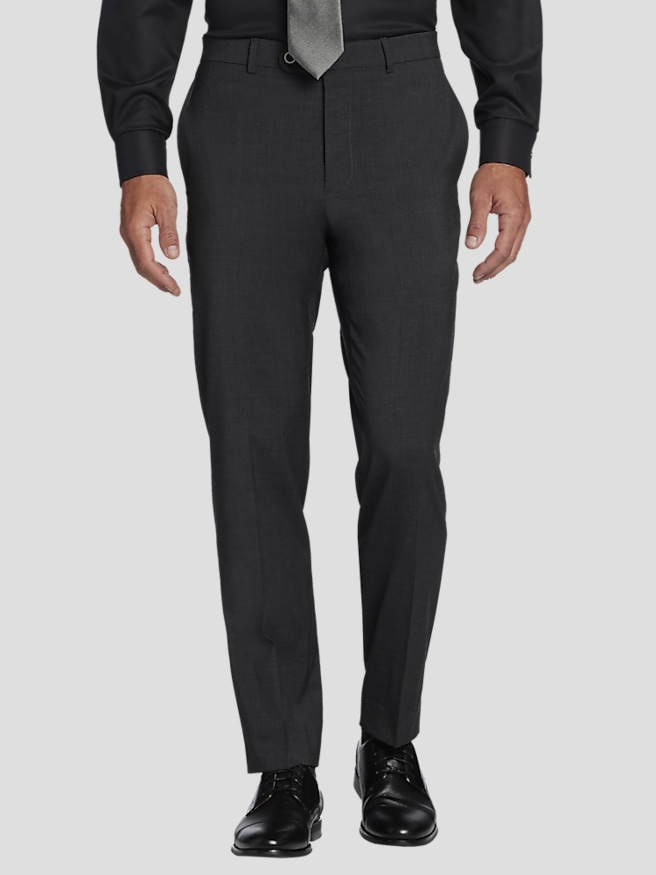
Charcoal socks are dark gray socks that bring a subtle, versatile finish to dress clothes and everyday outfits. The color sits between medium gray and black, offering enough depth to look polished without the sharper contrast of a true black sock. In this context, charcoal describes the shade, not a particular fiber or fabric treatment; the feel and performance depend on the material, knit, and construction. With charcoal trousers, a closely coordinated sock helps create a continuous line from the pant hem to the shoe, especially when sitting or crossing a leg. With navy pants, charcoal adds a quiet contrast that works with black, dark brown, or burgundy leather footwear. It also complements dark denim, gray chinos, and textured trousers, making it useful for office days, dinners, weddings, and other occasions that call for an intentional finish. Matching socks to the trousers rather than the shoes is a reliable approach, though an exact color match is not essential. A slightly darker shade often looks more cohesive than a noticeably lighter gray that draws attention to the ankle. Solid charcoal keeps the effect restrained, while fine ribbing, a subtle herringbone, or a heathered finish adds visual interest without competing with a patterned shirt or tie. For an outfit built around charcoal vests, socks in a related gray can repeat the color below the trouser hem without making every element identical. The overall effect depends as much on texture as shade: a smooth, fine-gauge knit suits sleek tailoring, while a more substantial knit looks at home with chinos and heavier leather shoes. That range makes charcoal a practical foundation for a sock drawer, particularly for anyone who moves between tailored clothing and relaxed business-casual outfits throughout the week. It is a color that can support the rest of an outfit rather than becoming its focal point.
Material and construction determine how charcoal socks feel inside a shoe, how they hold their shape, and how comfortably they wear through a full day. Cotton offers a soft, familiar feel, and cotton blends often include synthetic fibers to improve resilience and help the fabric recover after stretching. Merino wool can provide softness, breathability, and moisture management in a relatively fine knit, making it relevant to dress socks as well as more substantial everyday styles. Polyester and nylon can contribute strength, quicker drying, and resistance to abrasion, while small amounts of elastane or spandex help the sock stretch over the foot and maintain its fit. Fiber names alone do not tell the whole story: yarn quality, knit density, seam construction, and the balance of fibers all influence the result. A thin, smooth sock generally works well in a close-fitting dress shoe because it takes up less interior space. A cushioned footbed may feel more comfortable in roomier footwear, but extra padding can make a snug loafer or lace-up feel crowded across the toes. Length matters, too. Crew socks typically reach partway up the calf, while over-the-calf socks extend higher and can help keep skin covered when trouser hems rise while seated. The cuff should feel secure without digging into the leg, and the fabric should lie smoothly rather than collecting around the ankle. Shoe-size ranges provide a useful starting point, but heel placement is an important fit check: the shaped heel should sit at the heel of the foot instead of pulling underneath it or climbing toward the ankle. Toe seams deserve attention as well, especially for anyone sensitive to rubbing across the tops of the toes. For desk work, formal events, commuting, or extended time standing, a comfortable fit comes from balancing the sock’s thickness and stretch with the shoe’s interior shape, not simply choosing the thickest or softest fabric.
Consistent care helps charcoal socks retain their fit and keeps a deep gray shade looking intentional rather than washed out. The care label should set the routine, since a wool-rich knit may need gentler handling than a cotton-and-synthetic blend. Turning socks inside out before washing exposes the surfaces that collect perspiration and skin oils while reducing abrasion on the visible exterior. Washing with similar dark colors can also help limit noticeable color transfer and the pale lint that sometimes clings to darker fabric. When the label allows machine washing, a gentle cycle and mild detergent are sensible choices; bleach and excessive dryer heat can damage fibers, affect elasticity, or alter the color. Air-drying or using an approved low-heat setting can help preserve the sock’s shape, particularly at the cuff. Keeping toenails smooth and checking shoes for rough interior seams can reduce localized wear that otherwise appears as thinning at the toes or heel. Reinforced heels and toes may add durability in those high-friction areas, although fit and care remain important even with reinforcement. A sock stretched too tightly across the foot is under more strain, while a loose one can bunch and rub inside the shoe. Rotating pairs gives each pair time to dry fully between wears and makes regular laundering easier to maintain. For storage, laying pairs together or folding them loosely avoids keeping one cuff stretched around a bulky bundle. Charcoal socks also make a useful gift for a graduate building an office wardrobe, a partner who wears tailored clothing, or a father who appreciates everyday essentials with a polished appearance. Shoe size, preferred sock height, fabric sensitivities, and usual footwear are more helpful details than color alone when choosing a suitable pair. A person who spends the day in slim dress shoes may appreciate a smooth, lightweight knit, while someone who favors roomier casual shoes may prefer a little cushioning. Thoughtful attention to those details makes a familiar accessory feel well chosen and gives charcoal socks a dependable role in everyday dressing.