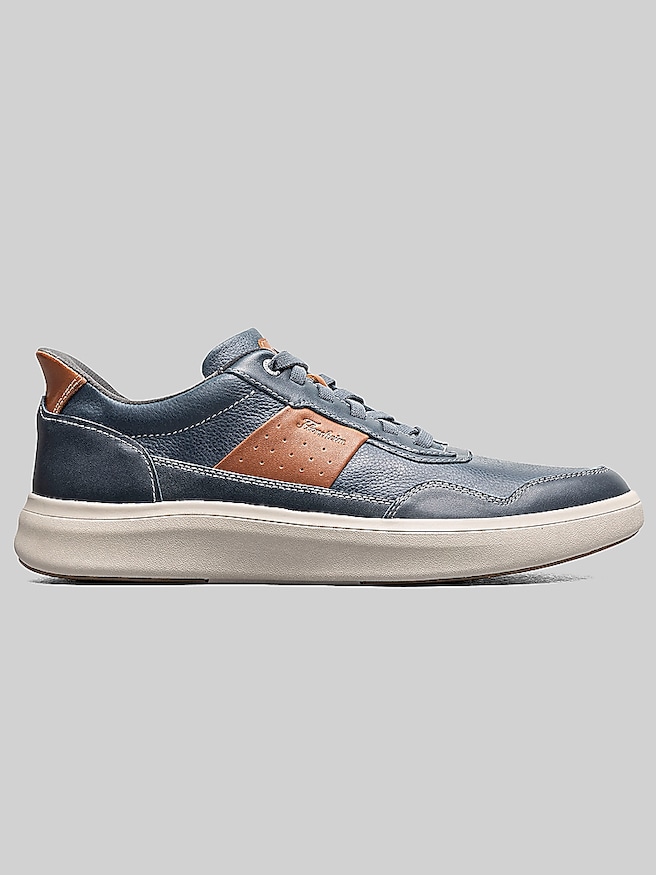
Canvas lace-ups are casual shoes with woven fabric uppers and an adjustable lace closure, often finished with rubber outsoles. Their appeal is straightforward: the textured fabric brings a relaxed look, while the laces help hold the foot securely without making the shoe feel overly formal. Canvas is commonly made from cotton, though fiber blends, fabric weights, and linings can change how a pair feels. A softer upper may flex easily with each step; a more substantial weave can give the shoe a firmer shape. Many canvas lace-up sneakers have a simple profile that works with jeans, chinos, and casual trousers, making them useful for everyday plans that fall somewhere between dressed up and completely off duty. With dark denim and a clean polo, they create an easy outfit for dinner at a neighborhood restaurant. With straight-leg chinos and an untucked button-down, they can suit a relaxed office where sneakers fit the dress code. The everyday appeal of Men's Lace Up Canvas Shoes comes from this balance of texture, uncomplicated styling, and adjustable fit. Color and sole design make a noticeable difference in the overall effect. A pale upper with a contrasting rubber edge has a crisp, sporty character, while darker canvas and a matching sole create a quieter look. Low-profile shapes tend to sit neatly beneath a trouser hem, and higher collars provide more coverage around the ankle without necessarily adding support. Visible stitching, metal eyelets, and a rubber toe bumper can also influence the shoe’s character, but the most versatile designs usually leave room for the rest of the outfit to set the tone. These are shoes for casual gatherings, commuting, errands, and everyday wear rather than a substitute for specialized athletic footwear. Their familiar shape makes them easy to work into an established wardrobe, especially for someone who prefers a few dependable outfit combinations over a separate shoe for every occasion.
Fit matters just as much as appearance, particularly with canvas uppers that have less structure than many leather shoes. A comfortable pair should leave room for the toes to move without allowing the foot to slide forward or the heel to lift noticeably with each step. Length alone does not tell the whole story: forefoot width, toe-box shape, arch height, and the space over the top of the foot all affect how the shoe feels. Laces offer useful adjustment through the midfoot, but tightening them cannot correct a shoe that is too long, and loosening them cannot create enough space in a narrow toe box. Canvas may soften with wear, yet a painfully tight fit is not a sensible starting point. The socks intended for everyday use are part of that fit, too. A thin no-show sock can feel quite different from a cushioned crew sock, especially around the heel and across the forefoot. Inside the shoe, lining texture, seams, footbed cushioning, and heel construction deserve attention because those details often become more noticeable over several hours. Some canvas sneakers have removable footbeds, while others use a fixed interior; that distinction matters for anyone who uses a preferred insole or orthotic. Underfoot comfort also depends on more than the softness felt during a quick try-on. A flexible sole can move naturally with the foot, while a firmer platform may feel more stable to some wearers. Neither construction is automatically the better choice for every routine. Someone walking between transit stops and an office may value a different combination of cushioning and support than someone wearing the shoes mainly for a short drive and a casual meal. For travel days, campus routines, or long stretches on foot, the most useful choice is a pair that remains comfortable through ordinary movement rather than one selected only for its appearance. Canvas construction by itself does not guarantee substantial cushioning, traction, or arch support.
The lasting character of canvas lace-ups depends on both construction and care. Tightly woven fabric, tidy stitching, securely attached eyelets, and a well-bonded sole are useful details to examine, especially around flex points near the ball of the foot. Repeated bending puts stress on those areas, while dragging a heel or frequently kicking shoes off can wear down the outsole edge and distort the back of the upper. Rubber toe caps and reinforced panels may help protect high-contact areas, although their presence does not make every shoe equally durable. Canvas has a visible texture that can hold dust, so routine light cleaning often does more for its appearance than waiting for a deep stain to develop. A soft brush can lift loose debris, and localized marks may respond to a small amount of mild soap and water when the care instructions allow it. Testing an inconspicuous spot first helps identify color transfer or changes to the finish. Machine washing is not suitable for every canvas shoe: adhesives, dyes, linings, and footbeds can respond differently, so the manufacturer’s directions should determine the method. Air-drying away from direct heat helps avoid unnecessary stress on the materials, and shoes should be fully dry before being worn again. Cleaning the laces separately, when appropriate, can make a surprisingly visible difference because they sit at the center of the upper. Storage matters as well; keeping shoes uncrushed helps preserve their shape, and loosening the laces before removal reduces strain on the heel. As a gift, canvas lace-ups can suit a graduate building a casual wardrobe, a partner who favors uncomplicated outfits, or a friend whose everyday uniform is denim and a T-shirt. The most thoughtful choice reflects the recipient’s usual size, preferred width, sock habits, and color palette. Familiar styling and a comfortable fit make these shoes useful beyond a single outfit, giving them a natural place among the pieces reached for on an ordinary day.