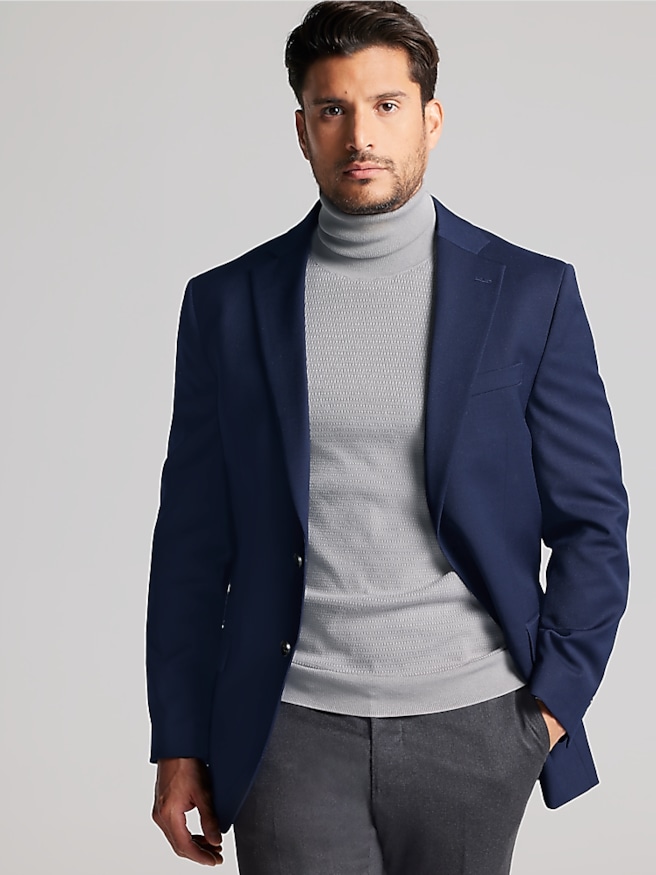
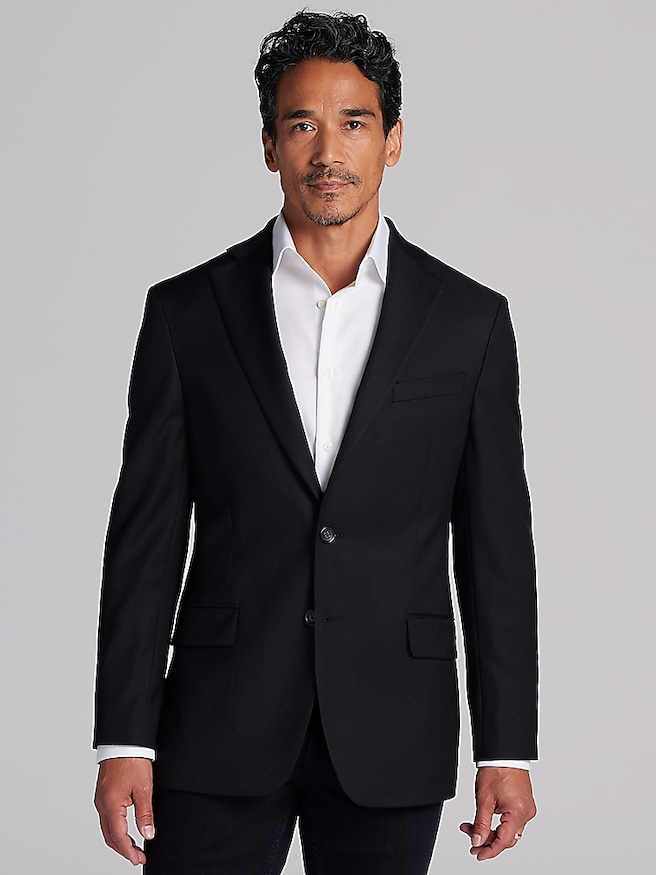
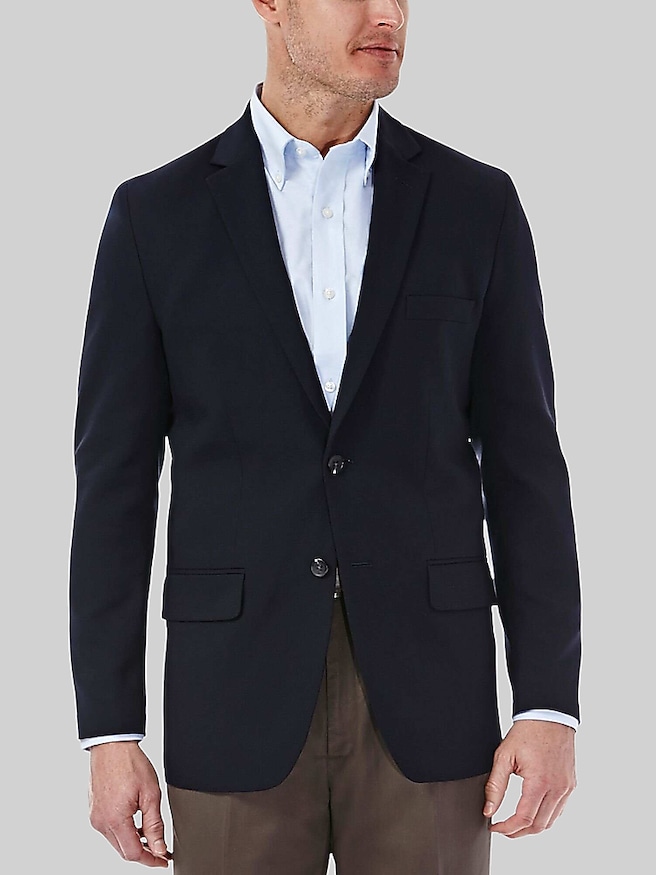
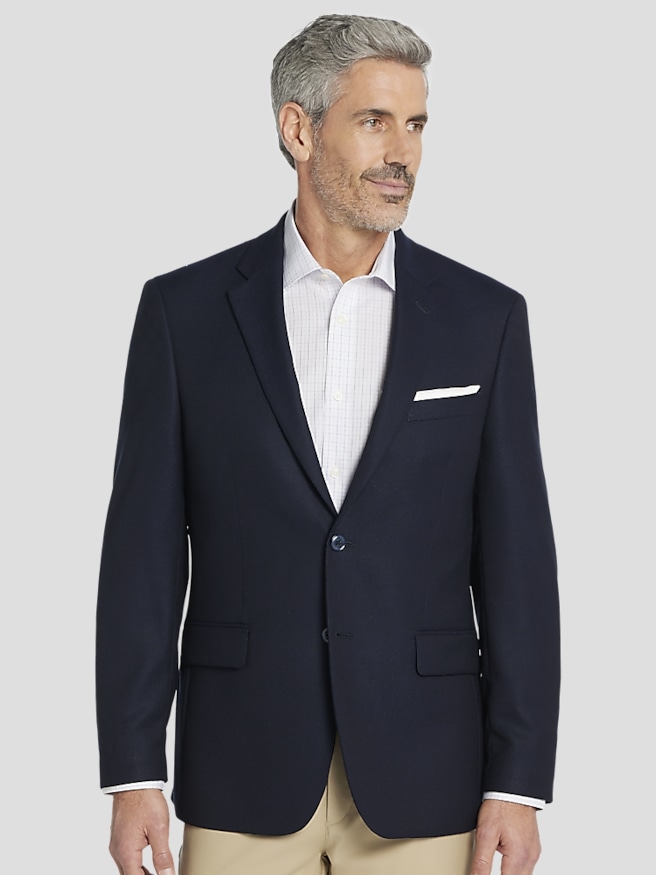
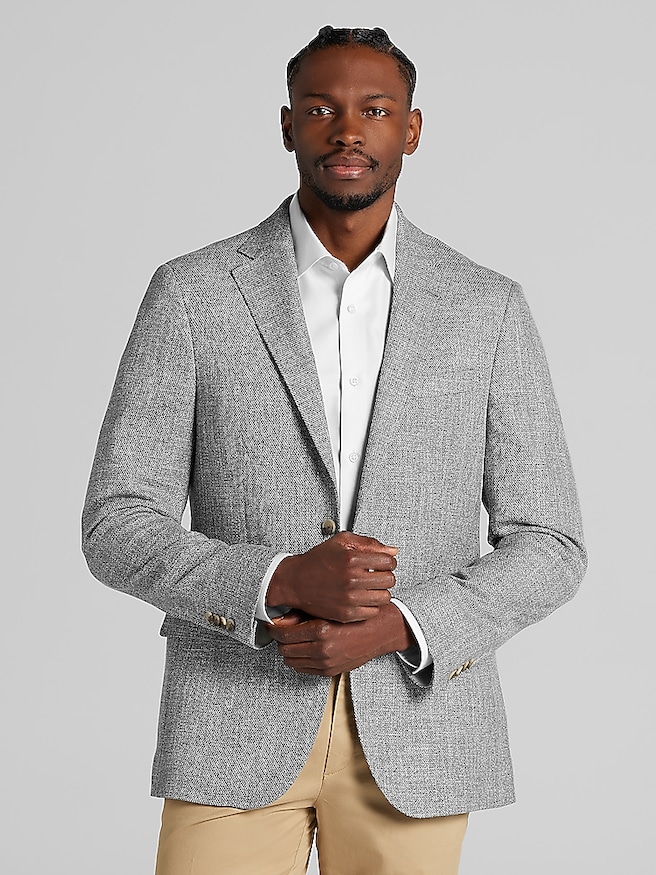
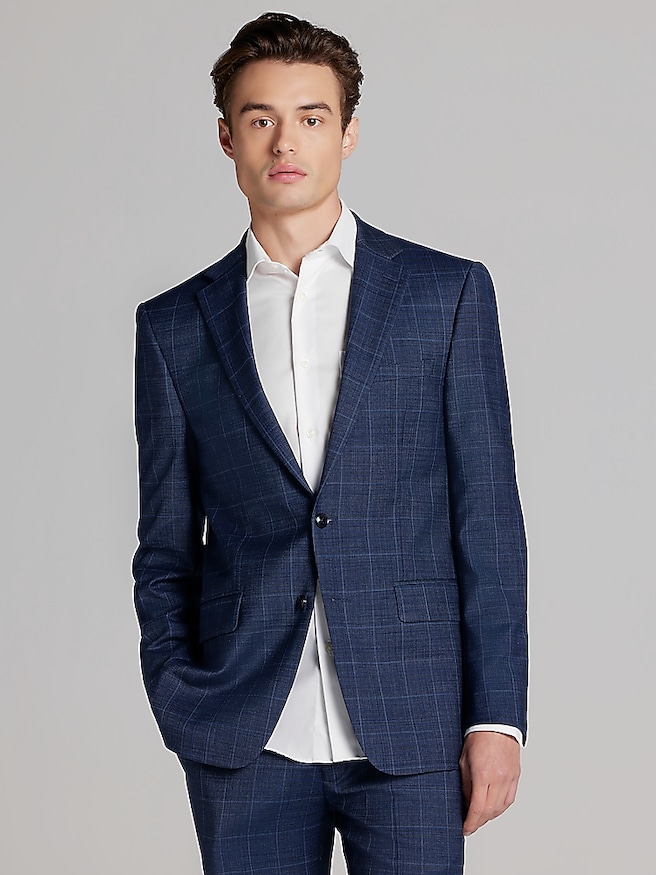
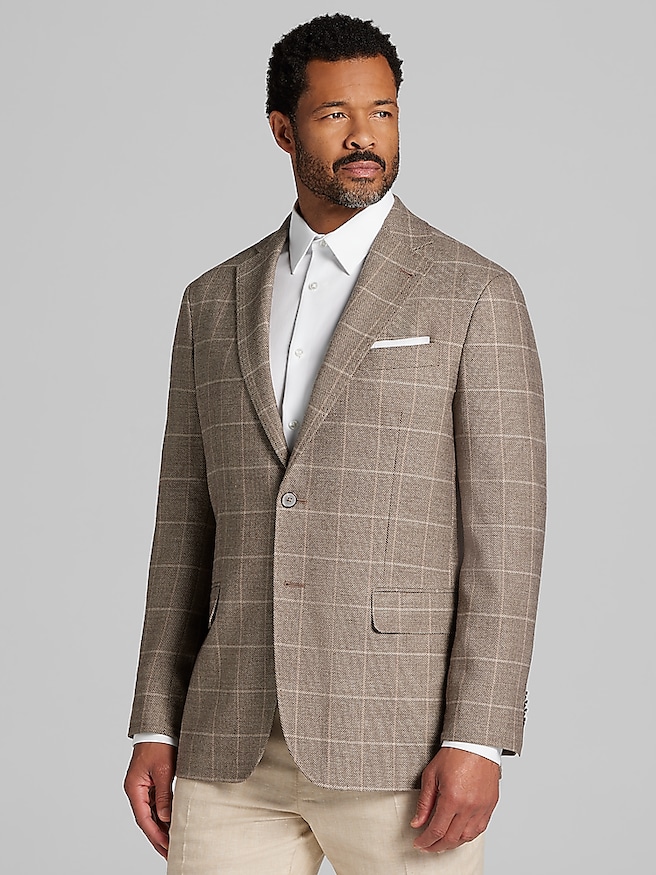
A well-chosen sport coat brings structure to an outfit without requiring the matched formality of a suit. Its appeal lies in that middle ground: polished enough for a client lunch, relaxed enough for a restaurant dinner, and versatile enough to work with several pairs of trousers already in a closet. Unlike a suit jacket, which is designed as part of a coordinated set, a sport coat is intended to stand on its own. Texture, proportion, and subtle color variation help it look deliberate beside contrasting pants rather than like one half of an incomplete suit. A fine weave can create a smooth, understated impression, while a more visible pattern adds depth to a simple shirt and trouser combination. Neither approach needs much embellishment. A pale blue shirt, charcoal trousers, and clean leather shoes give a textured jacket room to carry the outfit; an open-collar shirt and dark, un distressed denim can make the same general silhouette feel less formal. For an office presentation, a collar that sits neatly beneath the lapels and trousers with a clean drape create a composed appearance without excessive accessories. For an anniversary dinner or a graduation celebration, a pocket square or a shirt with a restrained pattern can add personality while keeping the overall look balanced. The shape of the jacket matters as much as its color: defined shoulders, a gently shaped waist, and a tidy front establish a clear outline even when the rest of the outfit is simple. Men who move between professional appointments and social plans often appreciate that flexibility, particularly when a full suit would feel overly formal but shirtsleeves would seem unfinished. The strongest combinations respect the occasion rather than forcing a sport coat into every dress code. It can be an excellent choice for many business-casual settings and dressy gatherings, but it does not replace formal attire when an invitation specifically calls for it.
Materials and construction influence how a sport coat looks, moves, and holds its shape through repeated wear. Wool is valued in tailoring for its drape and resilience, though the weight, weave, and finish of the cloth can produce noticeably varied results. Cotton often has a more relaxed character and may develop visible creasing, while blended fabrics can bring together qualities such as softness, shape retention, or added flexibility. A small amount of stretch may make reaching across a conference table or settling into a dining chair more comfortable, but it cannot compensate for a jacket that is too tight through the shoulders or chest. Fabric composition is only part of the picture. Lining, internal structure, seam placement, and the cut of the sleeve all affect the wearing experience. A more structured shoulder creates a defined outline; softer construction generally follows the body more closely and can feel less formal. Neither is automatically superior, and comfort depends on how the whole garment works with the wearer’s build. At the shoulder, the jacket should follow the natural frame without extending conspicuously past it or pulling inward. Across the front, the lapels should lie smoothly rather than bow away from the chest. When fastened as intended, the body should have enough room to avoid pronounced pulling around the button, while still maintaining a shaped silhouette. Sleeve length should complement the shirt beneath it, allowing a modest glimpse of cuff rather than covering the hand. Jacket length also needs to balance the torso and legs; an excessively short cut can look cramped, while too much length can overwhelm the frame. Trying a jacket with the kind of shirt normally worn underneath gives a more useful sense of fit than judging it over an unusually bulky layer. Walking, sitting, and reaching forward reveal restrictions that a still reflection may miss. Tailoring can refine certain proportions, especially sleeve length and shaping through the body, but a sound fit through the shoulders remains an important starting point.
A sport coat earns its place in a wardrobe when it works beyond a single carefully assembled outfit. Neutral trousers, solid shirts, and a small selection of complementary shoes can create several distinct looks without making the jacket seem repetitive. With patterned cloth, a solid shirt gives the eye a resting point; with a plain jacket, a subtle stripe or small check can introduce detail without competing with the tailoring. Contrast between jacket and pants is usually more convincing than a near match that suggests an unsuccessful attempt at a suit. Shoe choice changes the impression as well: polished lace-ups feel more formal, loafers can soften the look, and minimal sneakers belong in settings where a distinctly casual interpretation is welcome. For another take on understated outer-layer styling, the Calvin Klein Black Jacket page offers a related direction to explore. Whatever the styling approach, lasting wear depends on care as well as construction. The care label should govern cleaning, since outer fabric, lining, and internal components may have separate sensitivities. A broad, shaped hanger supports the shoulders between wears, and enough space in the closet helps prevent the lapels and sleeves from being crushed. Emptying pockets protects the outline of the jacket; a heavy phone or overfilled wallet can distort the front and create unnecessary strain. Light surface dust can often be removed with a suitable garment brush, while stains deserve prompt attention from a cleaner familiar with tailored clothing. Pressing also requires care, since excessive heat or pressure can leave shine or flatten texture. For travel, keeping the jacket supported in a garment bag helps limit compression and preserves a neater appearance on arrival. As a gift for a partner, father, son, or close friend, a sport coat is most personal when it reflects the recipient’s usual dress habits rather than an imagined wardrobe. Familiar sizing, preferred fit, and likely occasions make the choice more thoughtful, whether the jacket is intended for a first office role, regular dinners out, or meaningful family celebrations.