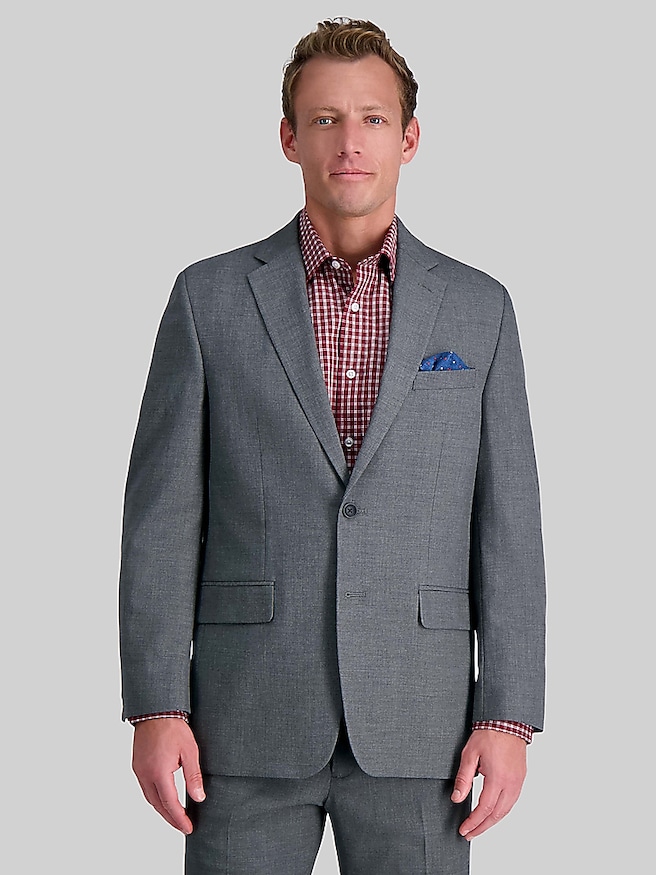
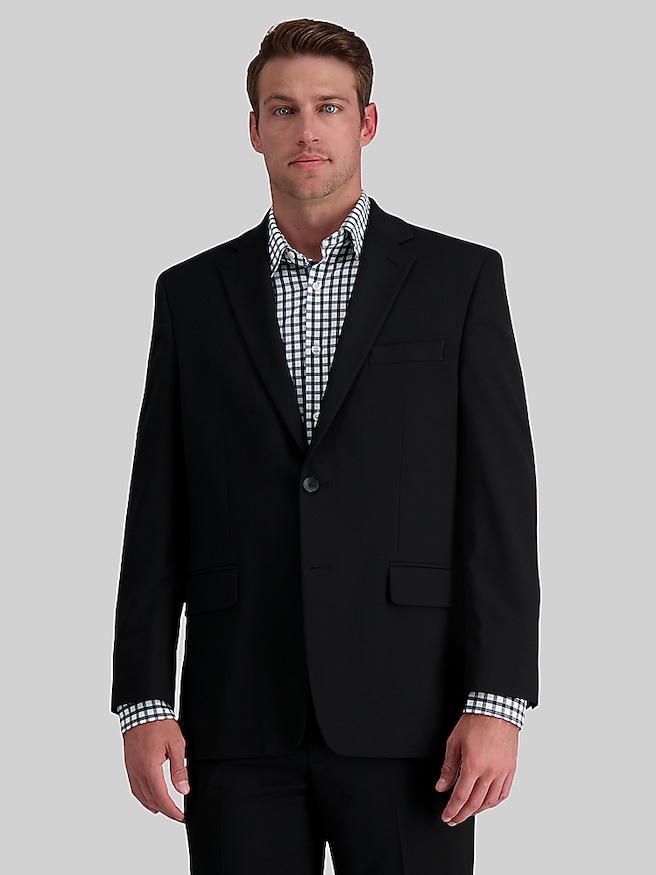
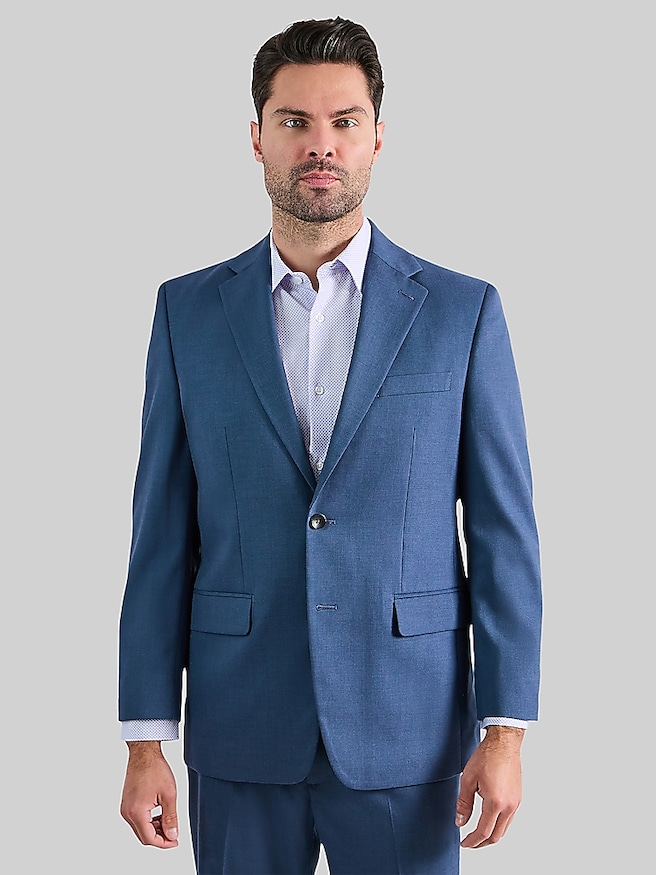
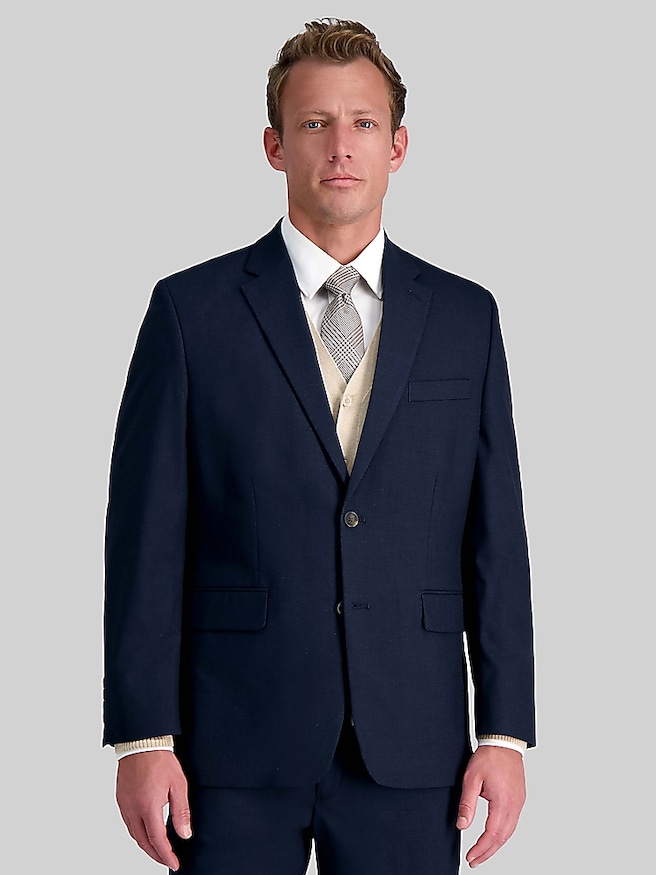
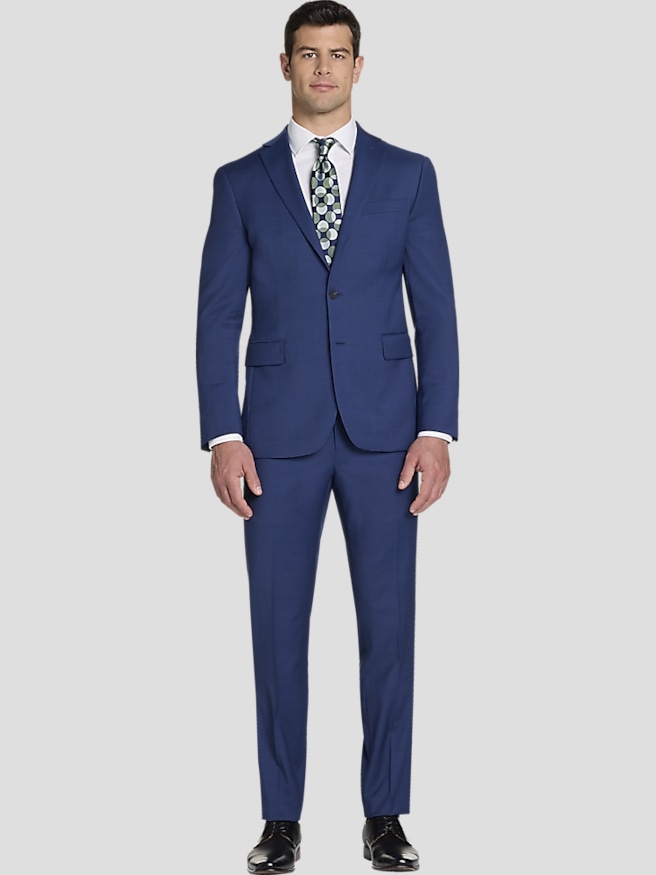
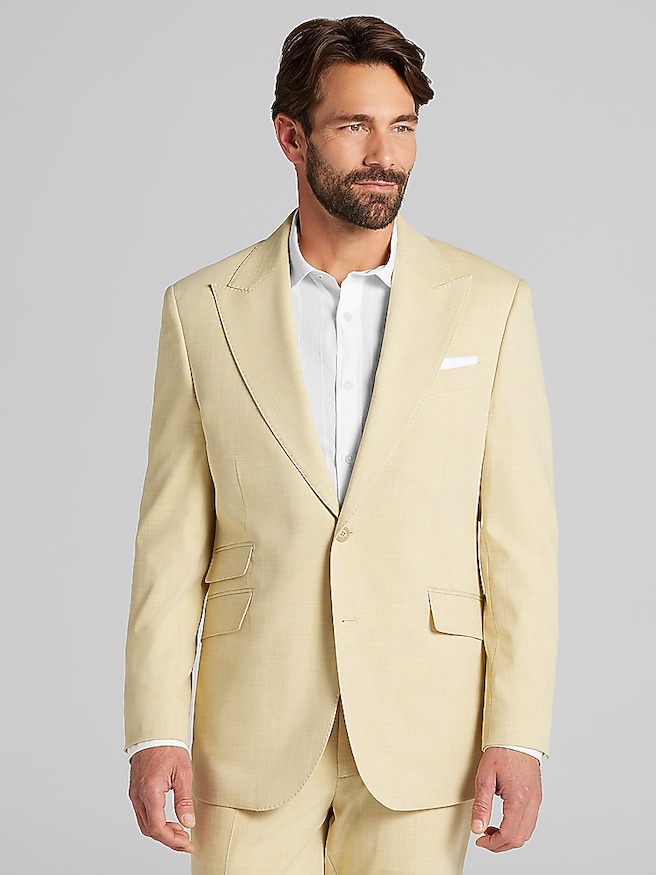
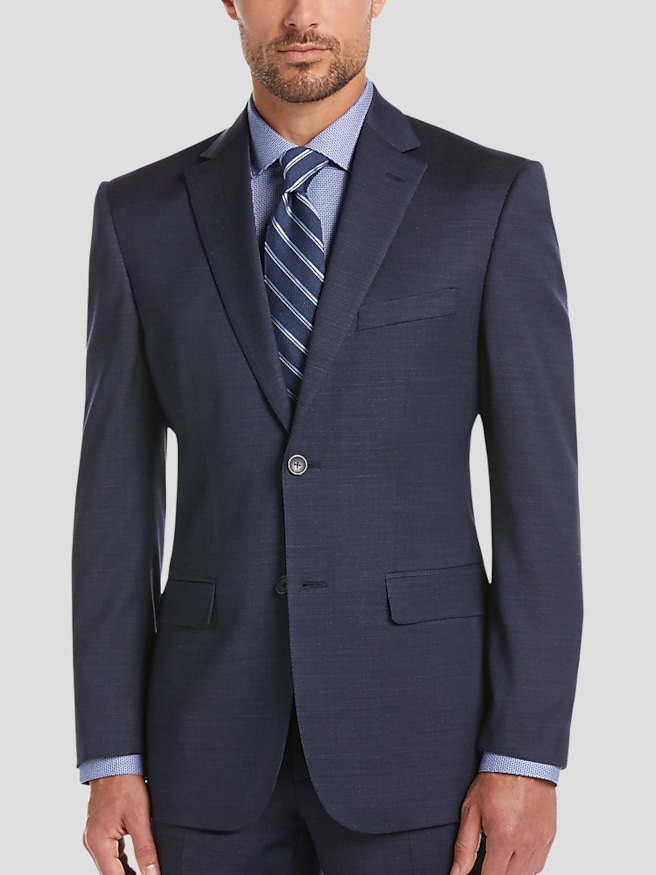
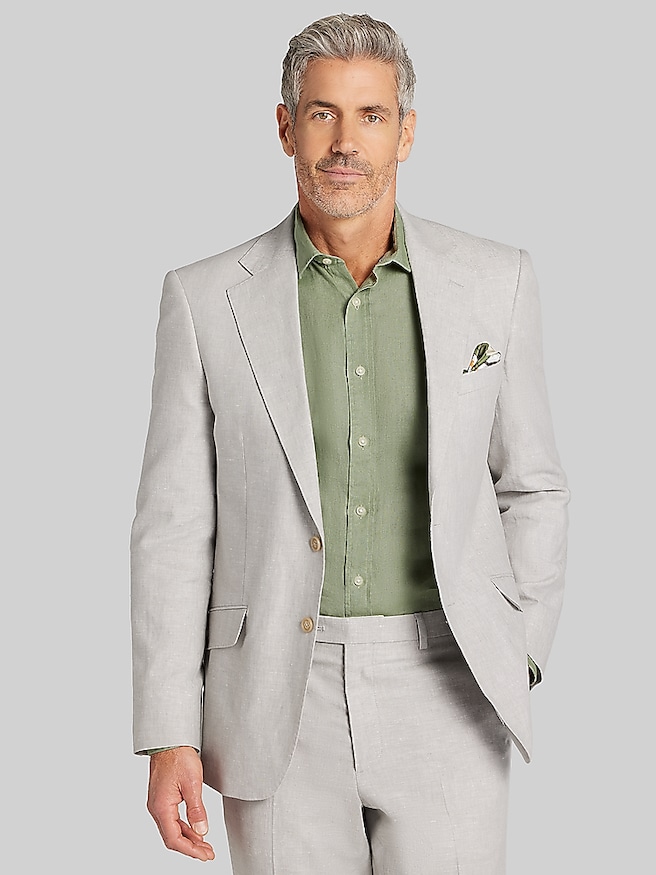
Business suits are matching sets designed to create a polished, professional appearance with very little guesswork. A typical suit pairs a structured jacket with coordinating trousers, while a vest can be added for a more formal three-piece look. The jacket usually features a notched or peaked lapel, a clean front, and enough structure through the shoulders to hold its shape without feeling restrictive. Trousers are generally available in straight, tailored, or slim cuts, with the best choice depending on comfort, proportions, and the way you prefer your clothing to drape. A crisp dress shirt and conservative tie complete the traditional business outfit, while a pocket square, leather belt, and dress shoes can add understated personality. Navy and charcoal gray remain dependable choices because they work across offices, interviews, presentations, conferences, dinners, and professional celebrations. Navy often feels approachable and versatile, pairing easily with white, blue, pink, or patterned shirts, while charcoal gray offers a refined, timeless impression that suits more formal corporate environments. Black can be appropriate for certain professional settings, although it often reads more formal and may be less flexible for everyday office wear. During the warmer part of the year, lighter-weight fabrics and breathable shirt materials can make a full suit more comfortable; as the weather turns cooler, wool blends and layered three-piece styling provide welcome warmth while preserving a composed appearance. Those building a reliable wardrobe can explore [Modern Business Attire] for additional ideas on coordinating professional looks.
Choosing a business suit begins with considering how and where it will be worn. Someone starting a new job may benefit from a versatile navy or charcoal suit that can be worn as a complete set for important meetings and then separated into different combinations for everyday use. A jacket worn with contrasting trousers can create a less formal office outfit, while the matching trousers can be paired with another coordinating jacket when a little variety is needed. For interviews, first days, presentations, and client-facing appointments, a clean silhouette and restrained color palette help keep attention on the wearer rather than the clothing. In workplaces with a traditional dress code, a matching suit, neatly pressed shirt, and understated tie provide a dependable standard. In more flexible offices, the same foundation can be softened with an open collar, a subtle pattern, or a fine-gauge sweater layered beneath the jacket. Fit matters as much as color. Slim fit suits typically have a narrower cut through the chest, waist, and leg; tailored fit offers shape with a bit more room; and classic fit provides a more generous, relaxed profile. The right choice should allow comfortable movement across the shoulders, a natural button closure without pulling, and trousers that sit securely at the waist. Jacket sleeves should reveal a small amount of shirt cuff, trouser hems should meet the shoe cleanly, and the shoulders should lie flat rather than extending past the natural shoulder line. Minor alterations can make an off-the-rack suit look noticeably more personal, so it is worth allowing time for hemming sleeves or trousers and refining the jacket at the waist when needed. A suit should feel ready for a long day that includes a commute, a meeting at a conference table, and an evening reception—not merely look impressive while standing still in a fitting room.
Business suits can also be a thoughtful gift for a graduate entering the workforce, a family member preparing for interviews, or someone stepping into a new leadership role. The most useful choice is usually one that complements the recipient’s existing wardrobe rather than a highly distinctive pattern that may be difficult to coordinate. Neutral colors, classic lapels, and adaptable fits tend to serve a wider range of occasions, especially when the recipient is still developing a professional wardrobe. When purchasing for someone else, knowing their jacket size, trouser waist and inseam, preferred fit, and typical shirt size can make the experience smoother; a trusted suit from their closet can provide helpful measurements, though proportions vary between cuts. For a first suit, comfort and versatility are often more valuable than novelty. Encourage the wearer to try sitting, reaching, walking, and fastening the jacket before deciding, since a suit must perform naturally throughout a full day. Proper care helps preserve that fresh, confident appearance. Follow the garment’s cleaning instructions, use a sturdy hanger that supports the shoulders, brush away surface lint, and give the jacket and trousers room to air after wear. Avoid leaving a suit crumpled in a car or crowded closet, and rotate between multiple suits when possible so the fabric can recover between uses. A garment bag is useful for travel, while careful steaming can release light wrinkles without the sharp risk of an overheated iron. With thoughtful fit, versatile color, and simple maintenance, a business suit becomes more than a single-use outfit: it is a dependable part of a professional wardrobe, ready for the interview handshake, the presentation under bright conference-room lights, and the cooler-season events where a well-fitted jacket brings both confidence and comfort.