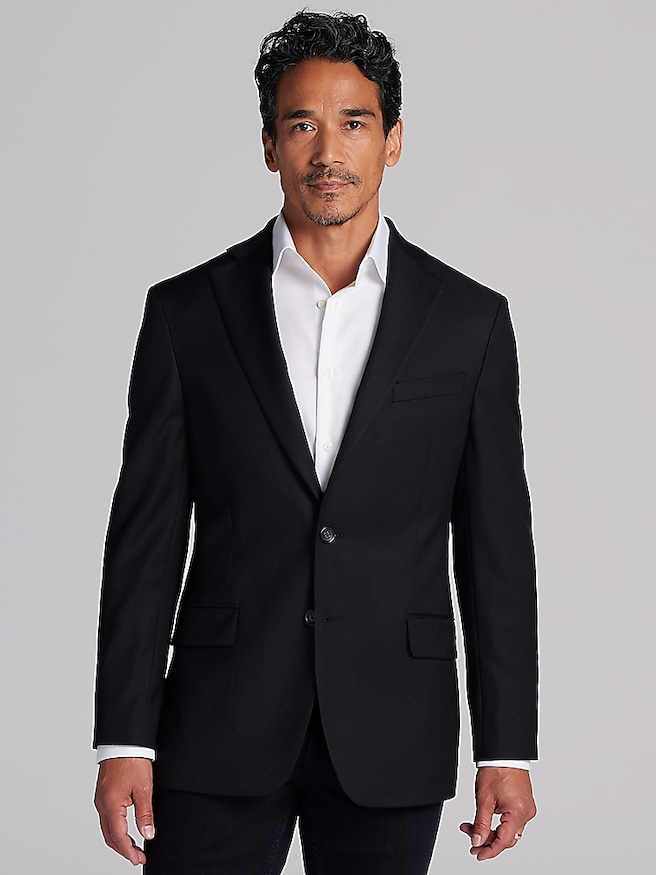
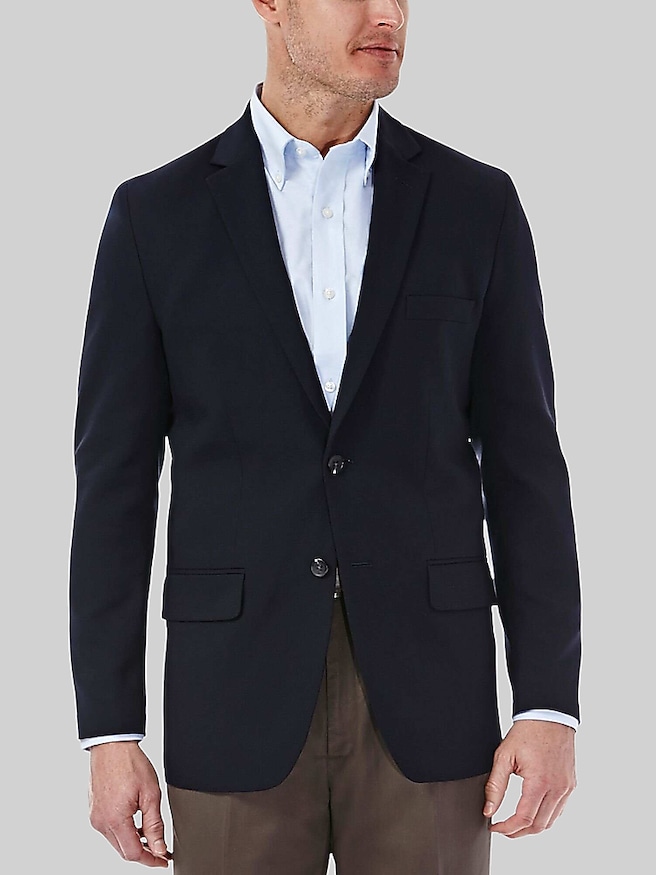
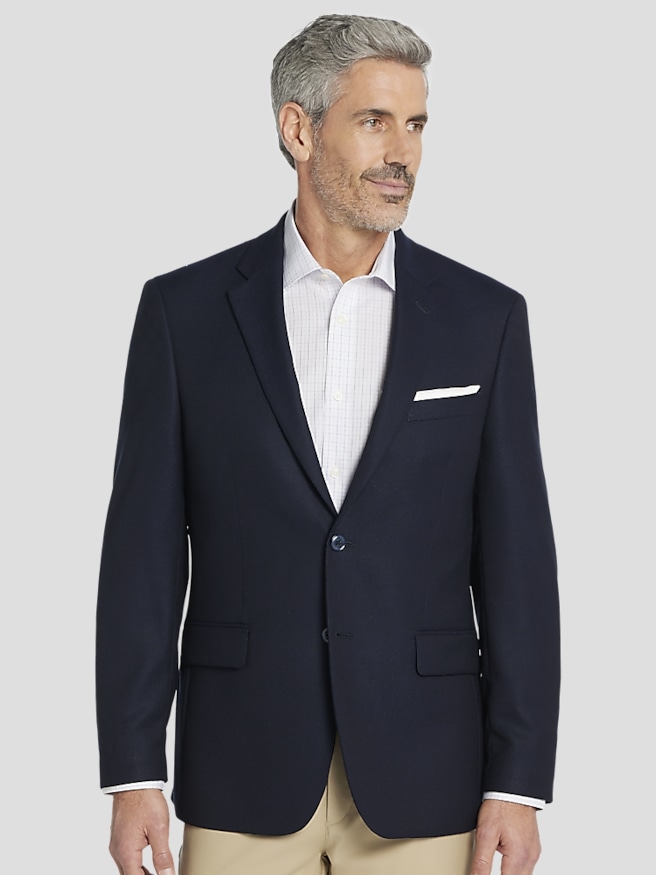
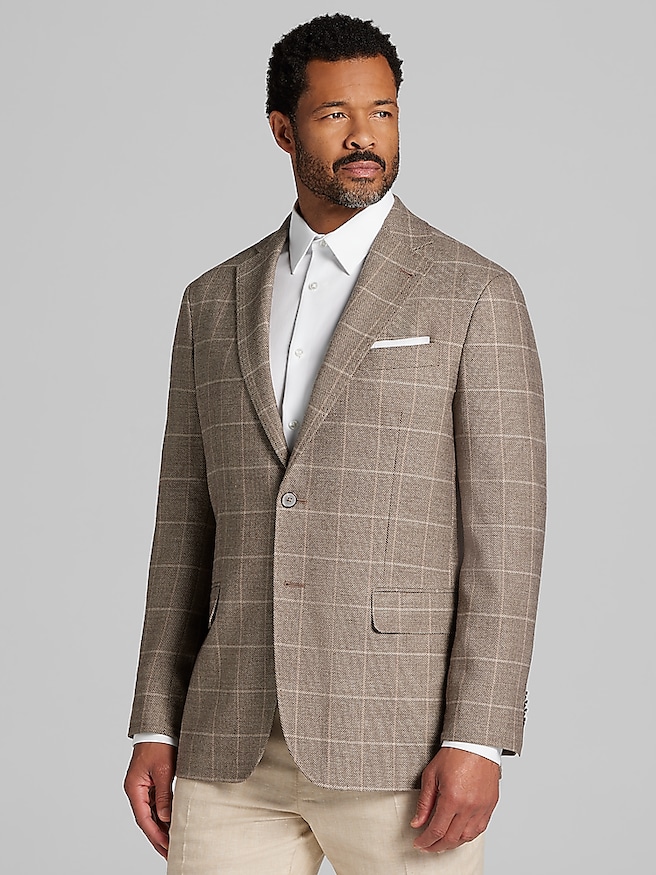
Business casual sport coats add the shape and polish of a tailored jacket to outfits that do not require a full suit. Worn with chinos, dress trousers, or denim where workplace expectations allow it, a sport coat creates a finished look without making every part of the outfit feel formal. Textured fabrics such as hopsack, wool blends, and cotton knits are especially useful for this balance because their visible weave or softer surface works naturally with separate pants. Navy, gray, and brown provide versatile starting points: navy pairs easily with gray trousers and khaki chinos, gray complements blue shirts and dark pants, and brown brings depth to cream, olive, and blue combinations. Subtle checks and understated herringbone patterns add interest while remaining easy to coordinate with solid shirts. Fabric composition and construction affect how a jacket feels throughout the day. Wool has natural resilience and can recover well from light creasing, while cotton offers a familiar feel and a more relaxed appearance, though it may show wrinkles more readily. Blended fabrics can combine the qualities of several fibers, and stretch components may provide additional give when reaching across a desk or sitting through a meeting. Hopsack describes an open, basketlike weave rather than a particular fiber; its texture helps distinguish a sport coat from the smoother finish often associated with a suit jacket. Knit construction can offer flexibility and a softer silhouette, while woven fabrics may hold a more defined shape. Lining also matters: a fully lined coat generally slides smoothly over a shirt, while partial lining can reduce bulk and leave more of the fabric’s natural drape apparent. The most useful business casual sport coat is not necessarily the most formal one. It is a jacket whose fabric, color, and structure fit the places it will be worn, from a routine office day to a client lunch or a professional gathering where a tie would feel unnecessary. Those details make the category adaptable to varied workplace dress codes rather than dependent on a single prescribed outfit.
Fit determines whether a business casual sport coat feels as comfortable as it looks. A well-proportioned jacket follows the shoulders without extending noticeably beyond them, rests smoothly across the upper back, and closes without pulling the front into a pronounced X shape. The lapels should lie against the chest rather than lift away, and the collar should sit close to the shirt collar without a conspicuous gap. Through the body, a closer cut creates a lean silhouette, while a roomier cut allows additional space through the chest and waist; neither should restrict ordinary movement. Fit labels such as slim, modern, and classic describe general shapes, but the actual shoulder width, chest room, jacket length, and sleeve proportions matter more than the label alone. Trying a coat over the type of shirt usually worn to work gives a more useful sense of its proportions than trying it over an unusually bulky layer. Sitting down, bending the arms, and reaching forward can reveal tension that is less obvious while standing still. Sleeve length should keep the hands clear and can allow a small amount of shirt cuff to show, while the jacket body should balance the torso rather than appear cropped or overly long. Alterations may refine sleeves or the waist, but a sound fit through the shoulders is an important starting point. Outfit combinations work best when the separate pieces look intentional. A navy sport coat with medium-gray trousers and a pale blue button-down creates a straightforward office combination; a brown textured jacket with cream chinos and an oxford shirt feels more relaxed while retaining a tailored outline. A fine-gauge polo can sit neatly beneath softer construction, and a clean crewneck shirt may suit workplaces with a less formal dress code. Dark, un distressed denim can also work where permitted. Loafers, derbies, or understated leather sneakers complete the outfit at varying levels of formality, with the workplace setting guiding the choice.
Business casual sport coats suit people whose schedules move between desk work, presentations, appointments, and social plans without a full change of clothes. A jacket can bring consistency to an outfit for someone leading a team meeting, attending a networking event, or meeting a new client, while remaining easy to remove when the setting becomes more relaxed. Educators and students may also appreciate the same balance for classroom presentations, campus interviews, and academic events; Men's Back To School Sport Coats connects that tailored approach with school-related occasions. As a gift for a father, brother, partner, or another recipient, a sport coat is most useful when its proportions and style reflect the person’s existing wardrobe. Knowing the recipient’s jacket size, preferred fit, and usual shirt and trouser colors helps make the choice practical rather than merely decorative. Long-term wear depends on construction and care as much as initial appearance. Secure buttons, neatly finished seams, smooth lining, and fabric that retains its shape contribute to a jacket’s ability to handle repeated use. Reinforced pocket openings are useful details, although carrying a heavy phone or a crowded wallet in the pockets can still stretch the fabric and interrupt the coat’s lines. A broad, shaped hanger supports the shoulders between wears, and giving the jacket space in a closet helps prevent crushing. Light brushing can remove surface dust from suitable woven fabrics, while knit or delicate materials may need gentler handling. The care label should determine whether professional cleaning, washing, or another method is appropriate; a tailored jacket’s outer fabric, lining, and internal structure may require care that differs from an ordinary shirt. Prompt attention to stains and cleaning when needed can help preserve its appearance without unnecessary processing. Steaming may ease light wrinkles when the fabric and care instructions permit it, but excessive heat or pressure can flatten texture or leave shine. With thoughtful care and coordinated separates, a business casual sport coat can become a dependable part of a working wardrobe, offering recognizable polish without the formality of matching suit pieces.