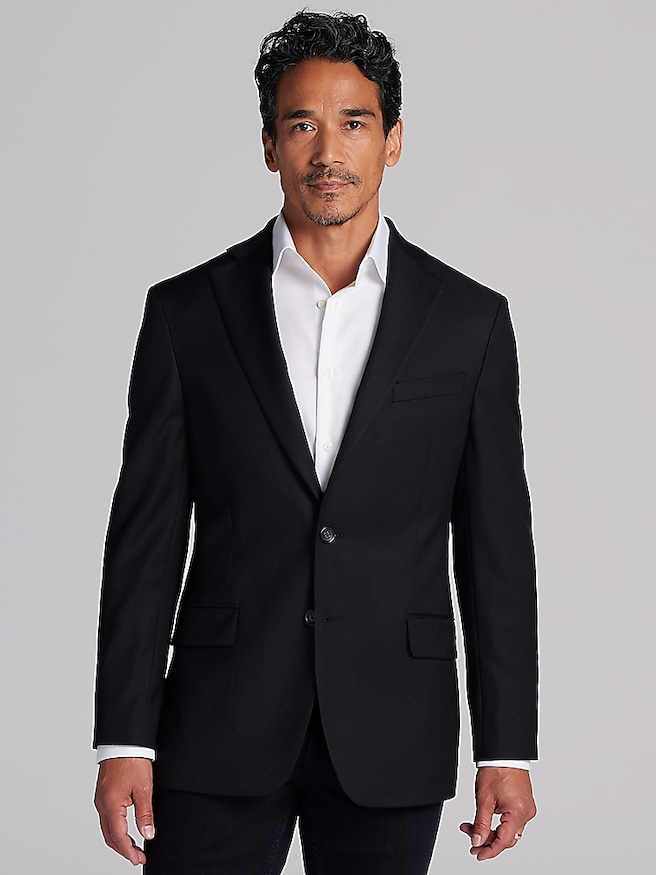
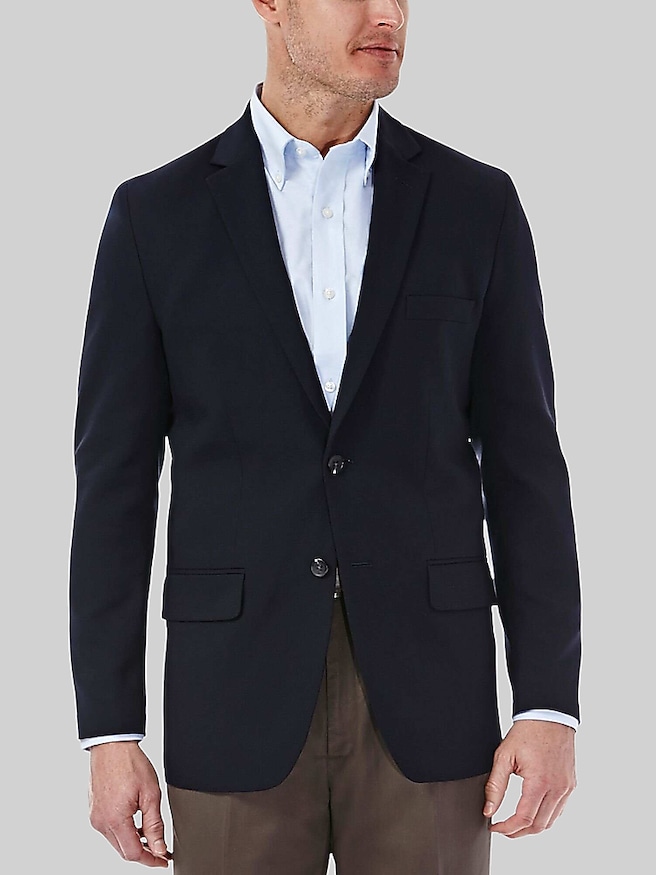
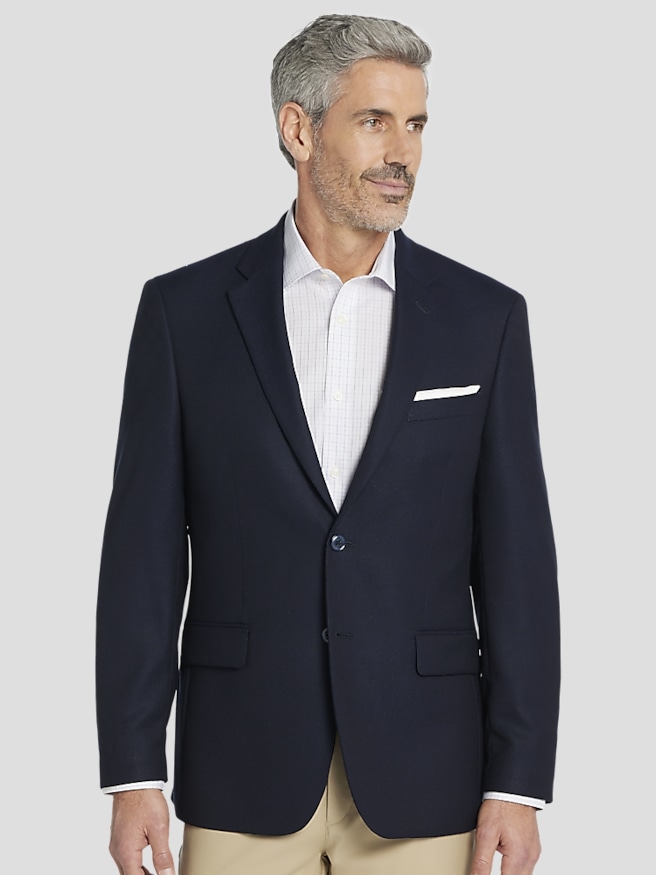
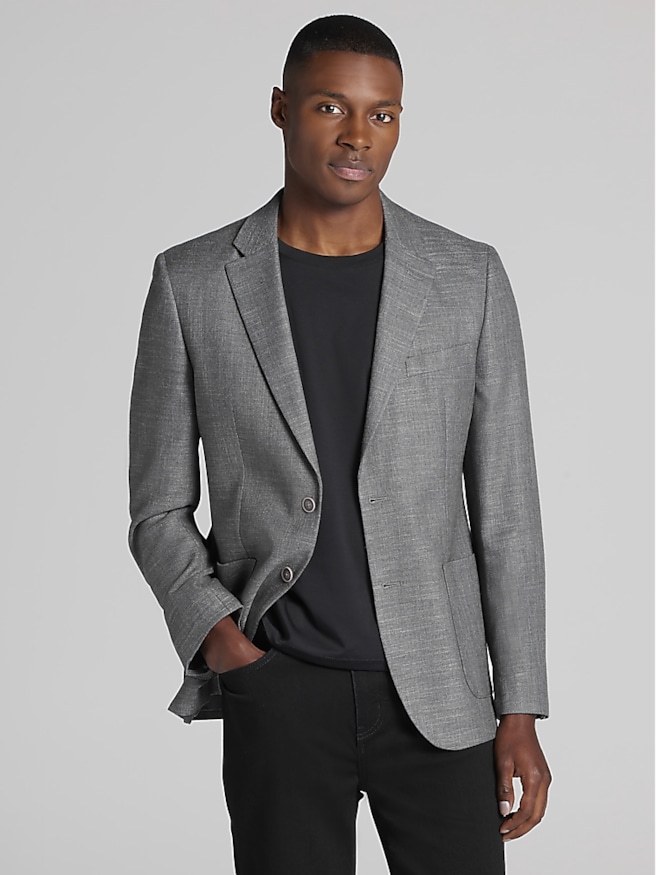
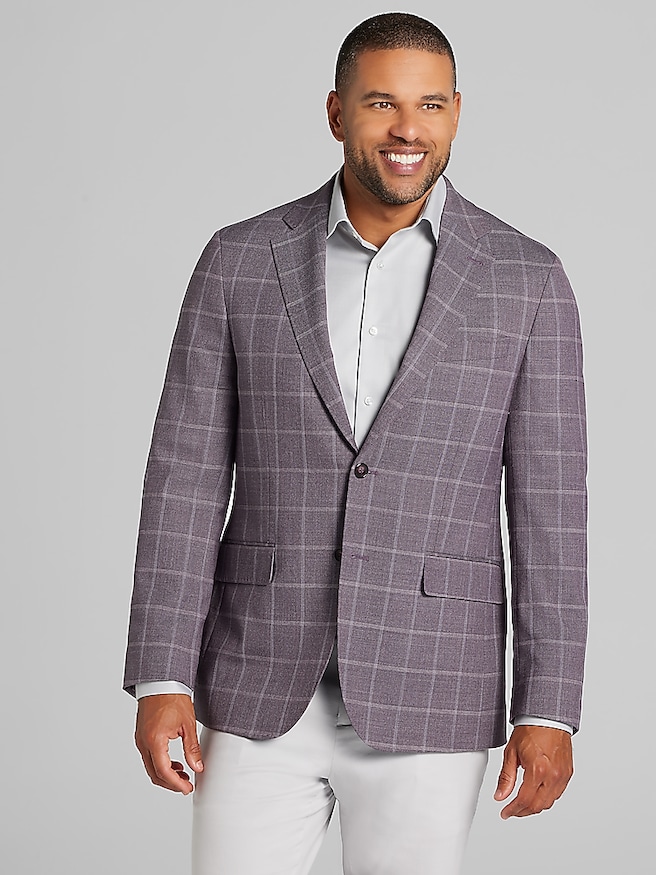
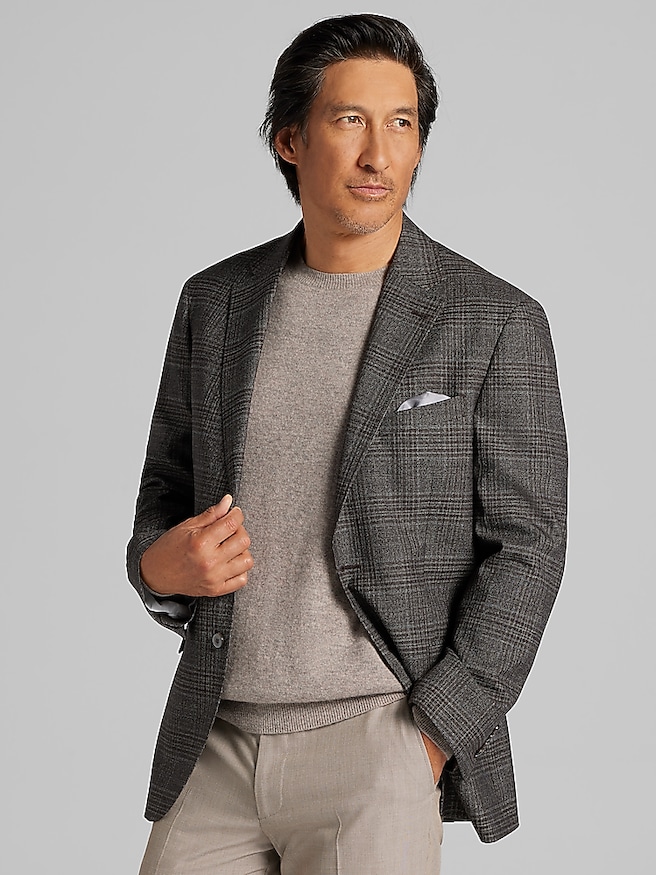
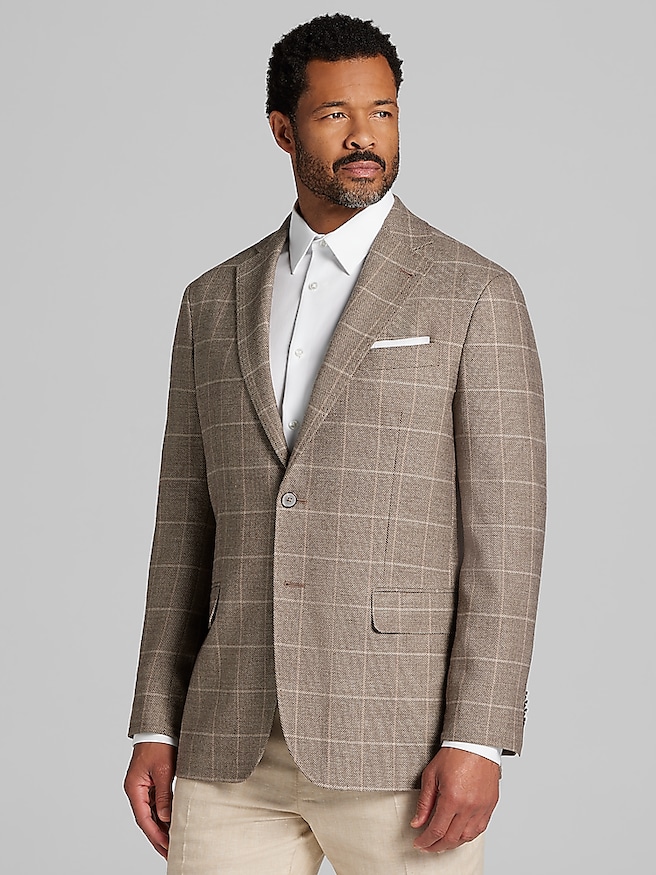
Big men's business casual sport coats bring the structure of a tailored jacket to outfits that do not call for a full suit. Designed with fuller proportions through areas such as the chest, waist, and upper arms, they offer a polished layer over dress shirts, polos, and fine-gauge knits. The best match balances room to move with a clean outline, rather than relying on extra fabric everywhere. For an office with a relaxed dress code, a client lunch, or a presentation where a tie would feel unnecessary, a sport coat makes chinos or dress trousers look more intentional. Fabric plays a major role in that balance. Wool and wool-blend cloths have a natural drape that helps a jacket hang smoothly, while textured weaves add depth without requiring a bold pattern. Cotton and cotton blends tend to have a more relaxed character, particularly with patch pockets or softer shoulder construction. Knit sport coats offer a flexible feel that works well for a workday divided between a desk, a commute, and conversations away from the office. Stretch blends may provide additional give when reaching across a conference table or settling into a chair, though the amount and direction of stretch depend on the fabric. A little flexibility complements a suitable fit; it does not replace enough room through the body. Lining also affects how a coat wears. A full lining helps the jacket slide over a shirt, while partial lining leaves more of the interior fabric exposed and can create a less structured feel. Smooth linings, neatly finished seams, and fabric that settles back into place after movement all contribute to everyday comfort. For regular business casual use, the most useful sport coat is one that looks composed without feeling rigid, with enough texture and shape to distinguish it from an ordinary casual layer. Its purpose is not to imitate a matching suit jacket, but to look at home with separate trousers and the practical demands of a working day.
Big sizing and tall sizing address distinct proportions, so a broader build does not automatically require a longer jacket. Big men's business casual sport coats should accommodate the torso while keeping the shoulder line, sleeve length, and overall jacket length in balance. A shoulder seam that sits near the natural edge of the shoulder usually creates a cleaner appearance than one that extends noticeably onto the upper arm. Across the chest and midsection, the front should lie smoothly when fastened, without pronounced pulling around the button or lapels that bow away from the body. Enough space through the upper back matters just as much, especially for someone who spends time driving, typing, or reaching for materials during meetings. Extra-long sleeves or an oversized shoulder are not reliable substitutes for that room. Sleeve length should leave the hands clear and work with the shirt underneath; a small glimpse of shirt cuff often gives the outfit a finished appearance. Jacket length needs similar attention. A balanced hem covers the seat appropriately without making the upper body look disproportionately long. Men with a longer torso may need added length, while those with a fuller chest and a shorter frame may benefit from broader proportions without the extra drop. Classic fits generally provide a roomier silhouette, but fit names vary, making garment measurements and the actual shape more useful than a label alone. Single-breasted fronts and notch lapels have an easy place in business casual wardrobes, while side or center vents allow the hem to open with movement. The vents should settle closed when standing rather than spread apart because the jacket is too tight. Inside, secure pocket openings, tidy stitching, and a smooth lining support repeated wear. Tailoring can refine sleeve length or adjust some areas of the body, but the shoulders and basic proportions need to be close from the outset. The result should feel comfortable through an ordinary workday, not just during a quick look in the mirror.
Color, pattern, and texture determine how easily a sport coat connects with the rest of a business casual wardrobe. Navy, charcoal, medium gray, and brown provide versatile starting points because they coordinate with a broad range of shirts and trousers. A navy textured jacket over a pale blue shirt and gray trousers looks appropriate for many office settings without resembling a complete suit. A brown coat with an ivory knit and navy chinos has a softer character while retaining a clear sense of structure. Plaid introduces another option, especially when the pattern uses muted colors or a subtle contrast. Big And Tall Plaid Sport Coats bring visual interest to simple combinations, with solid shirts and understated trousers allowing the pattern to remain the focal point. Pattern scale is a matter of preference rather than a fixed rule about body size; the contrast between the lines often has as much impact as the size of the check. A textured solid offers a quieter alternative for someone who prefers depth without a visible motif. Leather loafers, derbies, or clean, understated sneakers can complete the outfit where the workplace dress code permits, while darker denim belongs in settings that explicitly welcome it. Long-term usefulness also depends on care. A broad, shaped hanger supports the shoulders between wears, and emptying the pockets helps prevent the front from becoming stretched or distorted. A gentle clothing brush can lift surface dust from suitable woven fabrics, while spills deserve prompt attention according to the care label. Machine washing is appropriate only when the garment instructions specifically allow it; wool, structured interiors, and certain blends may require professional cleaning. Following those instructions helps preserve the fabric, lining, and shape together. With sound construction, a comfortable fit, and colors that work with existing clothing, a big men's business casual sport coat can become a dependable part of the workweek, equally useful for a routine office day and an occasion that calls for a sharper finish.