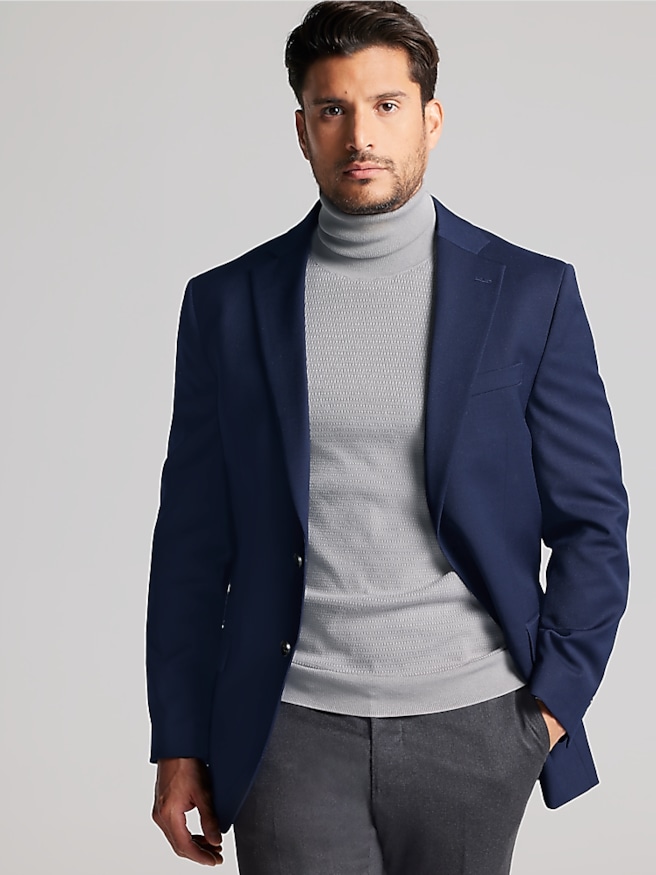
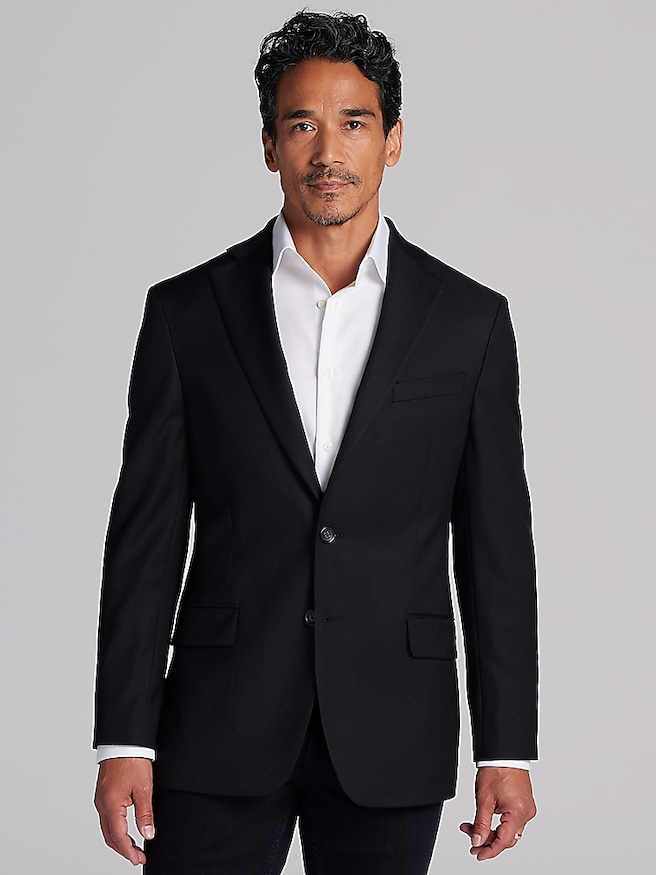
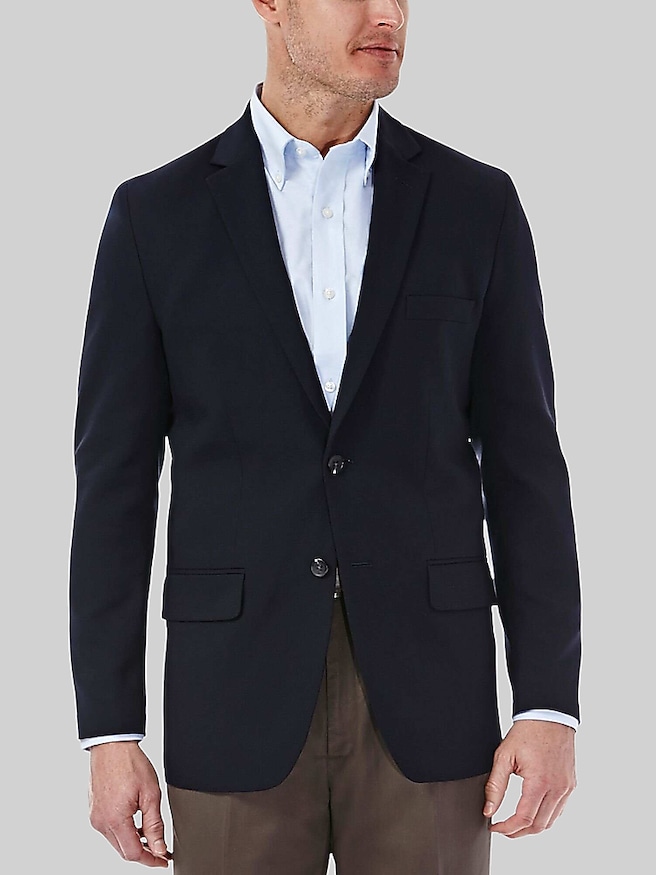
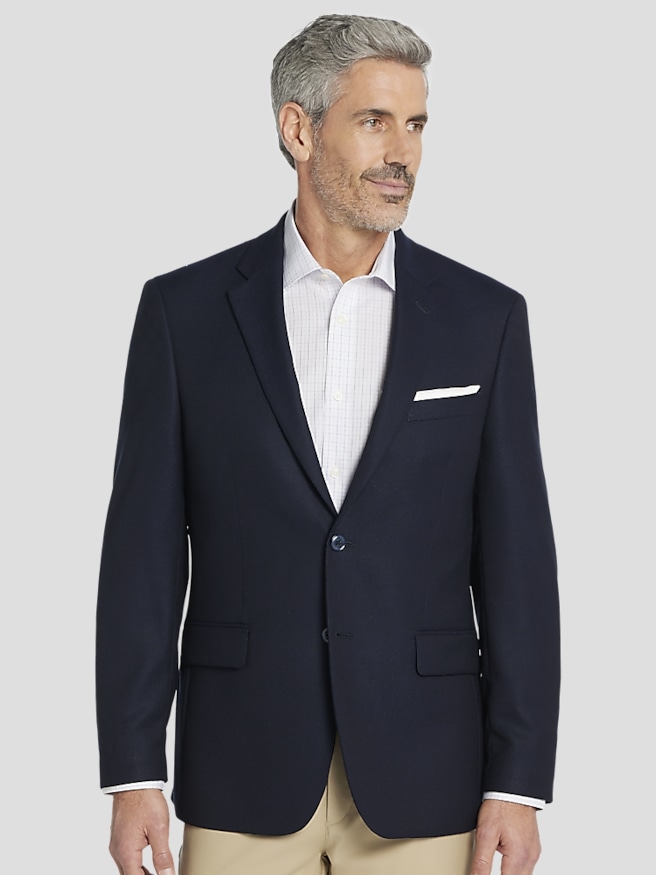
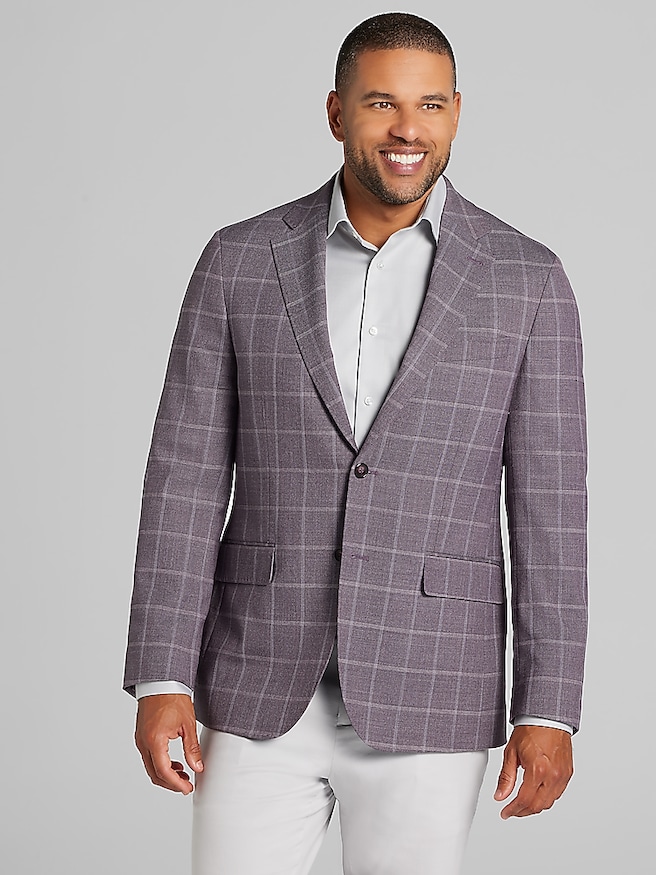
Big and tall plaid sport coats bring pattern and structure to a wardrobe built around comfortable, well-proportioned tailoring. Unlike a suit jacket designed to match a pair of trousers, a sport coat is intended to work with separates, making plaid a natural companion for solid dress pants, chinos, and dark denim. Big and tall sizing addresses more than overall size: big proportions generally provide additional room through the chest and torso, while tall proportions add body and sleeve length. Some men need both; others benefit primarily from one. A balanced fit starts at the shoulders, where the jacket should sit cleanly without extending noticeably beyond the natural shoulder line or pulling across the upper back. The chest should feel comfortable with the front button fastened, and the lapels should lie flat rather than bow away from the shirt. Enough room through the midsection allows the jacket to drape smoothly instead of creating an X-shaped pull around the button. Body length matters just as much as chest room, particularly on a longer frame: a jacket that is too short can look cropped even when it closes comfortably. Within the broader category of Sport Coats for Tall Men, plaid introduces another element of proportion through the spacing, contrast, and direction of its lines. Fine glen plaid creates a textured impression from a distance, while larger windowpane patterns make the geometry more noticeable. Neither pattern scale belongs exclusively to one body type. The overall effect depends on the contrast between the lines and background, the jacket’s shape, and the clothing worn with it. A navy or charcoal ground with a quiet overcheck can feel restrained enough for an office, while a bolder grid gives an otherwise simple shirt-and-trouser combination a stronger focal point. Clean drape helps either approach look intentional, allowing the pattern to remain visually balanced across the chest and through the front of the jacket.
Fabric and construction influence how a big and tall plaid sport coat feels throughout a full day. Wool can provide natural resilience and a refined drape, with smoother weaves offering a crisp appearance and more textured weaves giving the plaid additional depth. Wool blends may combine those qualities with other fibers for a particular feel or performance characteristic. Cotton can create a less formal look, while linen contributes visible texture and a relaxed character that includes natural creasing. Synthetic fibers may improve wrinkle resistance or help a blend retain its shape, depending on the fabric and construction. Stretch can make reaching, sitting, and driving more comfortable, but it does not replace adequate room through the shoulders, upper arms, and torso. The lining also affects the experience of wearing the jacket: a smooth lining helps it slide over a shirt, while partial lining can reduce the amount of material inside. Vents give the back hem room to open during movement, helping the jacket settle when standing again. These details are especially noticeable during a commute, a seated presentation, or a long dinner, when a sport coat needs to do more than look good on a hanger. Styling works best when the plaid has enough visual space around it. A solid white or light blue shirt creates a clear foundation, and trousers in navy, gray, brown, or another coordinating neutral can connect with a color already present in the pattern. An exact color match is not necessary; a related shade often creates a more relaxed, deliberate combination. A fine-gauge knit offers another option when a collared shirt feels too formal, provided there is sufficient room beneath the jacket. With dark denim, a clean finish and minimal distressing help preserve the tailored effect. Shoes complete the balance: loafers, derbies, or understated leather boots can support the jacket’s character without competing with its pattern. Keeping a tie or pocket square relatively quiet lets the plaid remain the main visual detail.
The appeal of big and tall plaid sport coats lies in their ability to make familiar clothing feel more considered without requiring a matching suit. A subtle plaid can suit a business-casual office, a client lunch, or a speaking engagement, while a more expressive pattern can bring personality to an anniversary dinner, theater outing, or wedding reception where the dress code allows separates. A sport coat is not a substitute for a suit or tuxedo when either is specifically requested, but it offers useful flexibility between casual clothing and more formal tailoring. For men who regularly move between meetings and social plans, a well-fitting plaid jacket can work with several combinations already in the closet. It can also make a thoughtful gift for someone who enjoys tailored clothing, especially when chest measurements, preferred jacket length, and usual fit are known. Those details matter more than assuming that height alone determines size. Sleeve and trouser pairings aside, the jacket’s own construction deserves attention over time. Durability depends on the weave, fiber blend, seams, and how frequently the garment is worn, not simply on whether the fabric feels heavy. Repeated friction at elbows, pocket edges, and areas touched by a shoulder bag can affect its appearance. A broad, shaped hanger supports the shoulders, and leaving space around the jacket helps avoid crushed lapels and sleeves. Empty pockets before storage so that keys and other objects do not distort their shape. Care should follow the garment label, since fabrics, linings, and internal construction can require distinct treatment. Gentle brushing may remove surface dust from suitable fabrics, while professional cleaning can address soil that ordinary airing does not remove. Pressing also calls for care because excessive heat or pressure can leave shine or flatten texture. With sound fit, suitable care, and straightforward styling, plaid offers lasting visual interest in a sport coat that earns its place through repeated wear.