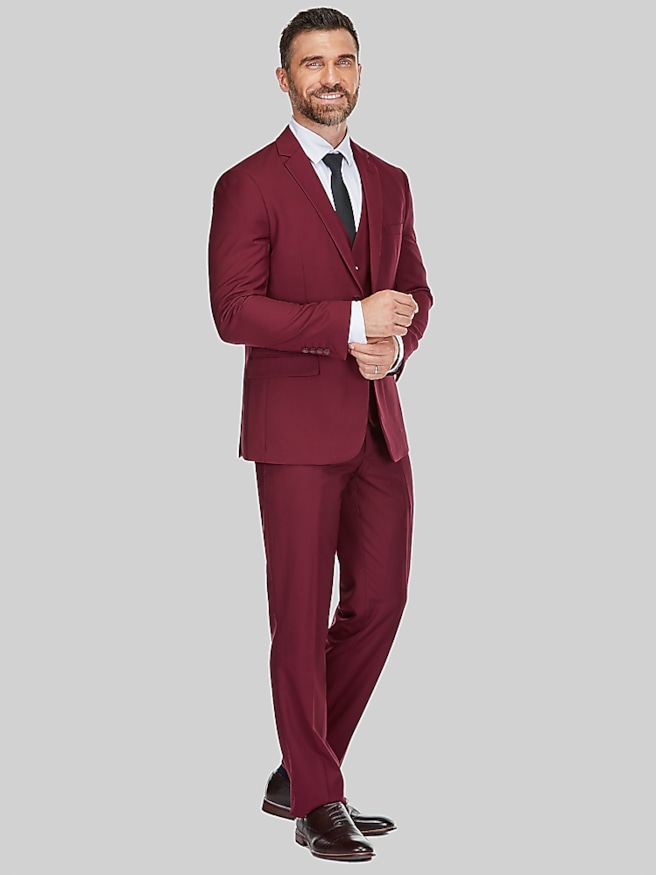
Burgundy suits for men bring rich color to weddings, proms, formal parties, and evening events without relying on a bright shade to make an impression. The color sits in the red family, often with wine, purple, or brown undertones that give it depth. Burgundy and maroon are sometimes used interchangeably, although maroon often leans browner and burgundy can have a more purple cast; the actual fabric matters more than the color name alone. A smooth, dark burgundy suit can feel restrained across a reception room, then reveal its color more clearly in photographs or under brighter lighting. That balance makes it appealing to a groom, wedding guest, graduate, or anyone who wants an alternative to familiar navy and charcoal. The occasion still sets the boundaries. Burgundy can work well for a cocktail reception or a wedding that welcomes expressive tailoring, while a conservative business setting may call for a quieter color. An invitation specifying black tie generally calls for a tuxedo, not simply a dark suit with a bow tie. For wedding parties, burgundy pairs particularly well with navy because both colors have enough depth to look intentional together without requiring every person to dress identically. Wedding parties considering Burgundy And Navy Wedding Suits can create cohesion through matching shirt colors, related tie patterns, and a consistent level of formality. A burgundy suit on the groom with navy suits elsewhere in the party creates a clear focal point; reversing that arrangement gives the supporting group a richer color story. White shirts help keep either combination crisp. Checking fabric swatches together in daylight and indoor lighting is useful, especially when coordinating ties, accessories, and ceremony details. Similar shades do not always share the same undertones, and a coordinated palette usually looks more thoughtful than an attempt to match every surface exactly.
Fabric and construction influence how a burgundy suit looks, feels, and holds its shape through an event. Wool is a traditional suiting material because it can drape cleanly, breathe comfortably, and recover from light creasing with proper rest. A fine, smooth weave gives burgundy a polished appearance, while a more textured weave breaks up the color and can make it feel less formal. Wool blends may combine those qualities with added resilience or stretch, depending on their fiber content and construction. Stretch can help with movement, but it does not replace the right size or enough room through the shoulders, seat, and thighs. Linen-rich fabrics tend to show natural creasing, while cotton often has a more matte, structured character; neither should be expected to behave exactly like a smooth wool suit. Fabric weight, lining, and the way the jacket is built also affect how it settles on the body. For a long ceremony followed by dinner and dancing, comfort while sitting and moving deserves as much attention as the view in a mirror. Shoulder seams should sit close to the natural shoulder edge without hanging over it, and the lapels should lie flat rather than bowing away from the chest. When the jacket is buttoned, pronounced pulling around the closure usually signals that the fit needs attention. Slim fits follow the body closely, while classic fits generally leave more room; fit labels vary, so measurements and movement are better references than the name alone. The trousers should stay comfortable when seated, with a clean line through the leg and a hem that works with the intended shoes. A slight break offers a traditional finish, while little or no break creates a sharper outline. Sleeves, trouser hems, and modest waist adjustments can refine the result, but major shoulder or jacket-length issues are better addressed by choosing a more suitable starting fit. If the jacket and trousers will be worn together regularly, buying them as a coordinated suit helps avoid noticeable differences in shade, texture, and finish.
Styling a burgundy suit works best when the supporting pieces give the color room to stand on its own. A white dress shirt provides the clearest contrast and suits many wedding and evening settings. Pale blue softens the combination, particularly with a navy tie, while a subtle stripe can add detail without crowding the look. A dark tie in navy, charcoal, or a deeper wine tone keeps the outfit grounded; small-scale patterns add interest when the shirt is plain. If both shirt and tie have patterns, varying their scale helps them remain distinct. Black leather shoes give the suit a sharper, dressier finish, while dark brown can create a slightly softer effect. Oxblood shoes can also work, provided their shade complements rather than competes with the fabric. Match the belt closely to the shoes when a belt is needed, and choose socks that connect with the trousers or another restrained color in the outfit. A white pocket square is an easy finishing detail, especially when folded simply rather than matched exactly to the tie. For a graduation or milestone gift, confirmed measurements and an understanding of the recipient’s preferred fit are more useful than guessing from a shirt size. Keeping the suit looking good afterward depends on straightforward care. Follow the garment’s care label, brush away surface dust with a suitable clothing brush, and let the fabric air out before storing it. A broad, shaped hanger supports the jacket’s shoulders, while properly hanging the trousers helps preserve their crease. Avoid crowding the suit into a tightly packed closet or leaving it compressed in a garment bag after travel. Empty pockets after wearing to prevent sagging, and address spills promptly using care appropriate to the fabric rather than rubbing the affected area. Professional cleaning should follow the care instructions and the garment’s actual condition, not an automatic schedule after every wear. Rotating wears and allowing time for the fabric to recover can help a burgundy suit retain its shape and remain ready for the next occasion.