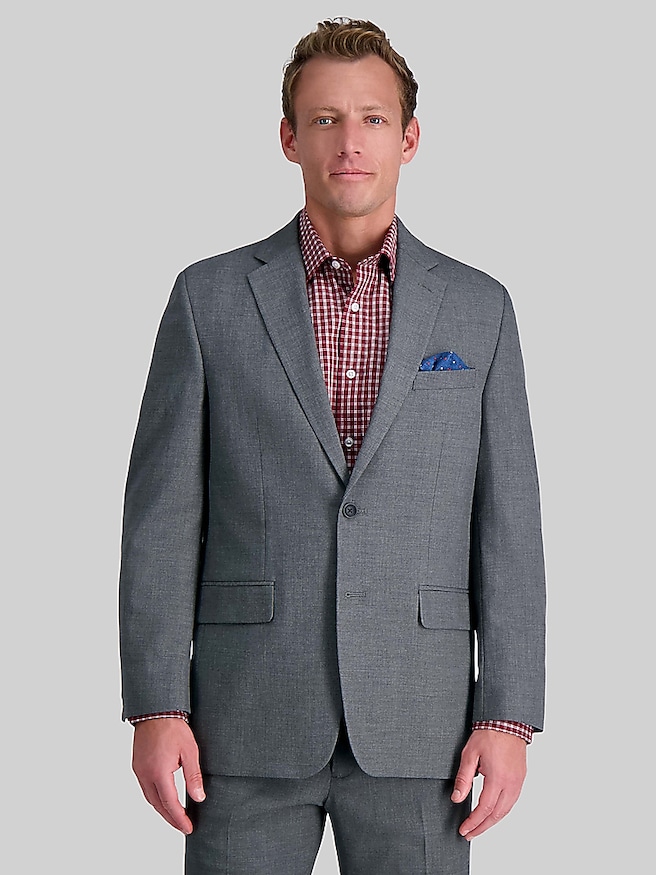
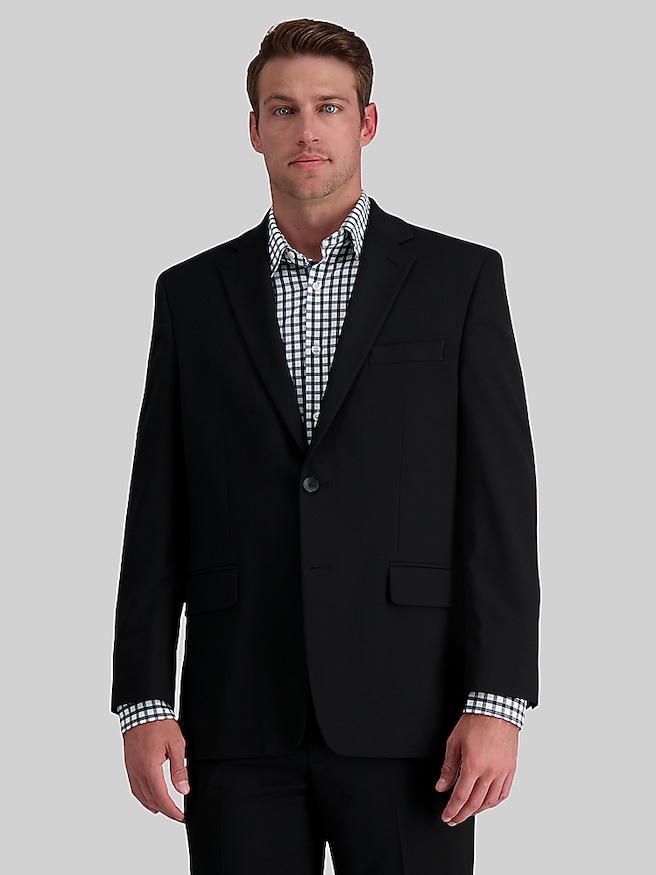
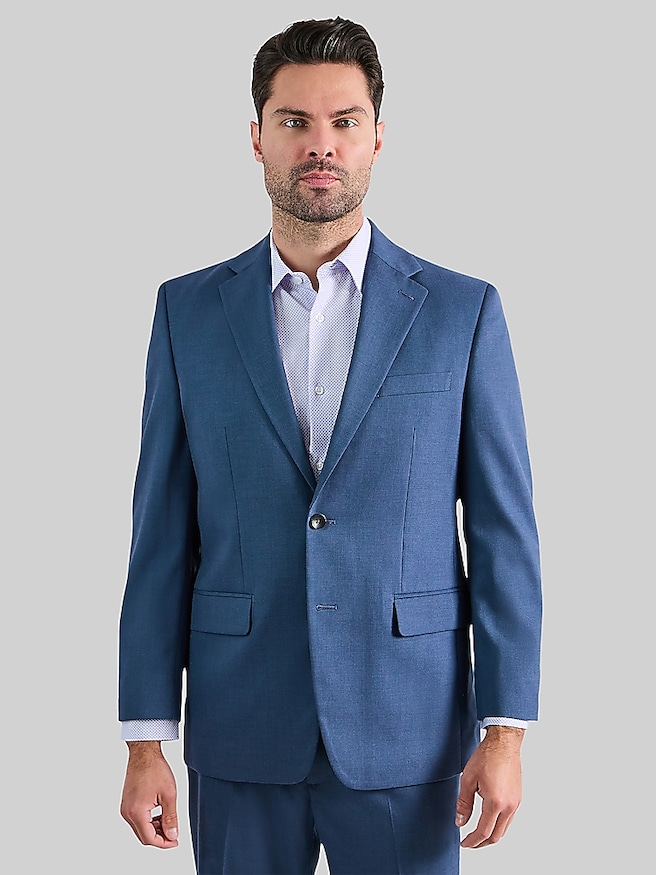
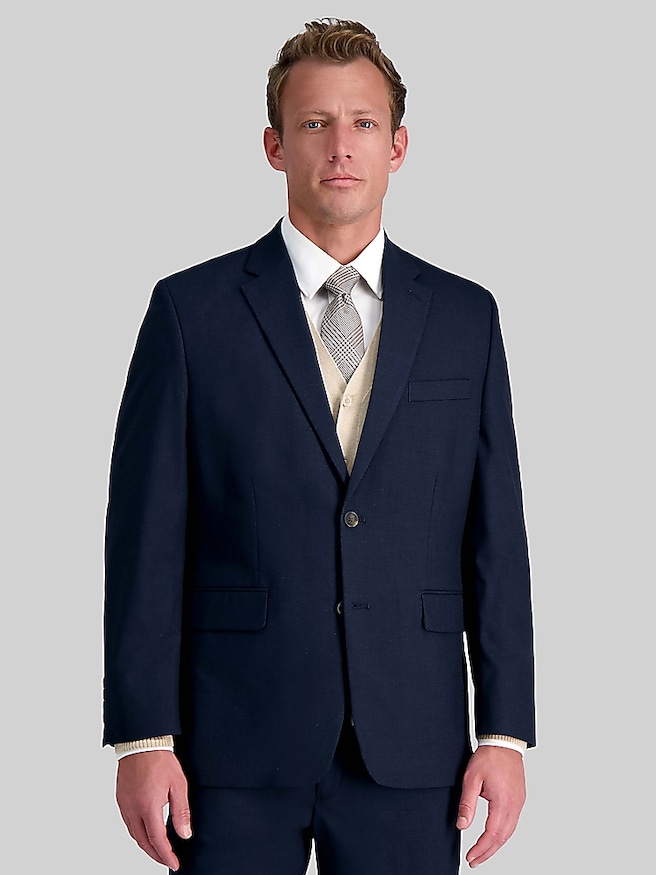
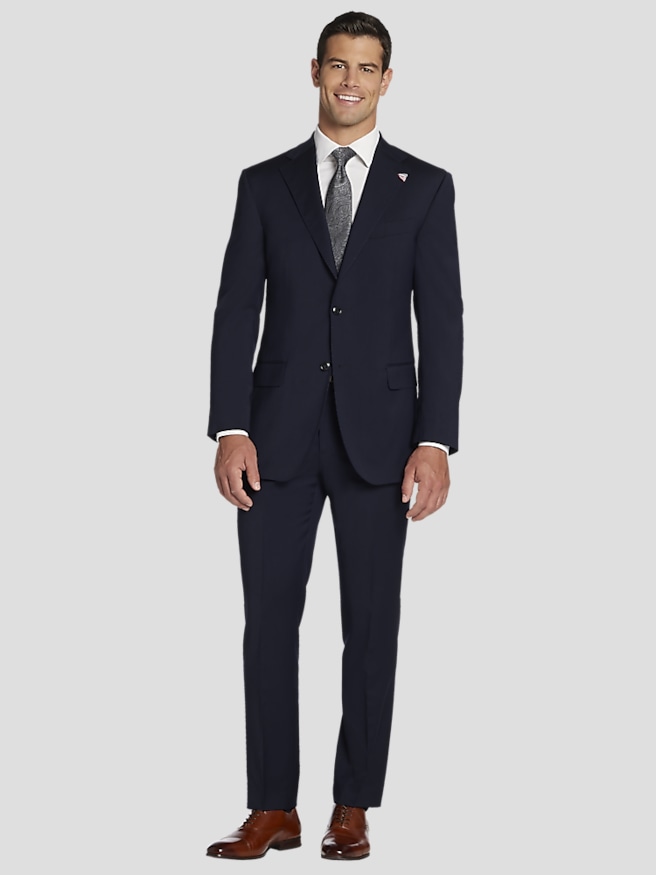
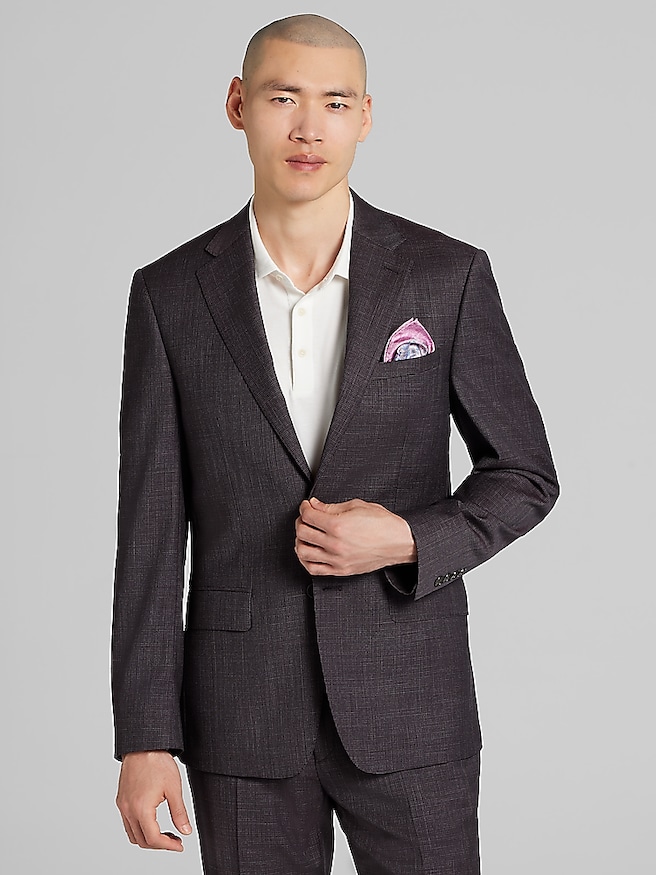
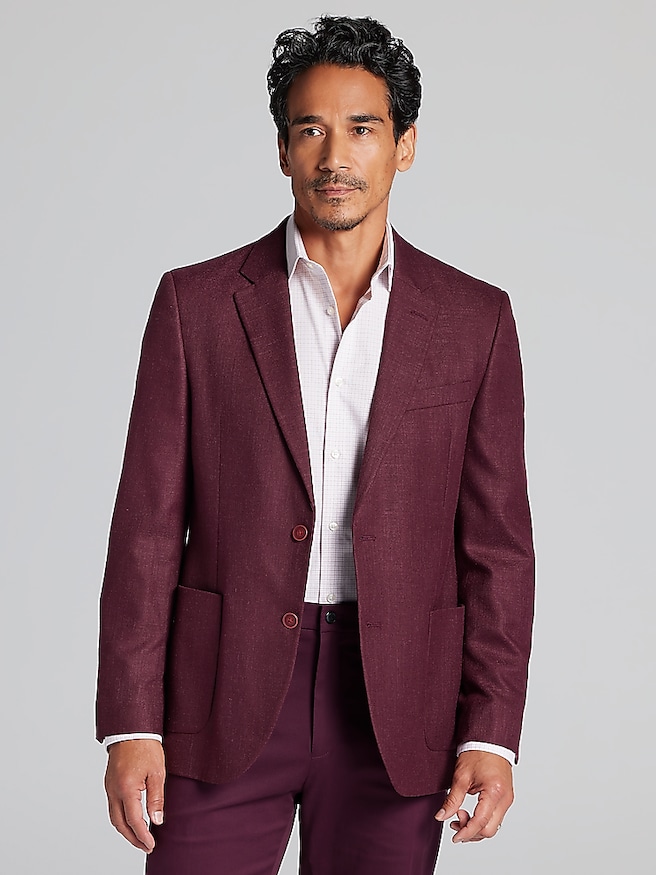
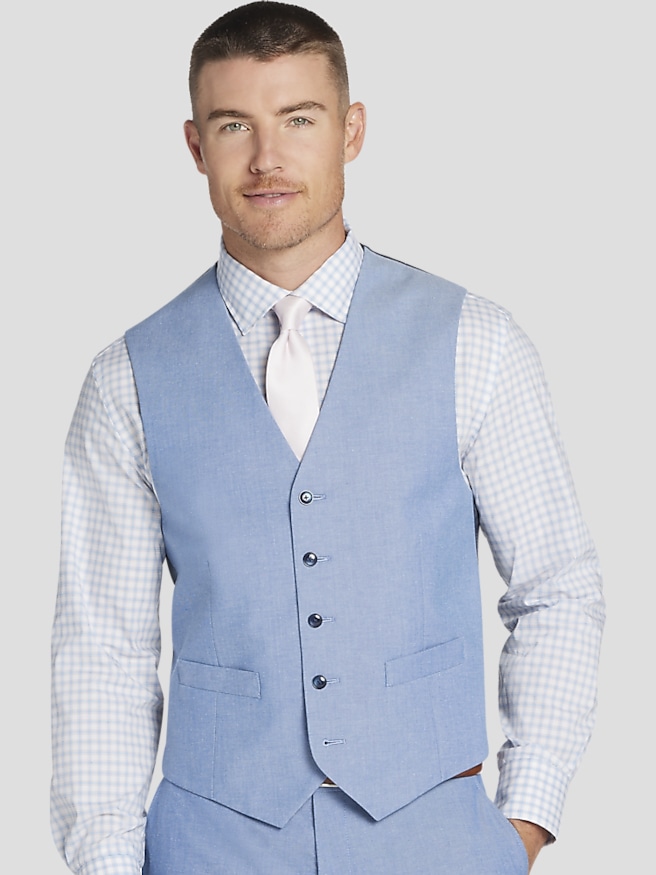
Burgundy and navy wedding suits create a polished, memorable color story that feels both traditional and distinctive. The combination works especially well when the groom wears a rich burgundy, wine, or merlot-toned suit while the groomsmen coordinate in classic navy, creating a clear point of distinction without making the wedding party look mismatched. Another approach is to dress everyone in navy and use burgundy ties, pocket squares, vests, or other accessories to bring the palette together. For a more fashion-forward celebration, a suit featuring a burgundy and navy plaid, windowpane check, or subtle woven pattern can combine both colors in one garment. These deep jewel tones are especially versatile because they look refined in formal indoor settings and natural in outdoor photographs as the weather warms or during the cooler months. Navy offers the dependable foundation, while burgundy adds warmth and personality, making the pairing suitable for elegant evening ceremonies, rustic venues, city weddings, and celebrations with a classic, romantic atmosphere. A groom can use the contrast to stand apart from the rest of the party, while wedding guests can choose either shade for a confident look that remains respectful of the couple’s dress code. When selecting from burgundy and navy wedding suits, consider the overall formality, the wedding location, and how the colors will appear beside the attendants’ attire, floral arrangements, and décor. A deep burgundy may read almost brown or black in dim lighting, while brighter wine tones can appear more vivid in daylight, so viewing fabric colors in several types of light is worthwhile. Navy similarly ranges from a nearly black formal shade to a lighter blue that feels relaxed and seasonal. The best choice is one that complements the wedding palette without competing with it.
Fit and coordination matter just as much as color. A well-fitted jacket should lie smoothly across the shoulders, close neatly without pulling at the button, and allow comfortable movement through a ceremony, reception, and long evening of dancing. Trousers should sit cleanly at the waist and fall with a modest break over the shoes, while sleeve and shirt cuffs should leave a small, intentional amount of shirt visible. For a timeless foundation, pair these rich colors with a crisp white dress shirt; its brightness anchors the jewel tones and keeps the outfit looking clean in photographs. A pale blue shirt can soften the contrast for a less formal ceremony, though white remains the most reliable choice for a coordinated wedding party. Burgundy ties and pocket squares work naturally with navy tailoring, and a navy tie can calm a burgundy suit while preserving the connection between the groom and groomsmen. Patterns should be balanced carefully: if the suit includes a noticeable check, keep the shirt and accessories relatively simple, while a solid suit allows room for a subtle patterned tie or textured pocket square. Shoes in dark brown leather bring warmth and work particularly well with burgundy, while black leather creates a sharper, more formal finish and pairs seamlessly with deep navy. Belts should match the shoes, and socks can echo navy, burgundy, or a small detail from the wedding colors without becoming distracting. Metal accessories such as watches, cufflinks, tie bars, and lapel pins look most intentional when they share a common finish, whether that is silver, gold, or a warmer bronze tone. Couples coordinating a full party may find it helpful to choose one consistent accessory color while allowing attendants some flexibility in fit and styling. If a classic navy foundation is the preferred direction, explore the Men's Navy Wedding Suit selection for additional formalwear inspiration that can be paired with burgundy accents.
When planning attire for several people, begin with who will wear each look and how much distinction the ceremony requires. The groom may choose burgundy as a signature color, with groomsmen in navy suits and matching burgundy ties, or the entire party may wear navy while the groom stands out through a burgundy jacket, vest, patterned garment, or a different accessory combination. Guests can adapt the same palette to their role: a navy suit with a burgundy tie is understated and dependable, while a burgundy suit can make a stronger statement when the invitation calls for formal or cocktail attire. For outdoor weddings, breathable construction and comfortable lining can make a noticeable difference during the ceremony and reception, especially when the weather is warm. During cooler months, a wool-rich fabric, structured jacket, or coordinated overcoat can add comfort without covering up the color story for long. Consider whether the suit will be worn again for business events, holiday gatherings, formal dinners, or other celebrations; navy tends to offer the broadest repeat-wear potential, while burgundy brings a distinctive option to a well-rounded wardrobe. Wedding-party purchases also benefit from early attention to sizing, alterations, and delivery schedules, since even a small adjustment at the sleeve or trouser hem can make formalwear look considerably more refined. If suits are being rented or purchased for a group, compare measurements consistently and account for different body shapes rather than relying on a single size label. Parents, relatives, and friends may also appreciate these colors for wedding gifts when a suit, dress shirt, tie, pocket square, or coordinated accessory fits the recipient’s style and upcoming plans. Ultimately, burgundy and navy wedding attire works because it balances individuality with cohesion: the navy keeps the party grounded and classic, while burgundy adds depth, warmth, and a memorable focal point to the celebration.