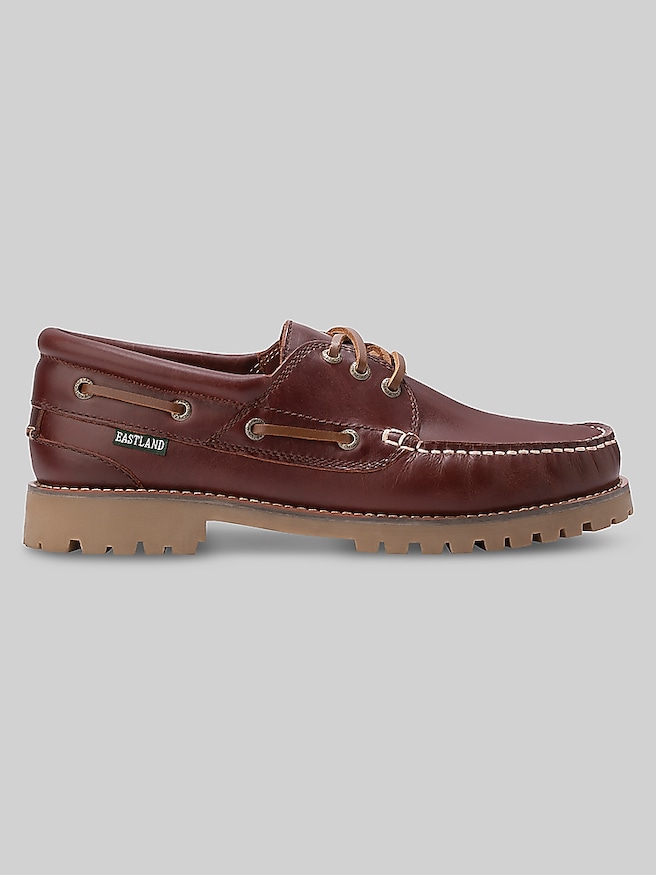
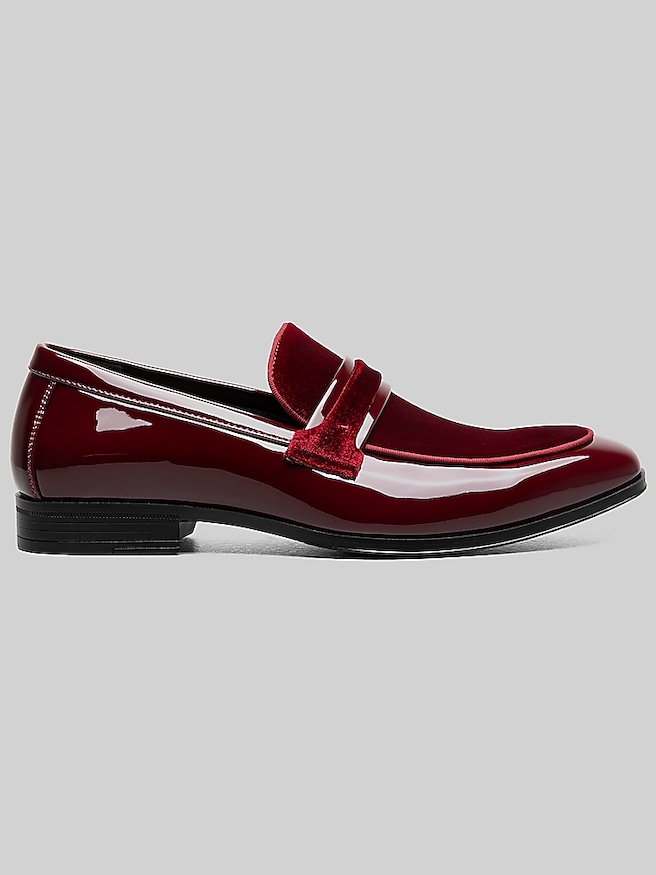
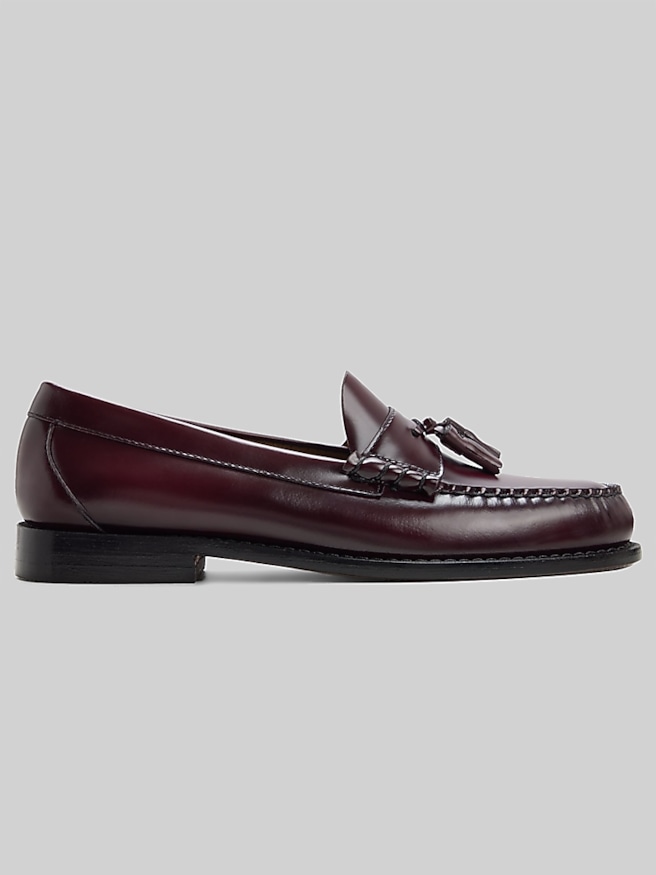
Burgundy footwear brings a deep, wine-red tone to men's shoes and works as a rich neutral with navy, gray, brown, olive, and dark denim. It offers more color than black or dark brown without requiring a bold outfit around it. The effect depends on the shade and finish: a dark, brown-leaning burgundy feels understated, while a redder shade or polished surface draws more attention to the shoes. Burgundy, maroon, and oxblood are often used to describe related colors, but the names do not guarantee an identical shade. Looking at the undertone is more useful than relying on the color name alone, especially when coordinating leather accessories. With a navy suit, burgundy lace-ups create a clear contrast that still looks appropriate for business meetings, wedding celebrations, and dressier dinners. With charcoal trousers, the same color adds warmth without making the outfit look busy. For everyday wear, dark jeans, a simple knit shirt, and burgundy loafers create a relaxed combination with a deliberate finish. Shape matters as much as color. An Oxford's closed lacing gives it a streamlined appearance, while a derby's open lacing generally looks less formal and allows more adjustment across the instep. Brogue detailing adds visual texture; a plain toe keeps the emphasis on the leather and silhouette. For an easygoing alternative, Burgundy Moccasins bring the same color family to a softer, more relaxed shape that pairs naturally with chinos and denim. Burgundy boots can add a more substantial outline beneath straight-leg trousers, while a low-profile loafer leaves a cleaner line at the ankle. A brown belt with a compatible undertone is often enough to connect the outfit; an exact burgundy match is not essential. Keeping the trousers relatively simple lets the color register without competing with a strong pattern. For strictly formal occasions, check the dress code rather than treating burgundy as a substitute for traditional black footwear.
Materials and construction influence how burgundy shoes look, feel, and hold up through repeated wear. Smooth leather can develop creases and a gradual patina, giving the surface more character over time. Pebbled leather introduces texture that changes the way light catches the color, while suede produces a softer, more muted appearance. Coated and synthetic uppers can offer a consistent finish, though their flexibility, breathability, and care requirements vary. Material labels are worth reading closely because the upper, lining, and sole may use entirely separate materials. A leather lining can feel smooth against a sock, while padding and removable footbeds may matter more to someone who spends long stretches standing. Cushioning alone does not establish a good fit: the shoe also needs enough width through the forefoot, comfortable room above the toes, and a heel that stays secure without rubbing. Try shoes with the type of socks intended for regular wear, and check both feet while standing and walking. Toes should not press against the front, and the widest part of the foot should sit comfortably within the widest part of the shoe. A little initial firmness in leather is not the same as painful pressure; shoes that pinch or cause numbness should not be expected to become comfortable through wear. Slip-on styles need particular attention at the heel and instep because laces cannot adjust their hold. Underfoot, leather soles offer a traditional appearance, while rubber soles and tread patterns can provide a more practical foundation for frequent walking, depending on their design. Neither material guarantees comfort or traction on every surface. Construction also affects repair options: some stitched shoes can be resoled, but that depends on the design and condition of the upper. For a commute followed by hours at a desk, flexibility and secure heel hold may take priority. For a wedding with extended standing and dancing, stable footing and a fit tested before the occasion matter more than a glossy finish alone.
Regular care helps burgundy footwear retain its color and shape, particularly when the shade has enough depth to show both polished highlights and darker creases. Remove loose dust after wear with a soft brush or cloth appropriate to the material. Smooth leather may benefit from occasional conditioning, but the correct formula and frequency depend on the finish and the maker's recommendations. Test any cleaner, conditioner, or polish in an inconspicuous area first. Burgundy shoe creams can vary considerably in their red, purple, and brown undertones, so a close color match matters; an unsuitable shade can gradually alter the appearance. A compatible neutral cream may be another option when recommended for the leather. Apply care products sparingly rather than building up heavy layers, and use a clean cloth or brush to finish the surface. Suede requires a separate approach, typically involving a suede brush and products specifically intended for its nap, not the creams used on smooth leather. If shoes become damp, blot away excess moisture and let them dry naturally away from direct heat. Properly sized shoe trees can help maintain the shape of suitable leather shoes between wears, while allowing footwear to air out before storage helps avoid trapped moisture. Rotating pairs also gives linings and uppers time to dry between uses. Watch for uneven heel wear, thinning soles, loose stitching, and worn linings; addressing small problems early may extend useful life when repairs are feasible. Store shoes clean and dry, with enough space to prevent neighboring footwear from scuffing the finish. For gifting, burgundy is a thoughtful choice for someone who already wears navy tailoring, earth-toned chinos, or dark jeans and would enjoy an alternative to familiar neutrals. Confirming size, width, preferred closure, and everyday dress habits makes the choice more personal. The most useful pair is one whose color, shape, and comfort fit naturally into the recipient's routine, whether that means polished office dressing or relaxed dinners out.