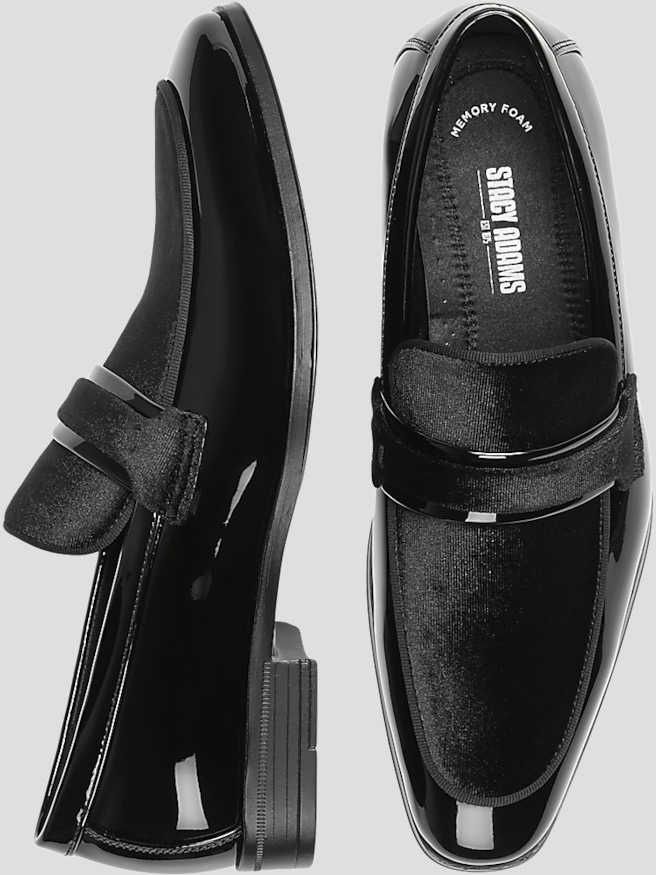
Burgundy men's loafers bring depth to an outfit without the sharp contrast of black or the more casual feel of lighter brown footwear. The color can range from a muted red-brown to a rich wine tone, with polished leather often showing subtle variations across the toe and sides. That depth makes burgundy easy to pair with navy, charcoal, medium gray, and tan, while giving familiar combinations a more distinctive finish. With a navy suit and a white shirt, burgundy loafers add color without competing with the tailoring. With gray trousers and a fine-knit polo, they create a balanced look for an office that favors polished separates over a full suit. Their slip-on shape also works well with dark denim and an unstructured jacket, particularly when the jeans have a clean hem and little distressing. The details determine how dressed up the shoe feels: a simple penny strap keeps the upper restrained, while a raised apron seam adds definition around the toe. For a more decorative finish, Burgundy Leather Tassel Loafers introduce movement and texture through the detailing across the vamp. A rounded toe generally feels relaxed and traditional, while a slightly elongated shape can sit neatly beneath tailored trousers. Neither shape needs an overly long trouser hem; a clean line with little break lets the loafer's profile remain visible. Socks offer another way to control the overall effect. Navy or charcoal dress socks create continuity with trousers, while a subdued pattern can pick up the burgundy tone without matching it exactly. No-show socks suit more casual combinations when the opening and fit of the shoe make them practical. A belt in a compatible burgundy or dark brown tone can tie the outfit together, though an exact color match is less important than a similar level of polish. These loafers suit business-casual settings, dinner reservations, graduation celebrations, and many wedding guest outfits, provided the event's dress code allows them. For occasions requiring traditional black-tie footwear, a dedicated formal shoe is the more appropriate choice.
Material and construction influence how burgundy loafers look, feel, and hold their shape with regular wear. Smooth leather tends to emphasize the richness of the color, especially when the surface develops a soft sheen through brushing and conditioning. Depending on the leather and finish, natural creasing may appear where the foot bends; this is expected, but the shoe should still flex comfortably rather than pinch across the forefoot. Suede gives burgundy a softer, more muted appearance and pairs naturally with textured trousers, chinos, and less structured tailoring. Its nap also changes slightly as light hits it from various angles, giving the color a less uniform look than polished leather. Other upper materials may have their own cleaning requirements, so the care label matters more than a single routine applied to every pair. Inside the shoe, lining, footbed shape, and cushioning affect comfort, particularly for someone moving between a desk, meetings, and an evening event. A leather lining can help manage moisture, while padded areas may soften pressure under the heel or ball of the foot. Sole construction matters just as much: leather soles offer a sleek appearance, whereas rubber soles can provide more traction and a different feel underfoot. Loafers have no laces to adjust the upper, which makes a secure initial fit especially important. The heel should stay reasonably settled during a normal stride, the toes should have room to lie naturally, and the top of the shoe should hold the instep without digging into it. A small amount of heel movement can occur in a new pair, but persistent slipping or the need to curl the toes suggests a fit problem. Trying loafers with the socks intended for regular wear gives a more useful sense of their fit. Width, toe shape, and instep height can affect comfort even when the marked size is familiar, and leather softening should not be treated as a solution for shoes that are painfully tight.
Good care helps burgundy loafers maintain their color, structure, and finish, especially when they are worn repeatedly for work or social occasions. For smooth leather, removing dust with a soft brush or cloth before applying care products keeps surface grit from being worked into the upper. A suitable leather conditioner, used sparingly according to its directions, can help prevent dryness, while a compatible cream polish can refresh the appearance of scuffed areas. Because burgundy shades vary, testing a small amount of any colored product on an inconspicuous area is sensible; a polish that looks close in the container may deepen the shoe more than expected. Heavy layers can obscure the character of the leather, so thin applications and careful buffing usually give a cleaner result. Suede needs a separate approach, using an appropriate suede brush to lift the nap and products specifically intended for that material when stains require treatment. Smooth-leather cream and wax should not be used on suede. If loafers become damp, letting them dry naturally away from direct heat protects the upper better than placing them near a heater. Cedar shoe trees can help support the shape between wears and absorb some moisture, while alternating pairs gives the lining and footbed time to dry fully. A shoehorn reduces strain on the heel counter when putting loafers on, preserving the part of the shoe that helps hold the foot in place. Periodic checks of the outsole, heel, and stitching can reveal wear before it becomes a larger issue; repair options depend on the construction and condition of the shoe. For someone who regularly wears tailored trousers, a burgundy pair can become a useful alternative to familiar black and brown shoes, adding distinction without demanding a completely new wardrobe. They can also make a thoughtful gift for a graduate, a partner, or a family member who appreciates classic footwear, particularly when their size, width, and preferred silhouette are known. The most useful pair is one that fits the recipient's everyday routine: refined enough for a presentation or celebration, comfortable enough for the expected amount of walking, and easy to coordinate with clothing already in rotation.