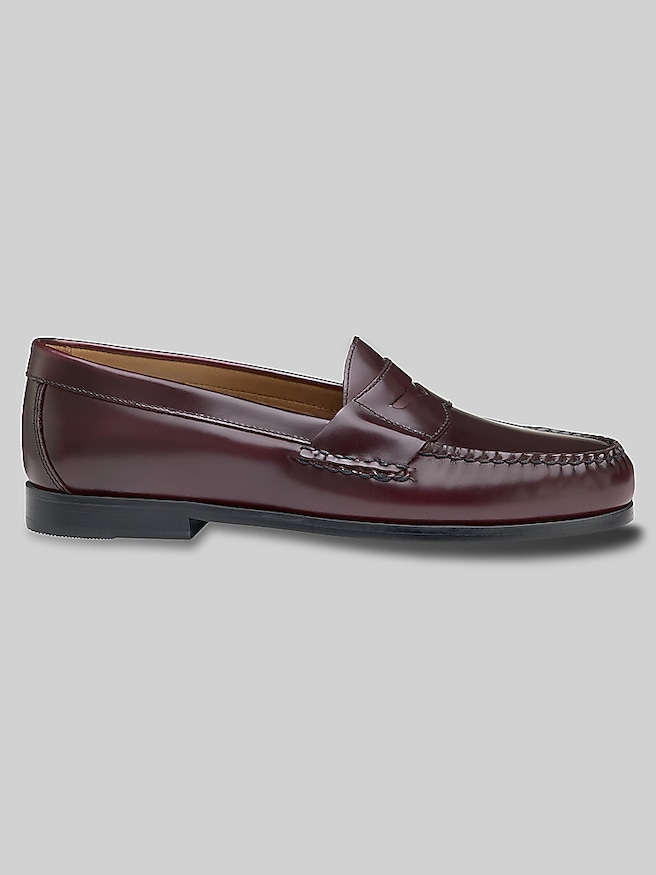
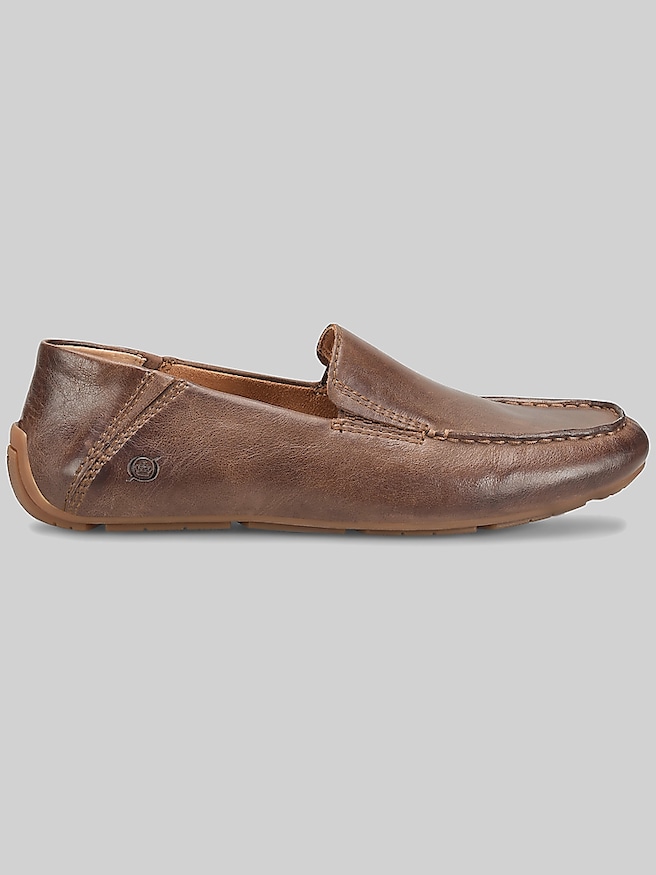
Brown penny loafers for men bring a familiar balance to a wardrobe: polished enough to sit beneath tailored trousers, relaxed enough to look natural with chinos or clean, dark denim. Their defining detail is the leather strap across the instep, usually finished with a small diamond-shaped opening that gives the penny loafer its name. That simple feature adds character without the hardware of a bit loafer or the movement of tassels, making the shape particularly versatile. Within the broader category of Men's Brown Loafers, penny styles offer a restrained look that can lean traditional or contemporary depending on the shape, finish, and outfit. A rounded toe and substantial sole feel grounded with straight-leg pants, while a slimmer profile and neatly finished edge complement tapered trousers. Color matters just as much. A chestnut shade creates a noticeable contrast against navy, while deep chocolate offers a quieter finish with charcoal, olive, or medium-blue fabrics. Subtle variations in the leather can give brown footwear depth, particularly when the toe and seams have a slightly richer tone than the surrounding surface. For an office day that includes a presentation followed by dinner, a pair worn with navy trousers, a tucked-in shirt, and a softly structured jacket can carry the outfit without looking overly formal. With denim, a clean hem and a shirt with some structure help preserve the loafer’s tailored character. Socks can reinforce either direction: fine-gauge dress socks keep the line continuous beneath trousers, while no-show socks create an exposed-ankle look without placing bare feet directly against the lining. For weddings or other dressed-up gatherings, brown penny loafers can complement an outfit when the dress code allows them, but they are not a substitute for footwear suited to black-tie attire. Their appeal lies in that useful middle ground between unmistakably casual shoes and more formal lace-ups.
Materials and construction influence how brown penny loafers look, feel, and hold up through repeated wear. Smooth leather gives the shape a defined finish and can develop a softer surface and natural creasing over time. Full-grain leather retains the hide’s surface character, while other leather finishes may offer a more uniform appearance; neither description alone tells the whole story of a shoe’s comfort or quality. Suede brings a softer texture that works especially well with chinos, textured trousers, and less structured tailoring, though it calls for care suited to its raised nap. Inside the shoe, lining material, cushioning, and the shape of the footbed all contribute to the wearing experience. A padded footbed may soften contact underfoot, while arch support and adequate room across the forefoot can matter more during a day spent standing or walking. Sole choices also change the feel. Leather soles often create a sleek profile, while rubber soles can provide flexibility and traction; the tread pattern and construction remain important regardless of material. Because penny loafers have no laces to adjust, fit deserves particular attention. The strap and upper should hold the instep securely without pressing hard across the top of the foot. Toes need enough room to rest naturally, and the widest part of the foot should align comfortably with the widest part of the shoe. A little movement at the heel can occur with some new loafers, but repeated lifting, rubbing, or a need to grip with the toes suggests that the fit is not secure. Leather may soften with wear, yet a shoe that feels too short should not be expected to gain meaningful length. Trying loafers with the type of socks intended for everyday use gives a more useful impression than assessing them with unusually thick or thin socks. Walking across a firm surface also helps reveal pressure points, sole stiffness, and whether the heel stays comfortably in place.
Good care preserves both the appearance and the structure that make brown penny loafers useful beyond a single occasion. For smooth leather, surface dust is best removed before conditioning or polishing so that grit is not worked into the finish. A soft brush or cloth handles routine cleaning, while a conditioner appropriate for the leather can help maintain suppleness when used according to its directions. Brown polish should be chosen with the shoe’s shade and finish in mind; a darker polish can alter the color, and heavily applied products may collect around stitching or the edges of the penny strap. Suede needs a separate approach, typically involving a suede brush and cleaning products intended for that material rather than conventional leather cream. Any unfamiliar treatment is worth testing on an inconspicuous area first. Storage and wear habits matter, too. Allowing loafers to air out between uses helps the lining dry naturally, and properly sized shoe trees can support the upper’s shape without stretching it. A shoehorn reduces strain on the heel when slipping the shoes on, especially when the opening fits closely. If footwear becomes damp, gentle drying away from direct heat is preferable to trying to speed the process. Durability depends on more than a substantial-looking sole: secure seams, well-finished edges, and an upper that flexes comfortably all contribute to long-term use. Some constructions allow sole replacement, while others do not, so repair potential depends on how the shoe is made. Brown penny loafers can also make a thoughtful gift for someone building a professional wardrobe, marking a graduation, or refining an everyday style. The recipient’s foot shape, usual trouser choices, and preference for a sleek or substantial silhouette are more useful considerations than color alone. Someone who spends much of the day at a desk may prioritize a streamlined look, while someone moving between meetings and appointments may place greater emphasis on cushioning and secure traction. A comfortable fit and a finish that works with familiar clothing give this classic slip-on its lasting place in a well-used wardrobe.