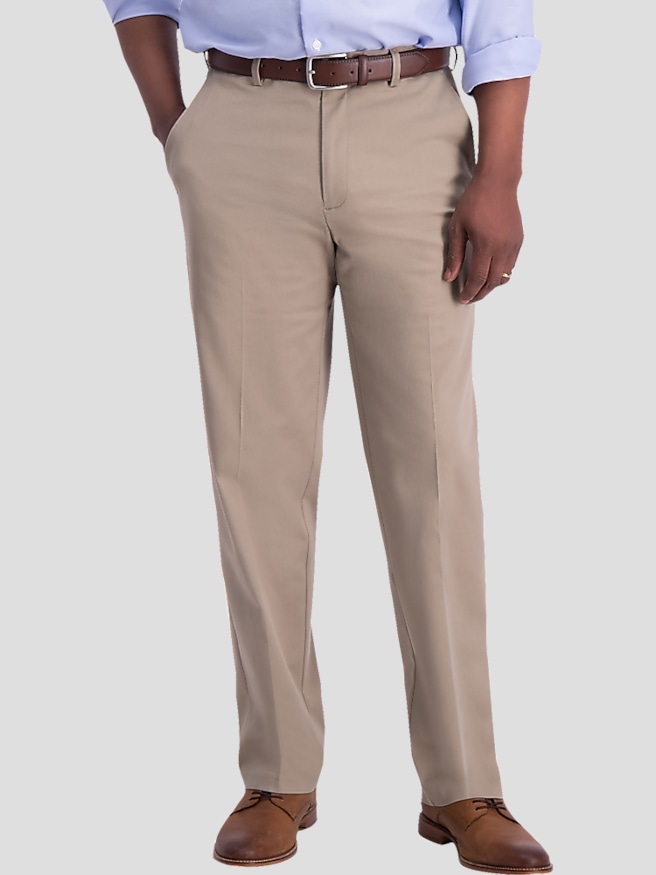
Brown pants for men bring an earthy neutral to everyday outfits, business-casual wardrobes, and dressed-up occasions. The color covers a broad range, from light tan and warm caramel to walnut, chocolate, and deep espresso, so the overall effect depends as much on the shade as on the cut. A lighter brown can create a softer contrast with a navy shirt, while dark brown trousers look especially polished beside a white button-down and a textured sport coat. Compared with black, brown often gives an outfit a less severe finish without losing its sense of purpose. Compared with blue, it introduces another neutral that works comfortably with familiar shirts, sweaters, and jackets. Cotton chinos lean casual, tailored dress pants feel more refined, and textured fabrics add visual interest even when the rest of an outfit stays simple. Brown also pairs naturally with cream, pale blue, olive, burgundy, and charcoal. Keeping some separation between the pants and the top helps each piece stand out; a cream knit against chocolate trousers creates a clear contrast, while a light blue shirt keeps medium brown from feeling too dark. Shoes influence the result, too. Leather loafers or lace-ups make brown pants feel more dressed up, while clean, understated sneakers suit relaxed settings. A belt and shoes in compatible brown tones can pull the outfit together without needing to match exactly. For a dinner reservation, a family gathering, or an office day that ends with plans afterward, brown trousers offer a useful middle ground between denim and a full suit. Their appeal is practical rather than flashy: the color has enough character to make a familiar outfit feel considered, yet remains easy to repeat with several combinations. For men building a smaller wardrobe, that flexibility makes brown a useful companion to navy, gray, and white rather than a color reserved for a single occasion.
Fabric and construction shape how brown pants feel, drape, and hold up to regular wear. Cotton twill has a recognizable diagonal weave and enough substance to give chinos a defined shape, with the exact softness and weight varying by fabric and finish. Brushed cotton offers a softer surface, while corduroy adds visible texture through its raised ribs. Wool and wool-blend trousers generally create a more fluid, tailored line, particularly when the fabric hangs cleanly through the thigh and knee. Stretch blends can make sitting, bending, and walking more comfortable, although stretch alone does not determine whether a pair fits well. A waistband that stays in place without digging in, pockets that lie flat, and enough room across the seat matter more than a fit label by itself. Slim cuts follow the leg more closely, straight cuts maintain a consistent line, and roomier cuts allow additional space through the seat and thigh. None should require the fabric to pull sharply across the front or strain at the seams. Rise matters as well: the distance from the crotch seam to the waistband affects where pants sit and how neatly a tucked shirt stays in place. Someone who spends much of the day seated may appreciate more room through the upper leg, while someone wearing a jacket may prefer a trouser shape that balances its proportions. At the hem, little or no break creates a crisp finish, while a slight break lets the fabric rest gently on the shoe. Excess length can bunch at the ankle and obscure the intended silhouette. Durability depends on more than fabric weight; secure stitching, well-finished seams, sturdy pocket openings, and a reliable waistband closure all contribute to everyday performance. Areas exposed to friction, including the seat, inner thighs, and hems, deserve particular attention because those spots often show wear before the rest of the garment. A comfortable cut helps here, too, since pants that fit without persistent tension place less strain on seams during ordinary movement.
The right brown pants also need to suit the day they are meant to handle. In an office with a relaxed dress code, a smooth chino with a tucked button-down can look neat without feeling overly formal. For presentations, business dinners, or other settings that call for a sharper appearance, tailored brown trousers with a defined crease offer a more polished foundation. When the focus is on professional outfits, Brown Work Pants provide a related starting point for considering workplace dressing. Details such as discreet pockets, an unobtrusive waistband, and a clean front help pants sit comfortably alongside a jacket or fine-gauge knit. Away from work, brown pants can pair with a polo for a casual meal or an untucked shirt for a relaxed gathering. Care is part of keeping that versatility intact. The garment’s care label should determine whether machine washing, hand washing, or professional cleaning is appropriate; a cotton chino and a lined wool trouser may need very different treatment. For washable fabrics, following the recommended water temperature and avoiding excessive dryer heat can help protect the fit and finish. Turning pants inside out before washing may reduce surface abrasion, while prompt attention to spills can limit staining when handled according to the fabric’s care instructions. Hanging trousers neatly after wear helps preserve their shape, and pressing or steaming should follow the label’s heat guidance. Darker browns may show lint, while lighter shades can make marks more noticeable, so a fabric-appropriate brush or lint roller can be useful between cleanings. Brown pants can also make a thoughtful gift for someone who already wears neutral chinos or tailored trousers, especially when their waist size, inseam, preferred rise, and usual fit are known. Those details turn a broadly useful color into something personally useful: pants that work with an established wardrobe, feel comfortable through an ordinary day, and look intentional without requiring an entirely new set of clothes.