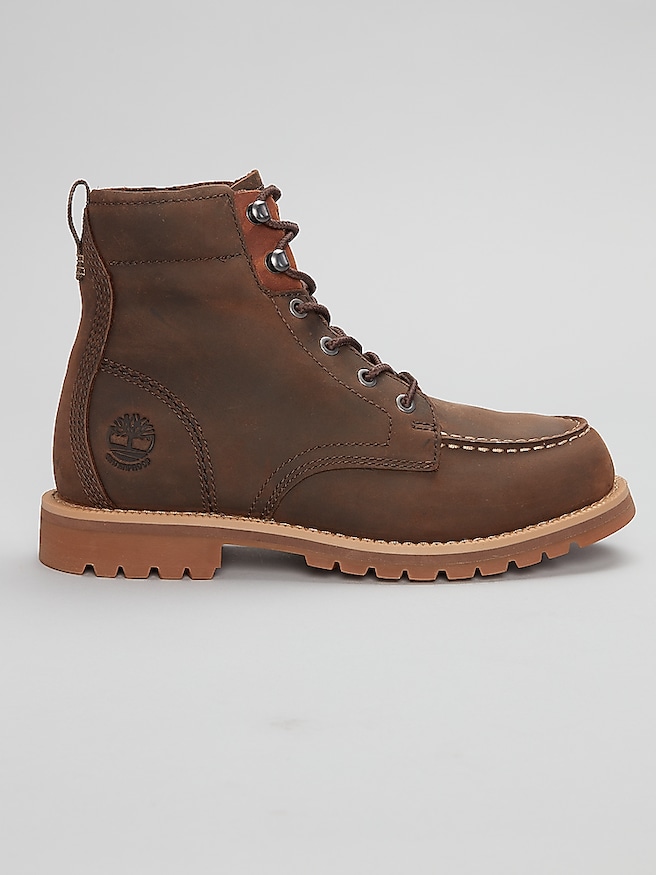
Brown office boots are ankle-height footwear with the polished appearance needed for many business casual workplaces and the coverage that feels practical during cooler months. Their defining features often include smooth leather, a streamlined toe, restrained stitching, and a sole that looks balanced beneath dress pants or chinos. Unlike heavily lugged outdoor footwear, office-oriented boots typically keep the profile neat, allowing the trouser hem to fall cleanly over the shaft. Dark chocolate and espresso shades create a subtle foundation for navy, charcoal, olive, and medium-gray clothing, while warmer chestnut tones bring more contrast to blue trousers and textured fabrics. The depth of the brown matters as much as the boot shape: a deep, evenly finished leather generally reads as dressier than a pale, distressed surface. Lace-up designs offer an adjustable fit across the instep and a familiar dress-shoe feel, particularly with a plain toe or understated cap toe. Chelsea silhouettes use elastic side panels for a smooth outline, while zipper closures can offer convenient access without prominent lacing. Each can belong in an office wardrobe when the proportions and finish suit the workplace. A narrow, excessively pointed toe is not necessary for a refined appearance; a gently rounded or softly tapered shape often provides a useful balance of polish and room. These boots work especially well for someone moving between a morning commute, a desk, and an afternoon meeting, where footwear needs to look composed without feeling reserved for a special occasion. With a navy blazer and gray wool trousers, dark brown leather can look quietly tailored. With chinos and a fine-gauge sweater, the same general style feels more relaxed but still intentional. Suit pairings depend on the dress code and the boot’s finish, and traditional dress shoes may remain the better choice in highly formal settings. For offices that welcome business casual clothing, brown boots provide an easy bridge between tailored pieces and everyday layers.
Materials and construction shape how brown office boots feel throughout a full workday, not just how they look beside a clothing rack. Smooth leather is valued for its structured appearance and its ability to respond to brushing, conditioning, and polishing, though the correct care depends on the finish. Full-grain leather retains the hide’s natural surface and may develop a rich patina with wear; other leather finishes can offer a more uniform look. Suede has a softer, matte texture that pairs naturally with flannel trousers, corduroy, and casual office clothing, but it needs care intended for its raised nap and extra consideration in wet conditions. Linings also affect comfort. Leather linings can absorb moisture, while textile linings vary in breathability and softness, making the overall construction more informative than any single material claim. Underfoot, cushioning can ease pressure during standing and walking, but a soft footbed alone does not establish support or a good fit. The heel should feel secure, the toes should have space to move, and the upper should hold the midfoot without squeezing it. Some slight movement at the heel can occur in a new slip-on boot, but repeated lifting, rubbing, or sliding forward suggests a mismatch in shape or size. A snug boot should not be expected to stretch enough to correct painful pressure or inadequate length. Fit also changes with sock thickness, so the socks worn on a typical workday belong in the equation. Someone walking several blocks from a train station may value flexibility and a low-profile rubber outsole, while someone spending most of the day indoors may prioritize a lighter feel and a sleeker edge. Leather soles offer a traditional dress appearance, but their grip can be limited on wet or smooth surfaces. Rubber tread may improve traction, although no office boot should be assumed to provide slip resistance, waterproofing, or occupational protection without an explicit designation. For jobsite-oriented needs, Brown Work Boots represent a separate category to assess against the demands and safety requirements of the work.
Durability in brown office boots comes from the relationship between the upper, sole, construction, fit, and regular care. Even substantial leather can wear prematurely if it stays damp, dries beside direct heat, or repeatedly creases under pressure from a poor fit. Welted and some stitched constructions may allow resoling, depending on the design and condition, while cemented construction can provide a flexible, lighter-feeling alternative. Neither construction alone guarantees a particular lifespan; walking surfaces, frequency of wear, and maintenance all play a part. For smooth leather, removing dust with a soft brush or cloth keeps surface grit from building up around creases and stitching. Occasional conditioning with a compatible product helps maintain suppleness, and a suitable cream polish can refresh color and soften the appearance of minor scuffs. Product directions matter, especially for waxed, oiled, or specialty finishes that may react poorly to a standard polish. Suede needs its own brush and appropriate cleaner rather than leather cream. During cooler months, moisture and sidewalk residue can become part of the commute, making prompt, gentle cleaning particularly useful. Damp boots should dry naturally away from radiators and heating vents; cedar shoe trees can help support their shape and absorb some interior moisture once excess wetness has been addressed. Alternating footwear gives linings time to dry between long days and can make the next wear more comfortable. Attention to worn heel edges, thinning tread, and loose stitching also makes it easier to address damage before it affects the upper or changes the way the boot sits underfoot. Beyond maintenance, the most useful office pair is one that fits naturally into its wearer’s routine. A teacher moving between classrooms, a manager crossing a large office, or a professional heading from meetings to dinner may each value a slightly distinct balance of cushioning, flexibility, and refinement. Brown office boots can also make a thoughtful gift for someone starting a new position or refreshing a work wardrobe, provided their size, preferred fit, and workplace expectations are known. Their appeal is grounded in that everyday usefulness: rich color, clean proportions, and a finish that looks at home with the clothing already in regular rotation.