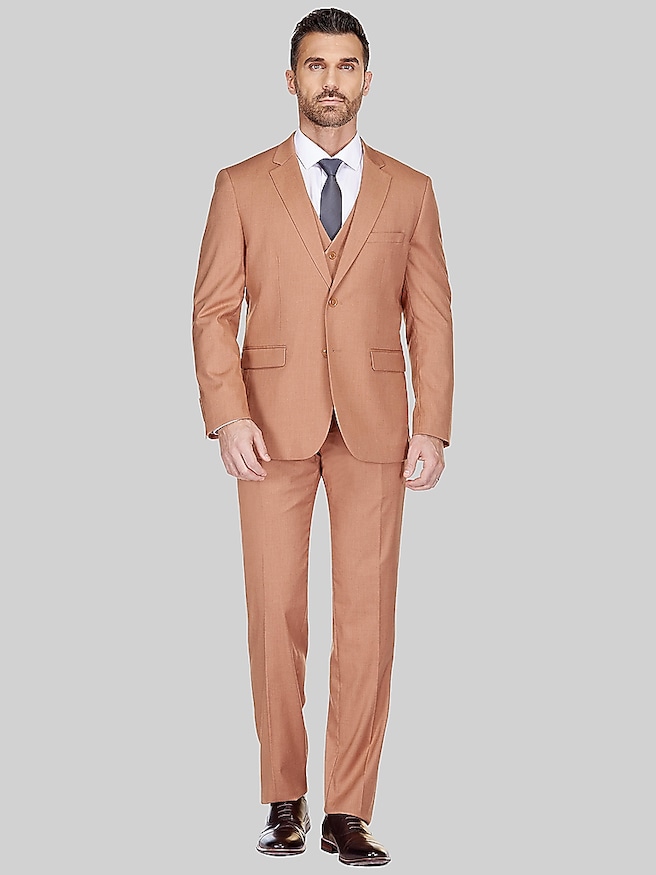
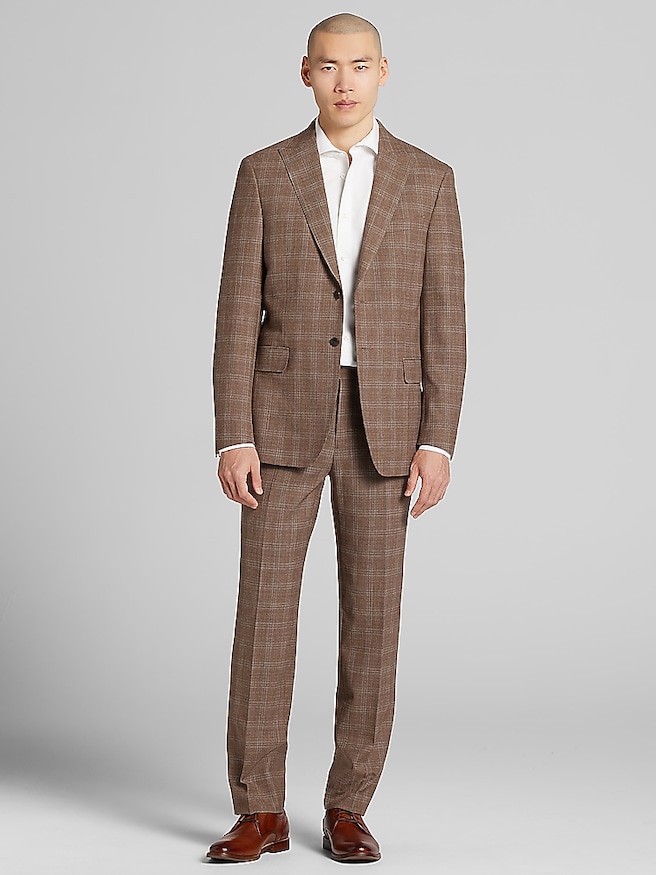
Brown formal attire centers on tailored clothing in shades such as chocolate, espresso, walnut, and chestnut, offering a rich alternative to black, charcoal, or navy for dressy occasions. Its appeal comes from the balance between a distinctive color and familiar formal details: a clean shoulder line, a neatly framed shirt collar, a defined lapel, and trousers with an uninterrupted drape. Deep espresso can look restrained and understated, while a reddish chestnut or lighter walnut brings the color more visibly into the outfit. The right shade depends partly on the setting and partly on how much contrast the wearer wants. A dark brown suit with a crisp white shirt creates a sharp outline for a wedding ceremony, an anniversary dinner, or an awards reception where a suit meets the dress code. An ivory shirt softens that contrast, while pale blue introduces another option for occasions that allow more flexibility. Brown is not automatically interchangeable with black at every formal event, however. Traditional black-tie expectations generally call for a black or midnight-blue tuxedo; a brown tuxedo is better suited to celebrations where the host welcomes expressive eveningwear. For that setting, Brown Tuxedos bring the depth of the brown palette to an eveningwear silhouette, often distinguished by contrasting lapel facings and other dress details. Suits and tuxedos serve distinct purposes, even when their colors are similar, so the invitation remains the best starting point. A groom choosing a personal look, a wedding guest dressing for a formal reception, or someone attending a milestone celebration may each approach brown differently. Matching brown jackets and trousers create a continuous line that usually reads as dressier than separates. A coordinating vest adds another layer of structure and helps maintain a composed appearance when the jacket comes off. Across these combinations, the strongest impression comes from a deliberate relationship between color, proportion, and the occasion rather than from adding more accessories.
Fabric determines much of how brown formal clothing looks in person, particularly because the same shade can appear smooth and luminous in one material and soft or textured in another. Worsted wool is a familiar choice for tailored suits because it can hold a clean shape while allowing the fabric to drape naturally. Wool blends may combine that tailored appearance with other qualities, including added resilience or stretch, though performance depends on the fibers and construction rather than the blend name alone. A small amount of stretch can make sitting through a ceremony or moving across a dance floor more comfortable, but it does not replace a properly fitted jacket or trousers. Velvet offers a deeper, more light-responsive surface for expressive evening jackets, while satin accents create a visible distinction between the body fabric and formal finishing details. Highly textured weaves tend to feel less ceremonial than smooth, refined surfaces, making texture just as important as color when judging an outfit’s intended use. Fit brings those material choices into focus. Jacket shoulders should sit close to the wearer’s natural shoulder line without extending into a pronounced overhang. The chest should lie smoothly when the jacket is buttoned, and the lapels should rest against the front rather than lift away. Pulling around the button, bunching beneath the collar, or sleeves that obscure the hands can distract from otherwise handsome tailoring. Trousers should stay comfortably at the intended waist position, with enough room through the seat and thighs to sit without strain. A slight break at the shoe gives a traditional finish; a cleaner, shorter hem creates a more contemporary line without requiring an overly narrow leg. For someone expecting to stand for photographs, sit through dinner, and dance afterward, checking all three movements matters more than how the outfit looks in a single pose. Sleeve and trouser length adjustments can make a meaningful difference, while shoulder fit deserves particular attention from the outset because substantial changes there are more involved.
Finishing details give brown formal attire its character without needing to compete with the tailoring. A white pocket square provides a clear accent against a dark brown jacket, especially when the shirt is also white. Burgundy, deep green, muted gold, and navy can complement brown in neckwear, with the fabric and pattern determining whether the result feels restrained or more expressive. A finely textured solid tie keeps attention on the overall silhouette, while a small, evenly spaced pattern introduces detail that remains subtle in photographs. A pocket square does not need to duplicate the tie; a shared accent color is often enough to connect them. Footwear should reflect the dress code as well as the suit shade. Dark brown leather shoes can create a cohesive finish with brown suiting, while polished black shoes offer a sharper contrast with deep espresso and may suit a more formal styling approach. Lighter tan footwear creates a stronger visual break and generally feels less formal. When a belt is worn, keeping its color close to the shoes helps the outfit look considered. Socks that relate to the trousers preserve the line of the leg when seated. These smaller accessories can also make thoughtful gifts for someone preparing for a wedding or another important celebration, especially when the recipient’s preferred colors are known but precise clothing measurements are not. Lasting appearance depends on care as much as styling. Follow each garment’s care label, address marks promptly using an appropriate method, and avoid unnecessary cleaning that can place extra stress on fabric and finishing details. A shaped hanger supports a jacket’s shoulders, while careful trouser storage helps preserve the crease. Let garments air after wear before enclosing them in a breathable garment bag, and store them away from prolonged direct light to help protect the color. Check buttons, pocket edges, and trouser hems periodically for loose threads or early wear. With suitable construction, comfortable proportions, and attentive care, brown formal clothing can remain a dependable choice for repeated celebrations, offering a recognizable personal signature while still respecting the occasion.