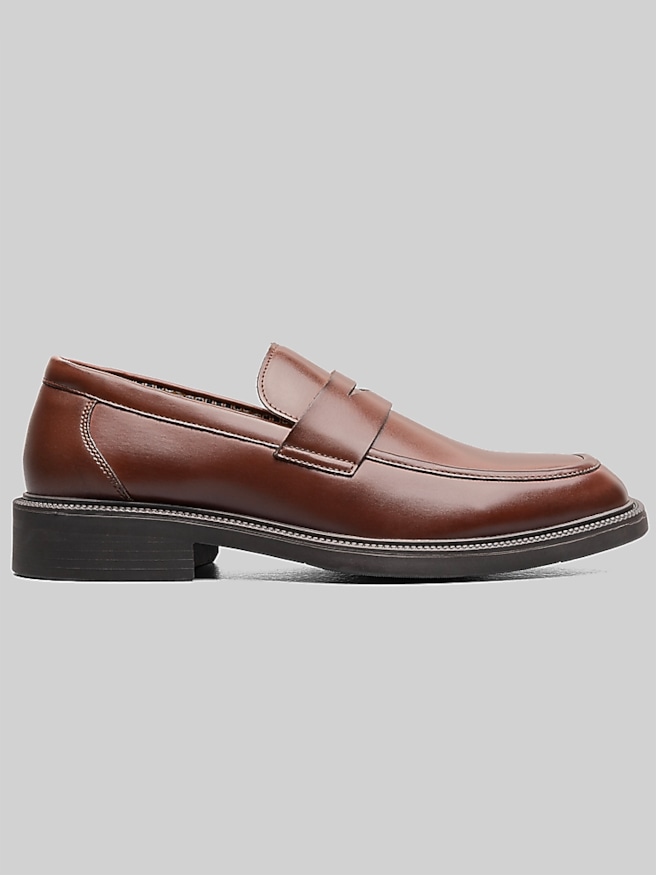
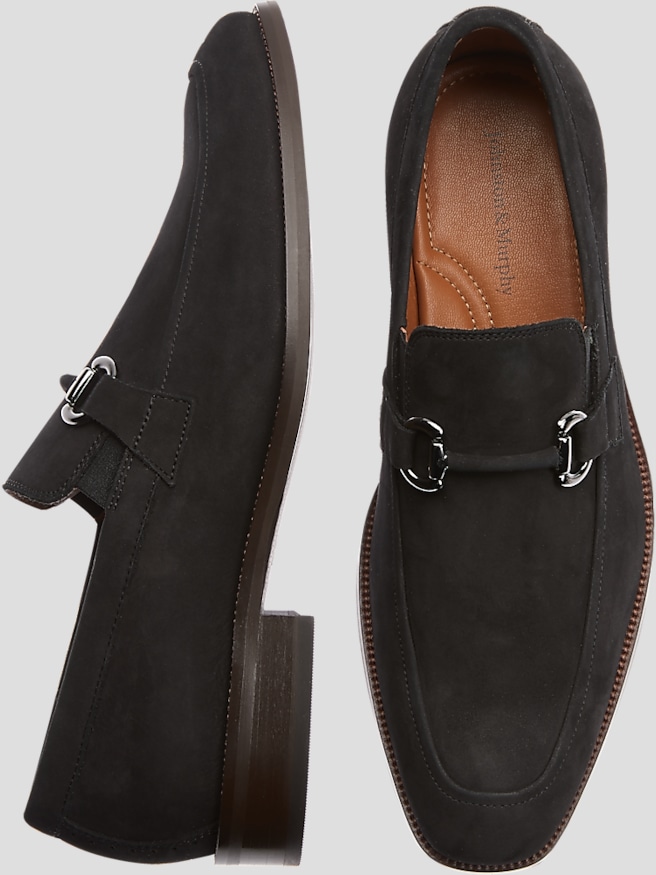
Brown dress loafers are slip-on shoes that combine the clean lines of dress footwear with the ease of a laceless design. Their versatility comes from the balance of color, shape, and finish: a dark chocolate leather loafer can look understated beneath navy suit trousers, while a cognac pair brings a brighter contrast to gray tailoring or khaki chinos. Brown also has depth that becomes especially noticeable in polished leather, where subtle variations around the toe and seams give the shoe character without requiring a bold pattern. Penny loafers have a distinctive strap across the instep and a restrained appearance that works with business clothing and more relaxed outfits. Tassel loafers add movement and a traditional decorative detail, while bit loafers introduce a metal accent that can coordinate with other accessories. A sleek profile, neatly finished stitching, and a relatively slim sole generally create a dressier impression than a broad toe or substantial tread. Toe shape matters, too: an almond-shaped toe offers a tapered outline, while a rounded toe has a softer appearance that can suit everyday office dressing. Brown dress loafers pair naturally with navy, medium gray, olive, and tan, making them useful for a wardrobe built around separate trousers, sport coats, and button-down shirts. Dark brown tends to create a quieter contrast with darker tailoring, while lighter shades draw more attention to the shoes. A belt in a similar brown tone helps the outfit feel coordinated without requiring an exact color match. For a client lunch, a presentation, or a dinner reservation, polished loafers can provide an intentional finish without the more structured appearance of lace-up dress shoes. Their suitability still depends on the setting: a business-casual office allows more flexibility than a conservative workplace, and traditional black-tie attire generally calls for more formal footwear. Within those boundaries, brown loafers offer a practical connection between tailored clothing and everyday ease.
Material and construction influence how brown dress loafers look, feel, and hold up through repeated wear. Smooth leather provides a defined surface that can be conditioned and polished, while suede has a soft nap and a more relaxed visual texture. Full-grain leather retains its natural surface character and can develop a patina with appropriate care; corrected-grain leather has a more uniform appearance, though its finish and maintenance needs vary. Neither a glossy surface nor a soft feel alone establishes overall quality. Even stitching, secure attachment at the sole, clean interior finishing, and a shape that supports the foot all deserve attention. Leather outsoles provide a traditional, streamlined finish, while rubber outsoles can add flexibility and traction, depending on their compound and tread. Stitched construction may allow repair or resoling, but that possibility depends on the shoe’s design and condition rather than the presence of visible stitching alone. Inside the shoe, lining texture, footbed cushioning, and arch shape can make a noticeable difference during a commute or an afternoon spent standing. For days that move from a desk to an evening event, Comfortable Brown Loafers keep ease of wear central to the decision. Fit is especially important in a slip-on style because there are no laces to adjust the hold across the instep. The heel should feel secure without rubbing, the forefoot should have room without sliding sideways, and the toes should not press against the front when walking. A little initial firmness in leather is different from pinching, numbness, or persistent heel slippage. Leather may soften with wear, but an uncomfortable size should not be expected to become the right fit through stretching. Trying loafers with the socks intended for regular use gives a more useful sense of fit than trying them with an unrelated thickness. Anyone who uses orthotics should also consider interior depth and whether the footbed is designed to be removed, since adding an insert can change both toe room and heel placement.
The most useful brown dress loafers fit the wearer’s routine as well as the wardrobe. Someone who spends much of the day seated may prioritize a refined shape and smooth leather finish, while someone who walks between meetings may place greater importance on secure heel fit, cushioning, and sole flexibility. For a graduation, an anniversary dinner, or a wedding with a dress code that permits loafers, dark brown leather offers a polished foundation for a navy or gray outfit. For everyday wear, a penny loafer beneath straight or gently tapered trousers keeps the overall line clean. Trouser hems that fall neatly around the shoe allow the shape to remain visible without excessive fabric gathering at the ankle. Fine-gauge dress socks in brown, navy, or a tone close to the trousers maintain visual continuity; a subtle pattern adds interest without competing with the rest of the outfit. Brown dress loafers can also make a thoughtful gift for someone starting a new job, building a professional wardrobe, or marking a personal milestone, particularly when the recipient’s size, width, and preferred silhouette are already known. Long-term appearance depends on a manageable care routine. Smooth leather benefits from regular dusting with a soft brush or cloth, followed by a compatible conditioner and polish as recommended for its finish. Suede requires a brush intended for its nap rather than conventional shoe cream. Testing any treatment in an inconspicuous area helps avoid an unwanted change in color. Cedar shoe trees can help maintain shape and absorb residual moisture after wear, and alternating pairs gives the interiors time to dry naturally. A shoehorn helps protect the heel counter when putting loafers on, while prompt attention to worn heel edges can prevent more extensive damage. With thoughtful fit, suitable materials, and consistent care, brown dress loafers can become a dependable part of a dressed-up wardrobe, equally at home beneath a well-cut suit or a favorite pair of tailored chinos.