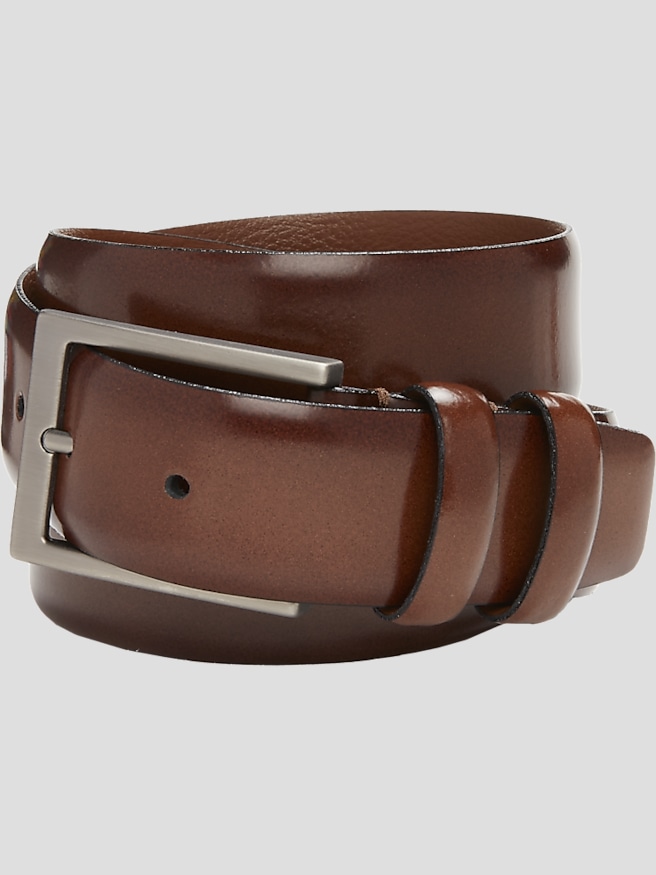
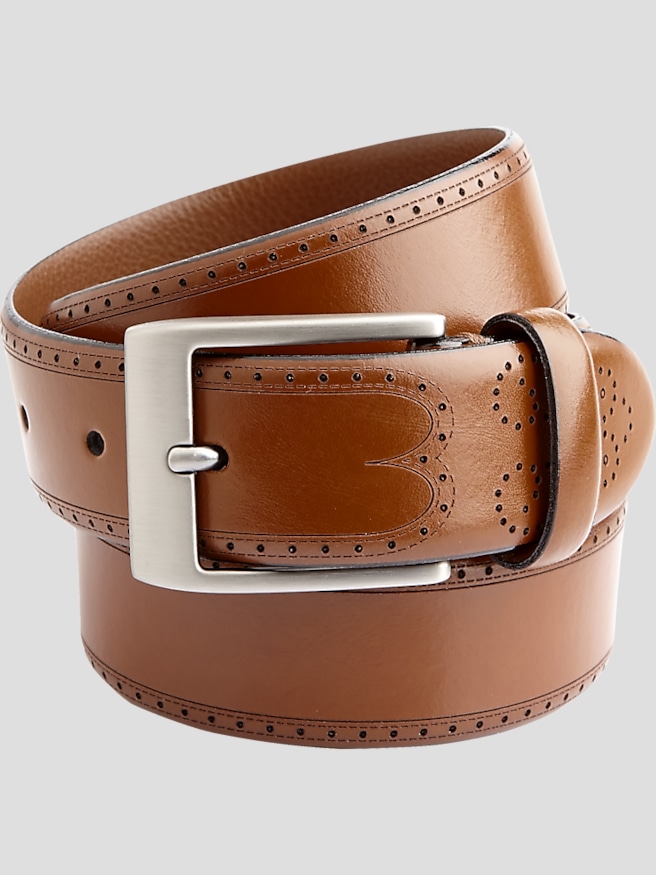
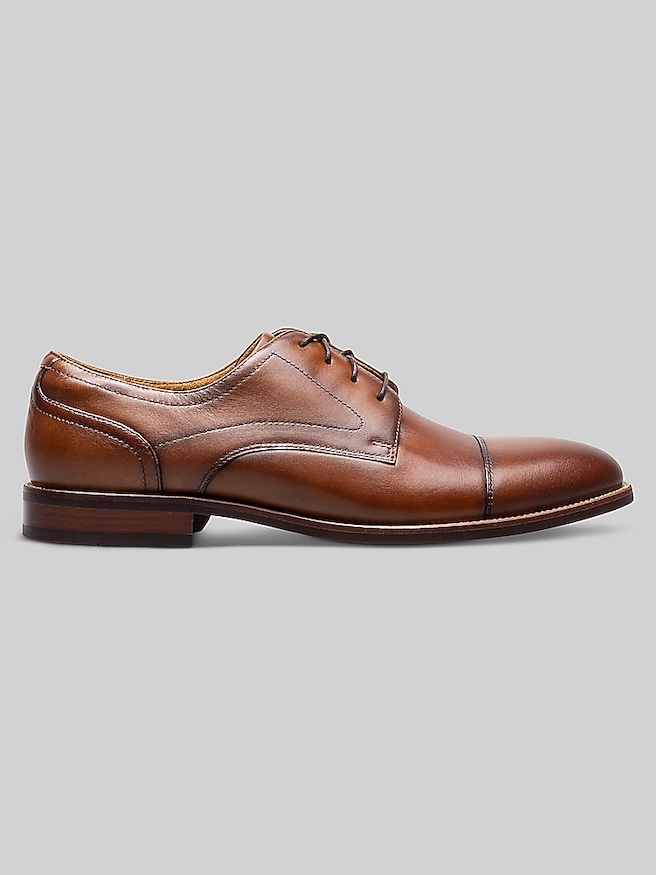
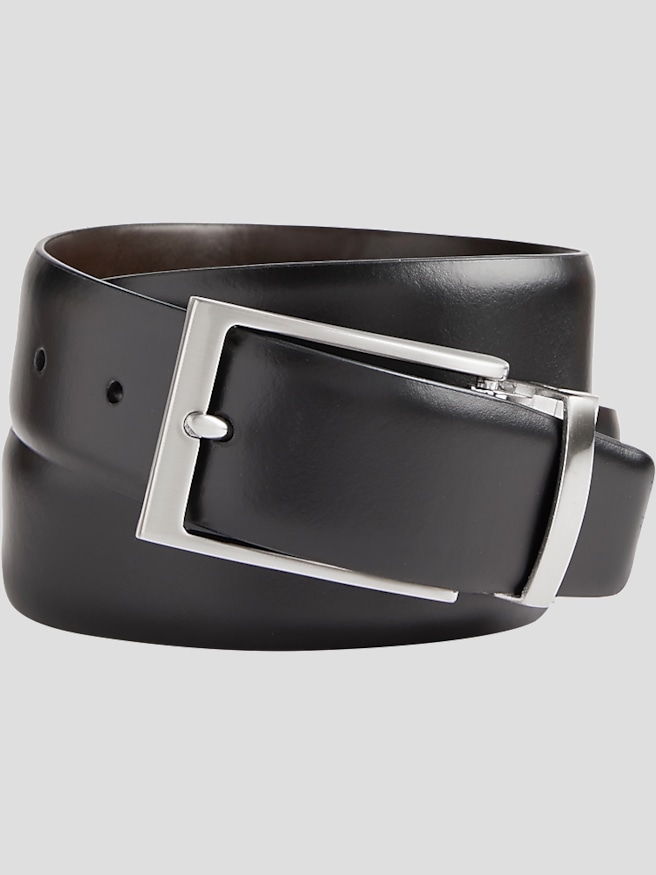
A brown dress belt is a streamlined accessory that secures tailored trousers and creates a finished transition between a shirt and the waistband. Typically narrower and less heavily detailed than a casual belt, it works with business suits, dress pants, and polished office outfits. Its character comes from the combination of leather color, surface finish, strap width, and buckle shape. A smooth medium-brown strap with a restrained metal buckle has a different effect from a dark chocolate belt with subtle grain, even when both suit the same pair of trousers. Brown shades range from light tan and warm cognac to rich walnut and deep espresso, giving each belt a distinct relationship to the rest of an outfit. Navy tailoring pairs naturally with many of these tones, while gray trousers can take on a warmer appearance beside brown leather. Paired with Brown Dress Shoes, a brown dress belt creates continuity without requiring an exact color match. Similar depth of color and a compatible finish usually matter more than making two leather surfaces look identical. Dark brown lace-ups tend to sit comfortably alongside a dark brown belt, while lighter loafers often work better with a lighter or medium-brown strap. A noticeably glossy belt beside matte shoes can look less cohesive than two slightly different shades with similar texture. The buckle contributes to that balance, too: a simple silver-tone or gold-tone frame provides definition without becoming the centerpiece. Echoing the finish of a watch case or cuff links can make a tailored outfit feel more considered, although every metal detail need not match precisely. For an office presentation, a wedding reception, or a dinner that calls for a jacket, the appeal is a clean line at the waist rather than a bold interruption. The same understated construction can also bridge the space between a full suit and a tucked-in shirt worn with neatly pressed chinos.
Materials and construction determine how a brown dress belt feels in the hand, rests against clothing, and responds to repeated wear. Leather remains a traditional choice because it can combine structure with flexibility, but leather descriptions deserve a closer look. Full-grain leather retains its natural surface grain and may show small variations that give the strap character. Top-grain leather has a surface that has been refined for a more uniform appearance, with its performance depending on the hide, finish, and construction. The term genuine leather alone does not establish a particular quality level. Bonded leather contains leather fibers held together with binders and should not be confused with an intact leather strap. Nonleather materials can provide a similar polished appearance, though their care requirements and wear patterns vary. Thickness matters alongside composition: a dress belt needs enough body to keep its shape without creating a bulky ridge beneath a shirt or jacket. Some straps use a single substantial piece of leather, while others combine a face, lining, and internal reinforcement. Neither appearance nor thickness alone reveals how well those layers are assembled. Even stitching, neatly finished edges, and a securely attached buckle are useful signs of careful workmanship. Edge paint should appear smooth rather than lumpy, and stitching should follow a consistent line without loose threads. A lightly rounded or beveled edge can give the strap a more refined profile than a broad, rugged edge associated with casual wear. Smooth finishes generally create the quietest look, while fine grain or subtle embossing adds texture without necessarily making the belt informal. Buckle proportions should complement the strap instead of overwhelming it. A compact frame and unobtrusive keeper help the loose end lie neatly against the waistband. With repeated use, natural leather may soften and develop gentle creasing near the fastening point; peeling surfaces, separating layers, or a loose buckle connection signal a different kind of wear. Durability comes from the complete construction, not simply from a material name stamped on the underside.
Fit is what allows those details to look right once the belt is threaded through the trousers. A brown dress belt should fasten comfortably, hold the waistband in place, and leave enough strap to pass through the keeper without extending far around the hip. Fastening near the middle hole generally leaves useful room for adjustment in either direction. Belt sizing varies by maker, so a marked size is not always interchangeable with a trouser waist measurement. Measuring a well-fitting belt from the buckle’s fastening point to the hole used most often offers a practical comparison when checked against the maker’s sizing method. Width also deserves attention: many traditional dress belts fall around 1 to 1¼ inches wide, although the best proportion depends on the trousers and their belt loops. A strap that barely passes through the loops can look crowded, while an unusually thin one may feel out of scale with a substantial waistband. Properly fitted trousers should sit comfortably without needing the belt pulled tight enough to gather the fabric. That distinction matters through a commute, a long meeting, or an evening spent sitting and standing. Care helps preserve both comfort and appearance. A soft, dry cloth removes everyday dust, while any cleaner or conditioner should be appropriate for the material and finish and tested discreetly first. Too much conditioner can darken or soften some leather, and products intended for smooth leather may not suit textured or specialty finishes. If a belt becomes damp, gentle blotting followed by air-drying away from direct heat is preferable to forcing it dry. Hanging it straight or storing it in a loose coil helps avoid sharp bends; tightly folding the strap can stress the finish. Rotating between belts also gives each one a break from repeated pressure at the same hole. For someone starting a new job or building a tailored wardrobe, a brown dress belt can make a thoughtful gift when the recipient’s measurements, usual footwear, and preferred buckle finish are known. Those details turn a useful accessory into something that fits naturally into an established routine.