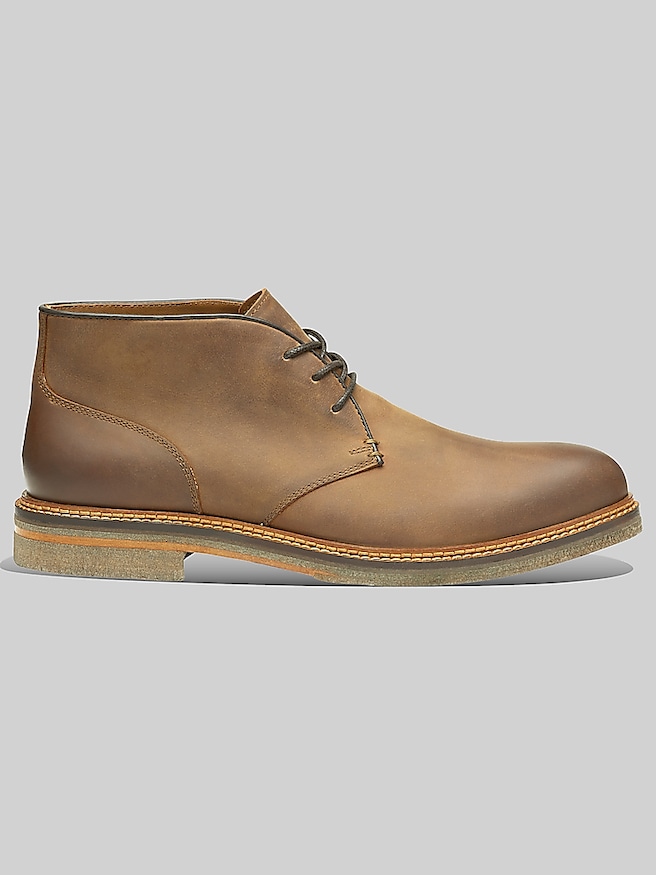
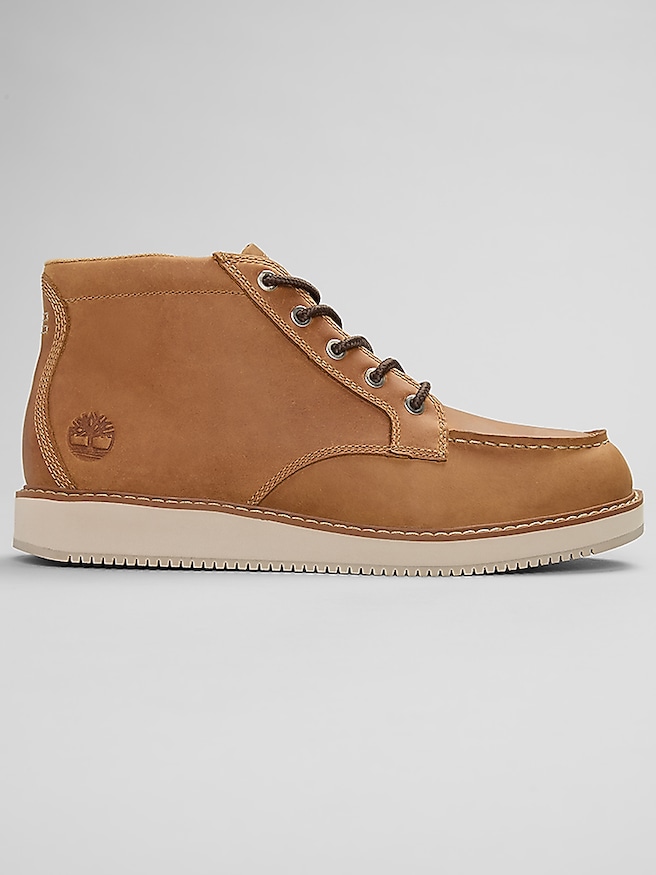
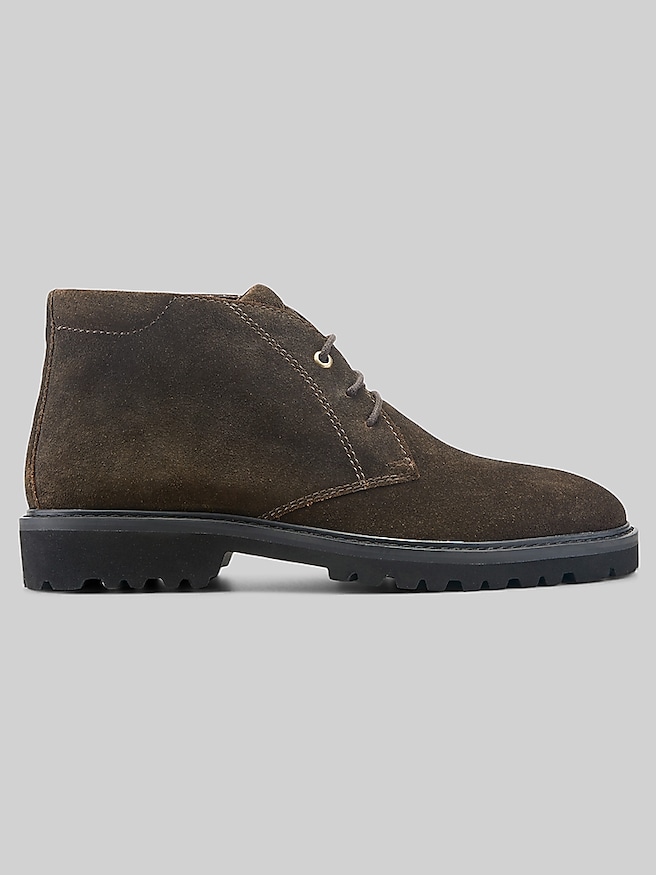
Brown chukka boots are ankle-height lace-up shoes recognized by their simple uppers, open lacing, and typically two or three pairs of eyelets. Most have a rounded or softly tapered toe, with relatively little stitching or decoration across the front. That uncluttered shape gives them a useful place between casual sneakers and traditional dress shoes: substantial enough to complement denim, yet understated enough to work with chinos and many business-casual outfits. Brown also offers considerable variety within a single color family. A light tobacco shade creates a noticeable contrast against dark jeans, medium brown pairs naturally with navy and olive, and deep chocolate can look especially refined beneath gray trousers. Surface finish matters as much as shade. Smooth leather has a clean appearance that suits an office lunch or dinner reservation, while suede brings a soft, textured finish to everyday outfits. Burnished leather may show darker shading around the toe and heel, adding depth without elaborate detailing. For a straightforward combination, dark straight-leg denim, a tucked-in Oxford shirt, and brown chukkas make an outfit feel considered without looking overly formal. With tailored clothing, a slimmer toe and a less prominent sole generally look more cohesive than a broad toe and thick, heavily textured outsole. Trouser length also changes the effect: a hem that meets the boot with little excess fabric keeps the ankle area neat, while a large stack of denim can hide the shape entirely. A brown leather belt in a similar depth of color helps connect the outfit, though an exact match is unnecessary. These boots are best understood as casual-to-business-casual footwear rather than a substitute for formal dress shoes. Their appeal lies in that middle ground, whether the day includes a relaxed workplace, a museum visit, or an informal gathering where sneakers would feel a little too casual.
Materials and construction help determine how brown chukka boots feel, wear, and fit into a regular routine. Smooth leather can develop creases and a subtle patina with use; differences in tanning, finishing, and thickness affect how supple it feels from the start. Full-grain leather retains the outer grain surface, but that designation alone does not establish comfort or overall construction quality. Suede has a raised nap that gives brown tones a softer appearance, with slight variations in color as the fibers change direction. For a closer look at that texture, Brown Suede Chukka Boots for Men focuses on the relaxed character that makes suede a natural companion to denim, cotton chinos, and textured tailoring. Inside a boot, lining materials, seam placement, footbed shape, and cushioning all influence comfort. A soft footbed may feel inviting immediately, but a secure fit and appropriate support matter more over a full day than plushness alone. Outsoles also vary considerably. Crepe rubber has a distinctive textured appearance and often feels yielding underfoot; other rubber compounds can provide a firmer platform, with tread patterns that affect traction. Leather soles create a traditional dress-shoe profile and feel, though grip depends on the surface and sole condition. No outsole material guarantees slip resistance, and comfort cannot be judged by thickness alone. Fit should leave enough space for the toes to lie naturally without pressing against the front or sides. The widest part of the foot should align comfortably with the widest part of the boot, and the laces should secure the instep without creating concentrated pressure. Trying boots with the socks intended for everyday wear gives a more useful impression than trying them with unusually thin or thick socks. Walk, turn, and pause to notice heel movement, rubbing at the collar, or pressure across the top of the foot. Leather may soften, but a boot that pinches sharply or crowds the toes should not be expected to become the right size through wear.
The most useful brown chukka boots are the ones whose shape, materials, and upkeep fit the way they will actually be worn. Someone who spends much of the day seated may prioritize a streamlined profile that works beneath office trousers, while someone moving between appointments may place greater importance on secure heel hold, underfoot support, and manageable weight. For travel, versatility can be particularly valuable: a medium-to-dark brown boot with restrained detailing can accompany jeans during the day and chinos for an evening meal, reducing the need for multiple pairs of shoes. Chukkas can also make a thoughtful gift for someone building a business-casual wardrobe or moving beyond sneakers, especially when their usual size, width, and preferred leather finish are known. Long-term satisfaction depends partly on care, and smooth leather and suede need different treatment. After wearing smooth leather boots, remove surface dirt with a soft brush or cloth, then use a leather-appropriate cleaner when needed. Apply conditioner sparingly according to the maker’s directions, since excessive product can alter the finish or leave residue. A compatible cream polish can help maintain color on suitable smooth leather, while suede should generally be cleaned with a suede brush and products specifically intended for its nap. Test any treatment on an inconspicuous area first, particularly on lighter brown shades. If boots become damp during cleaning or wear, let them dry naturally away from direct heat. Shoe trees can help maintain their shape, and allowing time between wears helps the interior dry fully. Check heel edges, outsole wear, loose stitching, and fraying laces periodically rather than waiting for discomfort to develop. Some stitched constructions can be resoled, but repair options depend on the boot’s complete design and condition; a visible stitch line alone is not proof of repairability. With an appropriate fit, sensible care, and a silhouette suited to the wardrobe, brown chukka boots can become a dependable part of getting dressed, adding definition to simple outfits without demanding much extra effort.