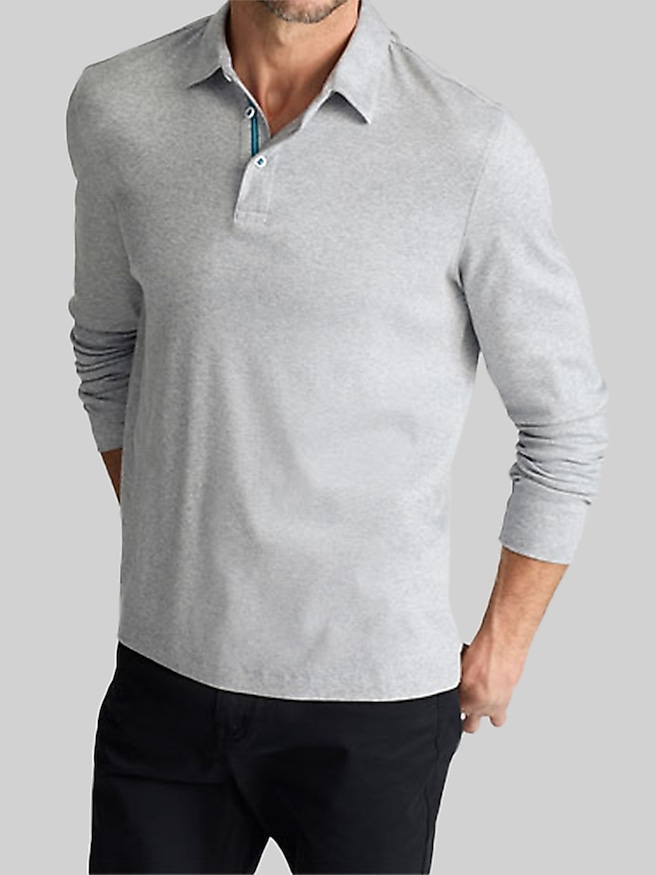
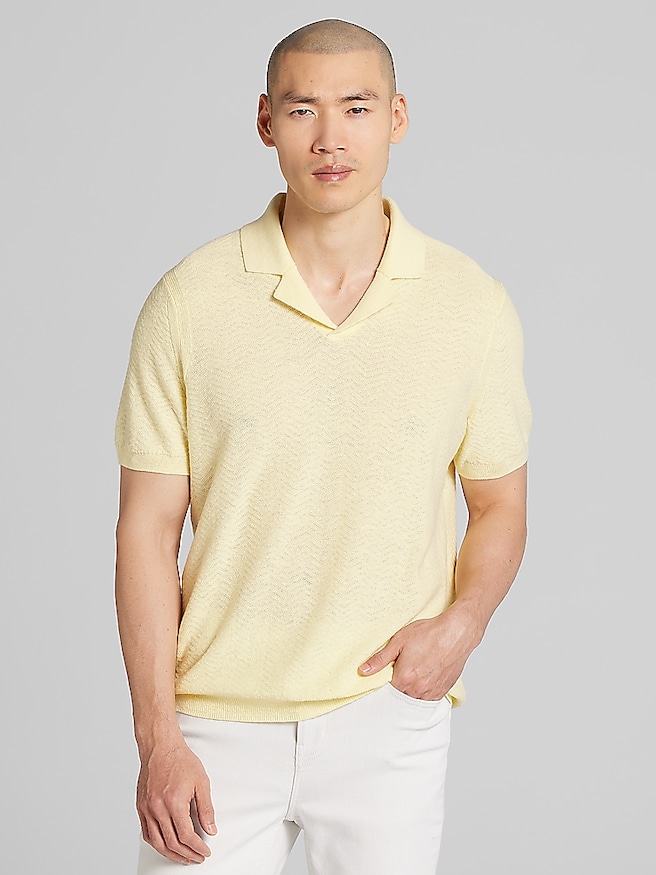
Breathable cotton polo shirts pair the easy feel of a knit tee with a soft collar and a short button placket. The collar gives the shirt enough structure to wear with chinos at the office, while the knit feels relaxed enough for an afternoon of errands. Much of the difference between one polo and another comes down to the fabric. Cotton piqué has a fine, raised pattern that gives the shirt a slightly textured surface. A lightweight, openly knit piqué can allow air to move through the fabric without giving up the defined shape that makes a polo look neat. Cotton jersey has a smoother face and generally drapes more softly, which makes it a natural match for jeans or casual trousers. Interlock, a double knit, is smooth on both sides and often has a little more body. The knit name is a useful clue, but it doesn't tell the whole story: a light jersey can be airier than a tightly knit piqué. Fiber content matters, too. A 100% cotton polo has the familiar soft feel of cotton and absorbs moisture, but it can take longer to dry once damp. A cotton-rich blend with polyester may dry faster, while a small amount of spandex can give the shirt a little more reach through the chest and shoulders. Stretch, airflow, and moisture wicking are separate qualities. A fabric that lets air pass through won't necessarily move moisture away from the skin, and a stretchy fabric isn't automatically more breathable. For a day behind a desk, the soft feel of an all-cotton knit may matter more than drying speed. For a full round of golf or an afternoon spent on foot, a breathable cotton blend that dries readily may be more practical.
A polo looks its best when the collar lies flat, the placket sits straight, and the body follows the torso without clinging. On a standard set-in sleeve, the shoulder seam should sit near the edge of the shoulder rather than riding toward the neck or dropping far down the arm. Short sleeves generally end around mid-bicep, with enough room at the opening to bend an elbow comfortably. A clean fit through the chest is easier to judge in motion than in front of a mirror: reaching for a steering wheel or leaning across a table shouldn't pull the placket apart or make the hem ride up sharply. A trimmer cut can sit neatly under an unstructured blazer, while a straight or relaxed cut leaves more ease through the waist and chest. That extra room can be welcome on a long flight or any day that involves a lot of sitting. For an untucked polo, a hem that lands around mid-fly often gives the shirt a balanced look without covering too much of the pants. A polo worn tucked needs enough length to stay put when the wearer reaches overhead or gets up from a chair. Small side vents can help an untucked hem fall cleanly over the hips, especially with a straighter cut. The fabric and finish can change how dressed up the same basic shape feels. A smooth, solid-color polo tucked into tailored trousers works in an office where an open collar is appropriate. An untucked piqué polo with dark denim and casual shoes has more texture and feels less formal without looking like gym wear. The polo is also a useful gift for someone who splits time between a casual office and weekend plans. The cut and sleeve length of a shirt already in regular rotation are better clues than the size on its tag alone.
A cotton polo that gets worn and washed regularly needs to hold its shape at the collar, cuffs, and hem. Piqué's texture and interlock's fuller feel may suggest a sturdy shirt, but stitch quality and fabric recovery matter just as much as thickness. Even stitching around the placket and side vents helps those areas stand up to routine wear. A collar that settles back into place after being folded is more likely to sit neatly than one that takes on a crease with little handling. Lighter knits can be durable, too, though a rough bag strap rubbing against the same spot day after day can raise fuzz or cause pilling. Washing a polo inside out reduces surface rubbing and can help preserve its color. Follow the care label for washing and drying, particularly with cotton blends or shirts that have a contrasting collar. High dryer heat can contribute to shrinkage, so a lower setting or air-drying is often a better choice when the label permits. A quick smoothing of the placket and collar while the shirt is still damp can save some pressing later. A heavier knit can be laid flat to dry if hanging it wet would pull on the shoulders. Once dry, folding a soft polo rather than leaving it on a narrow hanger can help prevent bumps at the shoulder seams. Those small habits are especially useful for a shirt that goes from the laundry to the workweek and back again. The appeal of a breathable cotton polo is that it can look put together without making an everyday outfit feel stiff. For that same emphasis on airflow in styles beyond the polo collar and short placket, see Breathable Cotton Shirts For Men.