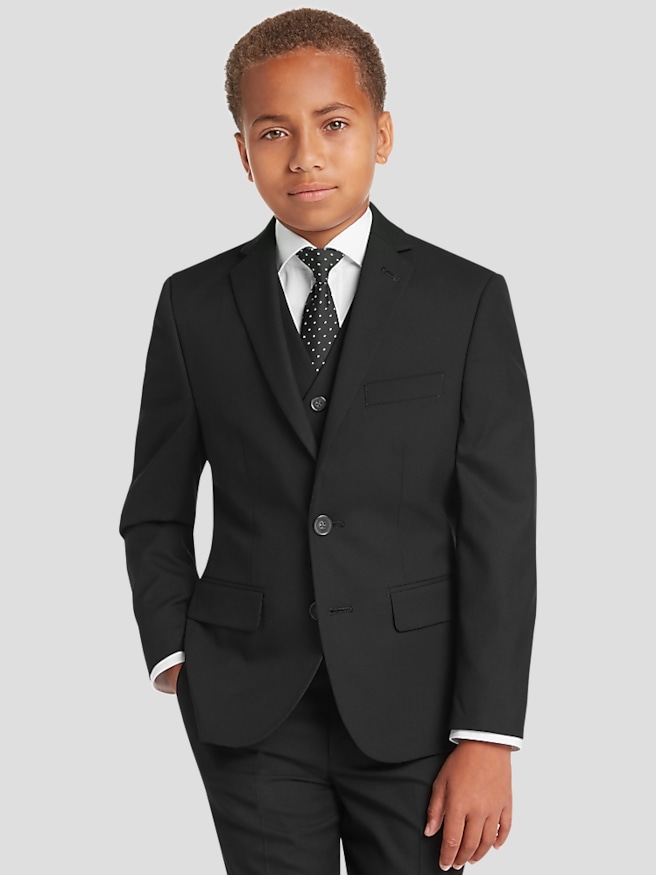
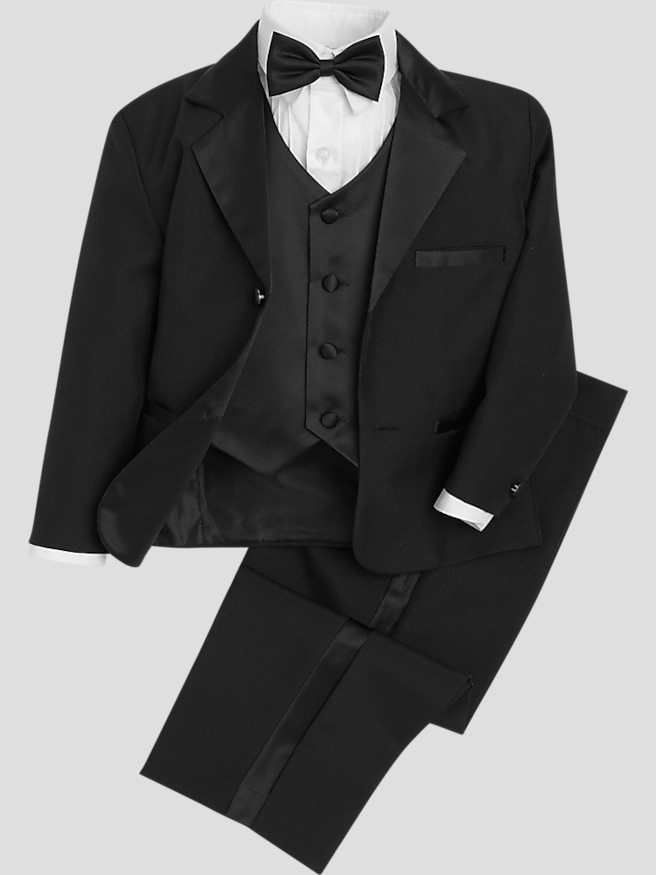
A boys’ size 16 suit typically pairs a tailored jacket with matching trousers, while some designs include a coordinating vest for a more formal look. Size 16 is a clothing size rather than a promise of fit at a particular age; body measurements and the suit’s cut determine how comfortably it wears. These suits suit the occasions when a young person needs something more polished than everyday clothes, from weddings and religious celebrations to school ceremonies, recitals, and family portraits. A coordinated jacket and trouser combination creates a clean line in photographs and makes getting dressed simpler, especially when several members of a wedding party need a consistent appearance. Navy and charcoal are versatile colors for repeated wear, while black has a distinctly formal character that works well when the event’s dress expectations call for it. A subtle check or understated stripe can add interest without competing with a patterned tie or a colorful boutonniere. Two-piece styling keeps the outfit straightforward; a vest adds another tailored layer and can maintain a dressed-up appearance when the jacket comes off at a reception. Notch lapels, a neatly shaped collar, and balanced jacket proportions contribute to the overall effect more than elaborate details. A white or pale blue dress shirt provides a simple foundation, while a tie can echo the colors of the occasion without matching every accessory exactly. Dress shoes and a belt in compatible leather tones help the outfit feel coordinated from head to toe. For a student stepping onto a stage or a young wedding attendant standing beside older relatives, the best result is polished but still age-appropriate. There should be enough ease to sit through a ceremony, shake hands, and move naturally, rather than feeling restricted by clothing that looks formal but fits too tightly. That balance makes a size 16 suit useful beyond a single photograph or brief appearance.
Fit gives boys’ suits in size 16 much of their character, and the same size label can look quite different in slim, regular, or fuller cuts. A slim silhouette generally sits closer through the torso and legs, while a roomier cut provides more space without necessarily changing the intended jacket length. Shoulder fit is especially important because a jacket that extends well beyond the natural shoulder can look oversized even when the sleeves have been shortened. The collar should rest neatly against the shirt collar, and the jacket front should lie smoothly when buttoned rather than pulling into an obvious X shape. Sleeve length usually leaves a small amount of shirt cuff visible, helping the outfit look finished without making the jacket appear outgrown. Trouser fit matters just as much during a long event. A comfortable waistband stays in place without being cinched tightly, and the seat and thighs need enough room for sitting, walking, and climbing stairs. An adjustable waistband, when part of the design, can help fine-tune the fit, but it does not correct trousers that are too short or a jacket that is too narrow. At the hem, a slight break over the shoe creates a traditional finish, while a cleaner, shorter break can give tapered trousers a sharper line. Excess fabric pooling around the ankles tends to make the whole outfit appear less precise. Accurate chest, waist, height, and inseam measurements are more useful than assuming that size 16 corresponds to a sixteenth birthday or a particular school grade. Boys’ sizing also does not translate directly into adult suit sizing. For families coordinating more than one outfit, Boys Suits Size 12 offers another size category to consider for a sibling or fellow wedding attendant, with each child’s measurements guiding the fit. Appropriate alterations can refine sleeve and trouser length when the garment’s construction allows, but buying substantially oversized to accommodate growth often leaves the shoulders and body looking unbalanced. A well-proportioned fit leaves sensible breathing room without overwhelming the wearer.
Fabric and construction influence how a size 16 suit feels throughout an event and how well it holds its appearance afterward. Wool is valued for its drape, breathability, and natural resilience, while wool blends can combine those qualities with other fibers chosen for strength or easier handling. Polyester blends often resist creasing, rayon can contribute softness and fluidity, and a small amount of stretch may make movement more comfortable. Fiber content alone does not tell the whole story: fabric weight, weave, lining, and the shape of the garment all affect comfort. A smooth lining helps a jacket slide over a dress shirt, while neatly finished seams and secure buttons support repeated wear. For a boy who will spend part of the day seated and part of it moving between photographs, dinner, and a dance floor, those practical details matter. Trousers benefit from a stable waistband and enough ease through areas that experience regular strain. Care requirements vary, so the garment’s label determines whether professional cleaning or another method is appropriate; a synthetic blend is not automatically machine washable. Between wears, a shaped jacket hanger supports the shoulders, and hanging trousers neatly helps preserve their crease. Empty pockets prevent unnecessary stretching, while allowing the suit to air before storage helps keep it fresh. A breathable garment bag can protect it from dust without trapping moisture. Prompt attention to spills also matters, since rubbing a mark aggressively can spread it or damage the fabric’s surface. With appropriate care and a fit that still accommodates growth, a suit can serve at several celebrations rather than just one. As a gift from a grandparent or another relative, it is most practical when the recipient’s measurements and upcoming occasions are already known. The lasting value is in a comfortable, well-kept outfit that lets a young person participate confidently in important family and school moments.