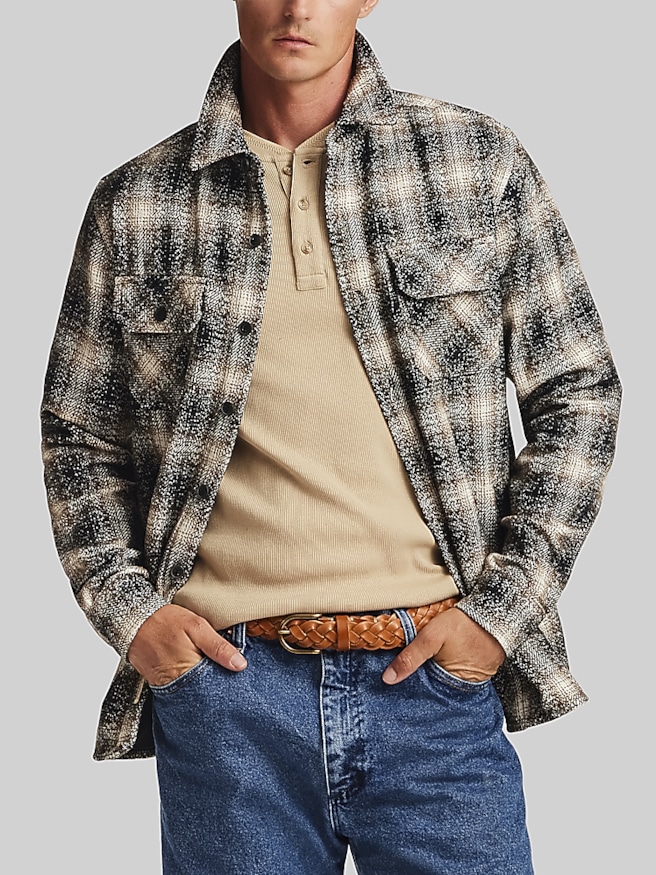
Blue shirt jackets combine the familiar shape of a button-front shirt with the structure of a lightweight jacket, creating an easy layer for casual outfits and relaxed business-casual settings. Often called overshirts, they typically have a collar, a full front opening, and enough room to sit comfortably over another shirt. Their appeal comes from that middle ground: more substantial than a basic button-down, less formal than a blazer, and easy to wear open or fastened. Blue gives the category plenty of range. Deep navy has a clean, understated appearance, indigo brings a denim-inspired character, and lighter or washed blues lend a softer, more casual finish. Fabric makes just as much difference as color. Cotton twill generally has a defined diagonal weave and a practical, workwear-inspired look, while denim offers a recognizable texture that can develop character with wear. Brushed cotton has a softer surface, and corduroy adds visible ridges that give a simple outfit more depth. Wool and wool-blend fabrics can create a more tailored impression, though their texture and care needs vary with the construction. Some blends incorporate synthetic fibers to influence shape retention, wrinkle resistance, or ease of care; the fiber label provides a clearer picture than appearance alone. Details also help establish the mood. Flap chest pockets and prominent stitching emphasize utility, while discreet pockets, a smooth placket, and matching buttons keep the overall effect restrained. A rounded shirt-style hem tends to read more casually than a straight, jacket-like hem, although either can work with everyday separates. For men who prefer a small group of versatile layers, a blue shirt jacket offers a useful way to introduce texture without relying on a bold pattern. It can serve as the defining piece over a plain T-shirt or blend into an outfit built around chinos and a knit polo. The best choice depends on whether the desired result is rugged, relaxed, or quietly polished.
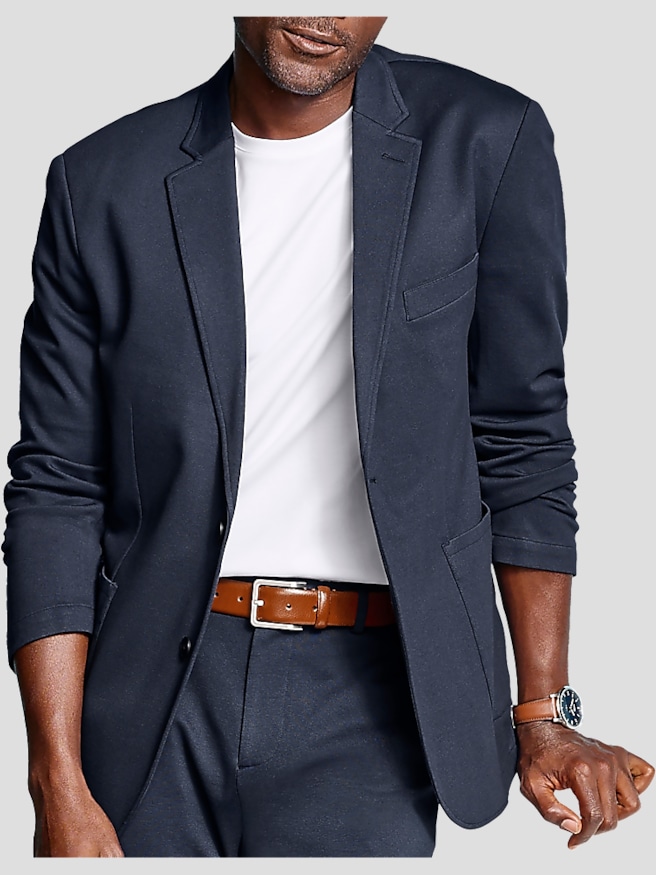
Fit determines whether a blue shirt jacket looks intentional or simply oversized. The shoulders should sit comfortably without pulling across the upper back, and the chest should allow the front to close smoothly over the layer most likely to be worn underneath. A T-shirt requires less room than a substantial knit, so evaluating the fit with a typical outfit gives a more realistic sense of proportion. Raising the arms, reaching forward, and sitting down can reveal tightness that is easy to miss while standing still. Extra room through the body can be part of the design, but sleeves that swallow the hands or a hem that overwhelms the frame may distract from an otherwise clean silhouette. Sleeve cuffs should sit near the wrist when fastened, with enough space to move naturally. Length matters, too: a shorter cut often works well with untucked casual layers, while a longer overshirt can create a looser, more workwear-influenced outline. Styling does not need to be complicated. A navy shirt jacket over a white crewneck, paired with stone chinos and simple sneakers, creates clear contrast without much visual noise. An indigo version with olive pants and leather boots leans more rugged, while a smooth, dark blue fabric over a fine-gauge knit can feel appropriate for a casual dinner or a less formal workplace. When pairing blue with blue, differences in shade and texture help the pieces look deliberately coordinated rather than almost matched. Dark denim beneath a lighter blue overshirt is one straightforward approach. Pocket placement and bulk deserve attention as well, especially when the jacket will be worn seated at a desk or carried through a commute. For occasions that call for a more tailored outline, Blue Smart Jackets offer a related direction; shirt jackets remain the more relaxed choice when easy movement and shirt-like details are the priority.
Care and construction have a lasting effect on how a blue shirt jacket looks after repeated wear. Before choosing a fabric, consider how its upkeep fits into an everyday routine. Some cotton and synthetic-blend styles may be machine washable, while wool blends, lined designs, or specially finished fabrics may call for professional cleaning. The care label should always take precedence over general assumptions about a material. When washing is permitted, following the stated water temperature and drying method helps limit avoidable shrinkage, fading, and distortion. Dark blue and indigo fabrics may release dye, particularly early in their life, so checking care guidance and separating colors can help protect lighter clothing. Promptly treating a spill according to the fabric instructions is usually more effective than allowing it to settle into the fibers. Between cleanings, a suitable hanger helps support the shoulders, while emptying pockets prevents unnecessary stretching and keeps the front hanging evenly. Construction is worth examining alongside fabric weight. Secure buttons, tidy buttonholes, even seams, and neatly finished pocket edges are useful signs of careful assembly. Reinforcement at pocket corners can help areas that experience frequent pulling, but a workwear appearance alone does not establish that a garment is suitable for demanding physical tasks. Intended use should guide the decision: a shirt jacket for restaurant outings may prioritize a smooth drape, while one for frequent everyday wear may benefit from a textured fabric that suits a more relaxed look. As a gift, a blue shirt jacket can be a thoughtful choice for a father, brother, partner, or friend who already wears casual collared shirts and simple separates. Familiar shades, manageable care requirements, and a fit that accommodates established layering habits make the choice more personal and practical. Attention to those everyday details helps a shirt jacket become a regular part of a wardrobe rather than a piece that looks appealing but rarely gets worn.