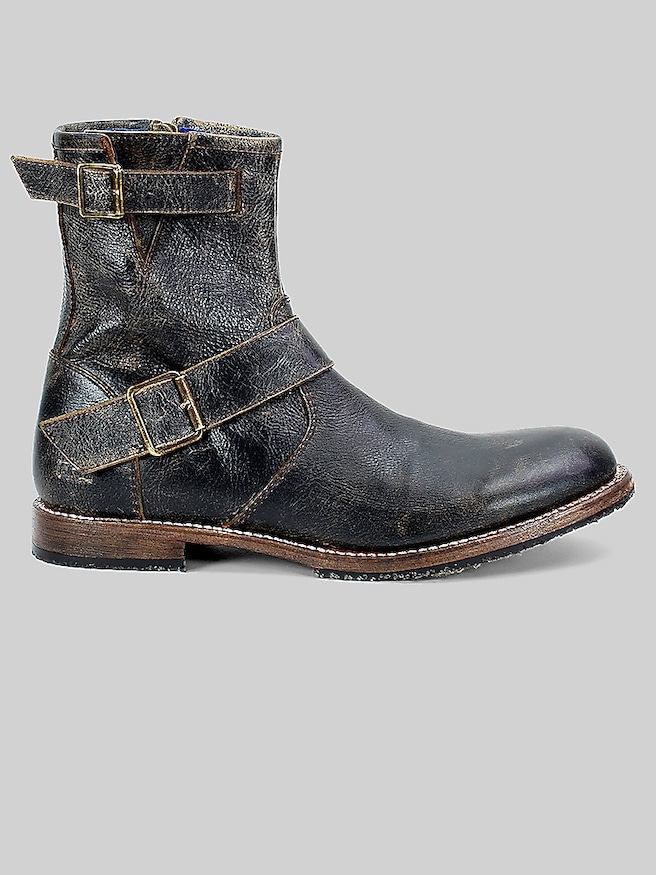
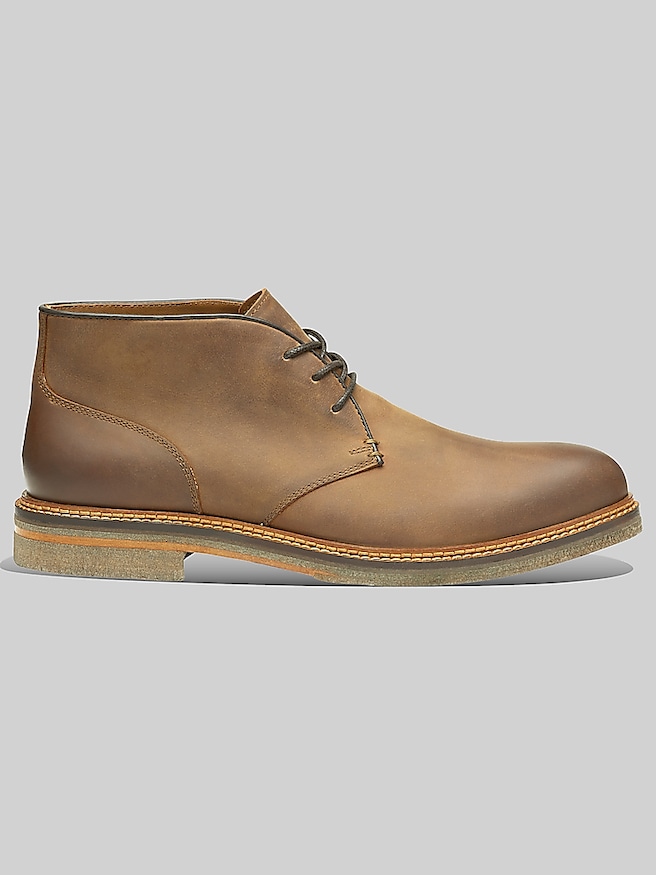
Blue boots bring color to a familiar footwear shape without requiring an entirely new approach to getting dressed. The category includes ankle-height lace-up boots, pull-on Chelsea boots, relaxed chukka silhouettes, and Western-inspired designs, with shades ranging from deep navy and indigo to brighter cobalt and pale blue. Each shade has a distinct effect: navy can look understated beneath charcoal trousers, while a brighter blue becomes a clear focal point against simple, neutral clothing. Material also changes how the color reads. Smooth blue leather often has a more defined, polished appearance, while blue suede produces a softer, matte finish with subtle variations as the nap catches the light. For men who usually wear black or brown footwear, dark blue offers an approachable alternative that still works with familiar wardrobe colors. Gray, cream, tan, olive, and white all provide useful pairings, and denim can complement blue boots when there is enough contrast between the two shades. Dark indigo jeans with lighter blue suede create separation; navy boots with faded denim keep the footwear distinct without making the outfit feel busy. Common silhouettes serve different purposes. A streamlined Chelsea boot can sit comfortably within a business-casual wardrobe, a rounded lace-up shape can complement everyday jeans and chinos, and a Western silhouette adds character through its shaft, heel, and toe shape. For an office day followed by dinner, a dark blue boot with restrained stitching and a relatively slim sole offers a more understated look than a heavily textured design. At a concert or casual gathering, a bolder shade can carry the outfit while the rest of the clothing stays simple. Suit trousers can also work with sleek blue boots in less formal settings, although the event’s dress expectations matter more than color alone. A boot with a substantial tread or pronounced Western details communicates something different from one with a smooth upper and a low-profile sole.
The feel and durability of blue boots depend on more than their color. Smooth leather, suede, nubuck, and textile uppers each have their own texture, structure, and care requirements. Full-grain leather retains the hide’s natural surface and can develop creases and character with wear, but leather quality also depends on tanning, finishing, thickness, and construction. Suede has a raised nap that gives blue tones depth, while nubuck has a finely buffed surface with a similarly soft appearance. Textile panels can change flexibility and weight, particularly around the ankle, though the complete construction determines how a boot feels on the foot. Underneath, rubber soles vary widely in firmness, tread, and grip; leather soles generally offer a smoother profile, with traction depending on the surface and any added rubber components. Neither material alone guarantees comfort or long wear. Stitching, lining, heel construction, and the connection between the upper and sole all contribute to performance. Some welted or stitched constructions may allow resoling, while repair options for other constructions depend on the design and a cobbler’s assessment. Fit is equally important because a boot surrounds both the foot and part of the ankle. Toes need room to move without hitting the front, the widest part of the foot should align with the boot’s broadest area, and the instep should feel held rather than compressed. Lace-up boots allow adjustment across the upper; pull-on styles rely more heavily on the shape of the opening and instep for a secure fit. Slight heel movement can occur in some new pull-on boots, but repeated rubbing or substantial slipping suggests the fit needs another look. Trying boots with the socks intended for regular wear gives a more useful impression than relying on size alone. Walking, sitting, and climbing a few steps can reveal pressure points that are not obvious while standing still. Leather may soften with wear, but breaking in a boot should not mean tolerating cramped toes, numbness, or persistent pain.
Keeping blue boots looking good starts with care suited to the upper rather than treating every pair the same way. Loose dust and grit can dull the finish and work into creases, so gentle cleaning after wear helps preserve both appearance and material. Smooth leather generally benefits from a soft cloth and, when appropriate, a cleaner or conditioner compatible with its finish. Blue dyes and surface treatments can react differently to care products, making an inconspicuous test especially important before treating the entire upper. Too much conditioner can darken leather or leave residue, and colored polish should match the boot closely rather than merely carry a similar color name. Suede and nubuck need tools intended for their textured surfaces; a suitable brush can lift the nap, while a compatible eraser may help with minor surface marks. Conventional leather creams and waxes are usually unsuitable for these materials because they can flatten or stain the texture. Any protective treatment should follow the boot manufacturer’s directions and should not be taken as a promise of waterproof performance. If boots become damp during cleaning or wear, allowing them to dry naturally away from direct heat helps protect the material and adhesives. For suitable leather boots, correctly sized shoe trees can support the shape between wears, and giving footwear time to air out helps manage moisture inside. Attention to worn heel edges, loose stitching, and thinning soles can also make repairs possible before damage spreads. Compared with brown boots, blue footwear creates a cooler color contrast with tan trousers, cream knitwear, and earth-toned jackets, offering another way to vary familiar outfits. As a gift, blue boots suit someone who enjoys footwear with personality, especially when the shade and silhouette reflect clothing already in regular rotation. Knowing the recipient’s usual boot size, preferred fit, and typical activities matters as much as choosing an appealing color. A polished navy shape for office dressing and a relaxed suede silhouette for everyday outings serve distinct needs, making intended use a practical starting point.