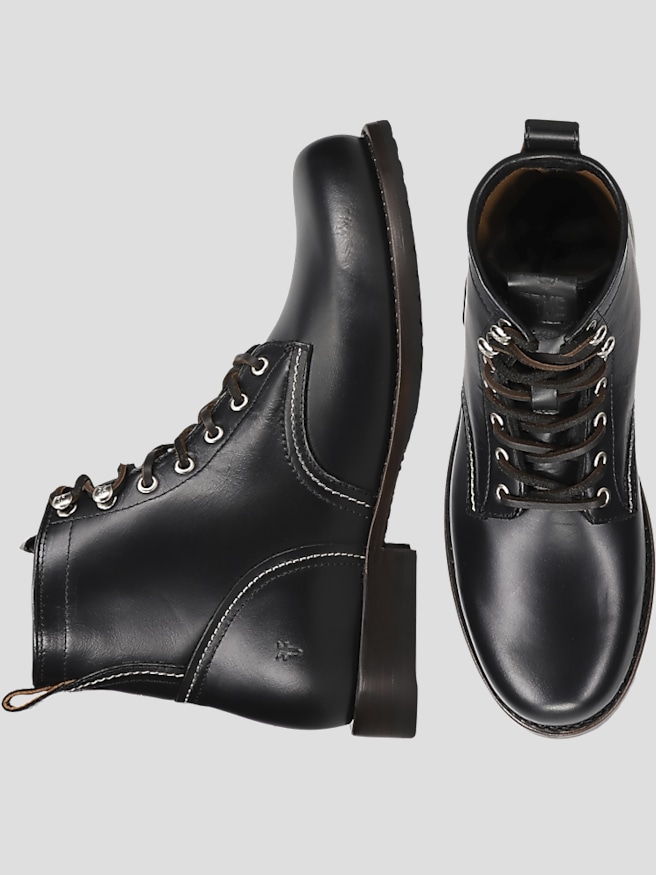
Black work boots bring a clean, understated finish to footwear built for demanding routines. Their appeal goes beyond color: a dark upper can look at home with a uniform, sturdy work pants, or straight-leg denim, making the same general style relevant to a workshop, a warehouse, or a casual day away from the job. The important distinction is between a boot designed for occupational use and one that simply borrows the look. A substantial sole and reinforced stitching may suggest toughness, but protective features need to be confirmed in the product specifications rather than judged by appearance. Materials help shape both performance and character. Full-grain leather generally has a substantial feel and develops creases that reflect how the boot moves, while nubuck has a softly textured surface that needs a somewhat different cleaning routine. Synthetic uppers may offer lighter weight or easier surface cleaning, depending on their construction. For anyone comparing upper materials, leather work boots offer a closer look at a familiar option valued for its structure, adaptability, and lasting character with appropriate care. Inside the boot, lining materials influence how smoothly the foot slides in and how effectively moisture from daily wear can move away from the skin. Underfoot, rubber compounds, cushioning layers, and sole construction all contribute to the feel of each step. A welted design may allow sole replacement when the construction and condition permit, while cemented construction can offer flexibility and lower weight. Neither method alone determines quality; the right balance depends on the tasks ahead. Someone moving between a loading area and a desk may prioritize flexibility and a tidy profile, while someone spending hours around abrasive surfaces may put greater emphasis on reinforced wear zones. Black keeps the overall look restrained, but the details of the build determine what the boots are suited to do.
Fit becomes especially important when boots stay on through a full shift. The toes need room to spread without pressing against the front or sides, and the heel should feel secure rather than lift enough to cause rubbing. Trying boots with the socks normally worn on the job gives a more useful impression than trying them with thin dress socks. Any prescribed orthotics should be part of that fit check, too, provided the boot is designed to accommodate them. A removable footbed can make that adjustment easier, although replacing an insert should not crowd the foot or compromise the footwear’s intended protection. Width matters as much as length: sizing up to relieve pressure across the forefoot can leave too much space elsewhere. Walking, bending, and using a step during a try-on can reveal pressure points that standing still misses. Leather may soften with wear, but painful tightness is not a sound starting point, and a protective toe cap will not stretch to make extra room. The work setting also determines which features deserve attention. Safety-toe construction, puncture resistance, electrical hazard protection, and slip resistance are distinct characteristics, not interchangeable promises. Workplace requirements and the applicable safety markings should guide that choice. Slip-resistant footwear is not slip-proof, and outsole performance varies with the surface, contamination, tread condition, and compound. Deep lugs can help on loose ground, while a less aggressive tread may be more practical on certain indoor surfaces and easier to clear of debris. For ladder work, employer requirements may call for a defined heel and other specific design features. Hours of walking may favor a balance of cushioning, flexibility, and support, whereas repeated contact with rough equipment can make toe and heel reinforcement especially useful. Boot height and closure also affect the experience: laces allow adjustments across the instep, while pull-on designs depend more heavily on the match between the foot, shaft, and heel shape.
Good care helps black work boots retain their appearance while making it easier to notice wear that needs attention. Dust and grit should be brushed away before they become embedded around seams and flex points, and stubborn residue should be cleaned with a method appropriate to the upper material. Smooth leather generally benefits from occasional conditioning with a compatible product, applied according to the maker’s directions; nubuck and synthetic materials may require other treatments. Testing a cleaner or conditioner on an inconspicuous area helps avoid unexpected changes in color or finish. Black polish can refresh suitable smooth leather, but it is not a substitute for conditioning, and it should not be applied indiscriminately to textured uppers, fabric panels, or outsole surfaces. After cleaning or exposure to moisture, allow boots to dry naturally away from direct heat. Removing removable footbeds can help the interior dry more thoroughly, and alternating pairs when practical gives each pair time to air out between uses. Routine inspection matters just as much as surface care. Look for separating soles, deeply worn tread, damaged stitching, frayed laces, and exposed protective components; footwear with compromised safety features may need replacement even if the uppers still look presentable. Beyond occupational use, the restrained color and substantial shape of black work boots can anchor everyday outfits without elaborate styling. Straight or relaxed pant legs generally sit comfortably over a boot shaft, while hems that drag under the heel can wear prematurely and create a tripping concern. Dark denim and a simple overshirt keep the look casual; structured work pants and a tucked-in polo suit settings where practical clothing is part of the routine. For a gift, boots are most useful when the recipient’s size, width, preferred fit, and workplace requirements are already known. A familiar silhouette is only part of the choice. The most satisfying pair is one whose materials, shape, and protective features match the way its wearer actually spends the day, from the first set of stairs to the final walk back to the car.