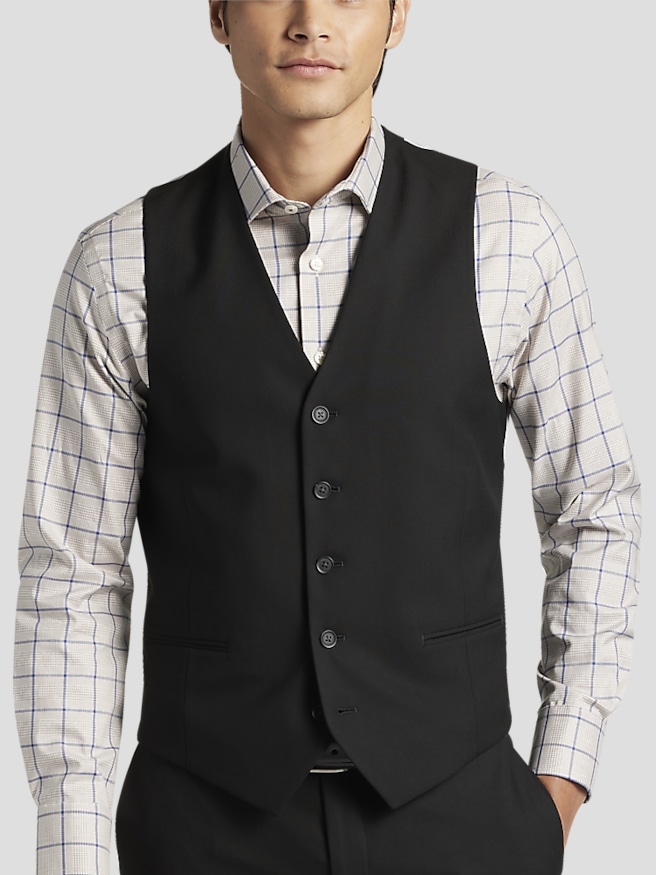
A black suit with a vest creates a three-piece look built around a jacket, matching trousers, and a waistcoat. The vest adds structure through the torso and keeps the outfit looking complete when the jacket comes off, whether that happens at a wedding reception or during a long evening of dinner and conversation. Black gives the combination a clean, understated character, with the shirt, tie, and fabric texture supplying much of its personality. It suits wedding parties, formal celebrations, evening ceremonies, and professional occasions where a more dressed-up appearance is appropriate. For a gala or invitation specifying black tie, the distinction matters: a black three-piece suit is not the same as a tuxedo, and the event’s dress code determines which is suitable. A coordinated suit and vest typically share the same fabric, finish, and shade, creating an uninterrupted line from shoulders to shoes. That consistency is especially important with black, since differences in dye, weave, or sheen can become noticeable under bright lighting or in photographs. Wool is a traditional suiting material because it drapes well, breathes, and recovers from everyday creasing. Wool blends can combine those qualities with other characteristics, such as added stretch or resistance to abrasion, depending on the fiber mix and construction. Synthetic blends may offer durability and easier upkeep, although the care label remains the best source for cleaning requirements. Fabric weight, lining, and surface texture also influence how a three-piece suit feels and looks. A smooth, matte cloth has a restrained finish, while a subtle woven texture adds depth without competing with the outfit’s formal lines. Because a vest adds another fitted layer, flexibility through the chest and comfort against the shirt matter as much as the jacket’s appearance. Thoughtful construction, securely attached buttons, and neatly finished seams help a suit hold its shape through repeated wear, making these details useful considerations for anyone expecting to dress formally more than once.
The strongest impression comes from how the three pieces work together on the body. A black suit with a vest should look shaped rather than tight, with enough room to sit, reach across a table, and move naturally without fabric pulling at the closures. The jacket’s shoulders should follow the wearer’s shoulder line, and the collar should rest cleanly against the shirt collar instead of leaving a noticeable gap. Across the front, pronounced wrinkles radiating from a fastened button usually indicate strain rather than a sleek fit. The vest should lie close to the chest with a smooth button line, not bow outward or pull into an X around the buttons. Its length should cover the trouser waistband so that a strip of shirt does not appear between the two pieces when standing. The shape of the vest’s lower points can vary, but the overall effect should be a continuous, balanced silhouette. An adjustable back strap, when present, can refine the waist without compensating for a vest that is too small through the chest. Slim fits generally sit closer through the torso and legs, while classic fits offer more room; modern fits often fall between the two, though fit names vary. The right choice depends on proportions and movement, not simply the label. Someone with broader shoulders may need more room in the jacket while still benefiting from a defined waist, and a shorter frame can look balanced with a well-proportioned jacket and a clean trouser hem. Trousers should sit securely at their intended rise, with a length that creates either a slight break over the shoe or a cleaner finish, according to preference. Alterations can refine sleeve length, trouser hems, and some areas of fullness, while shoulder construction is harder to change. On many traditional single-breasted vests, the bottom button is left undone; double-breasted and other designs may follow a different closure pattern. A comfortable fit should remain polished even after sitting through a ceremony or standing for group photographs.
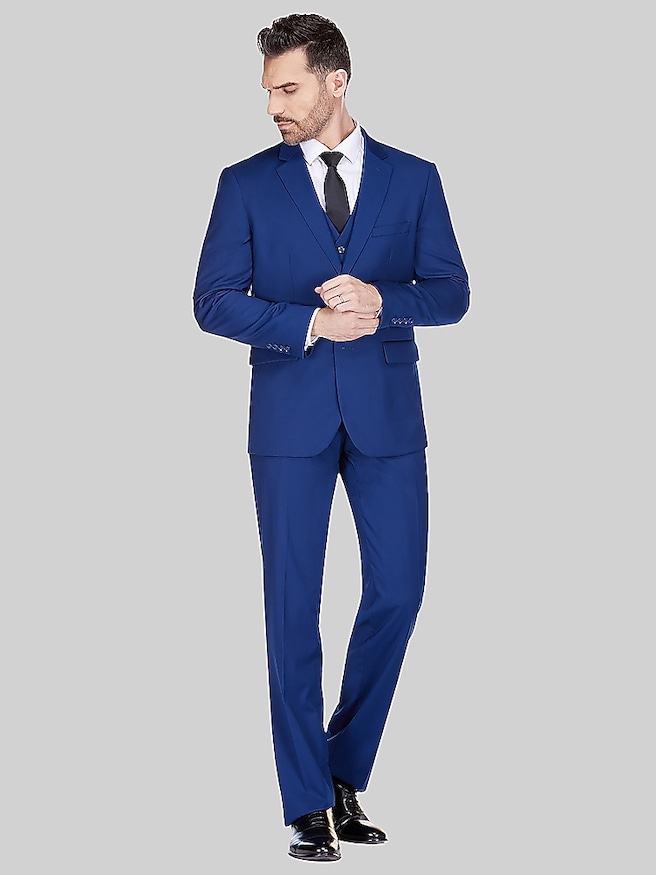
Shirts and accessories give a black vested suit its individual character without distracting from the coordinated foundation. A white dress shirt provides crisp contrast and works especially well for ceremonies and evening events, while a pale blue shirt softens the effect for occasions with a less formal dress code. A textured tie, restrained pattern, or neatly folded pocket square introduces distinction without requiring a loud color combination. At a wedding, a groom or member of the wedding party might echo an accent color in the tie while keeping the shirt and suit consistent with the group. For a guest, a simple silk tie and polished leather shoes can create a composed outfit that does not compete with the celebration. Smooth black dress shoes are a natural partner, and coordinated leather accessories keep the finish cohesive. A contrasting vest creates a different impression from a matching three-piece suit, so consistency of fabric and color remains important when a uniform look is the goal. For a different color direction with the same coordinated approach, a Blue Suit And Vest offers another option for wedding and occasion dressing. Long-term appearance depends on care as well as styling. Cleaning instructions should govern treatment, particularly when wool, specialty linings, or structured tailoring are involved. A soft clothing brush can remove surface dust, and airing the pieces after wear helps freshen them without unnecessary cleaning. When professional cleaning is needed, treating the matching pieces together helps limit differences in color and finish over time. A broad, shaped hanger supports the jacket’s shoulders, while properly hanging the trousers and vest helps prevent stubborn creases. Storage away from direct sunlight protects the depth of the black fabric, and a breathable garment bag shields the suit from dust. As a gift for a graduate, partner, or family member preparing for a milestone occasion, a vested suit is most successful when measurements, preferred fit, and opportunities for alterations are part of the consideration.