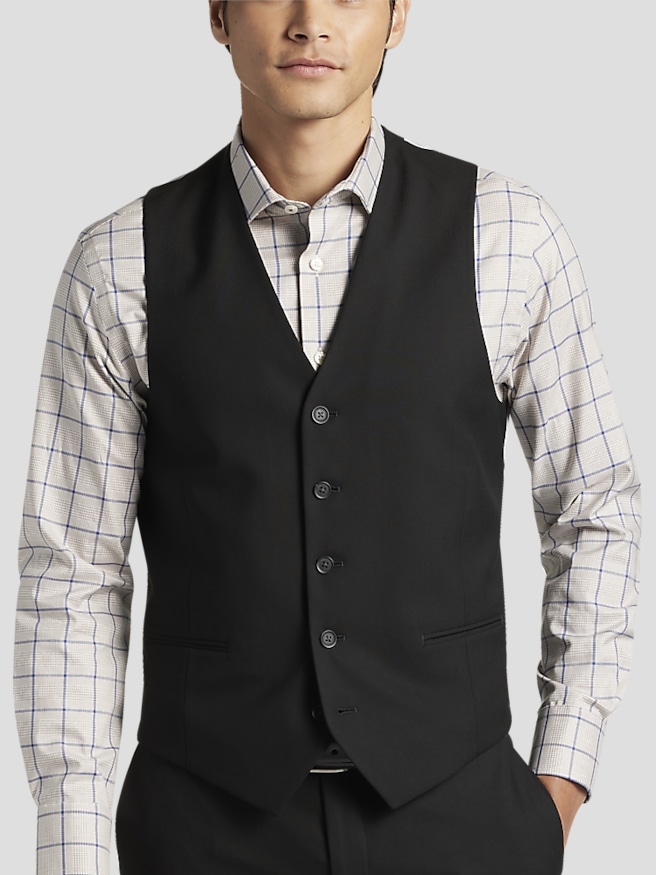
A black suit with a black vest creates a coordinated three-piece look when the jacket, trousers, and vest share the same fabric, shade, and finish. The added layer gives the outfit a more complete appearance, keeping the shirt neatly framed even when the jacket comes off at a reception or dinner. This combination works well for weddings, evening celebrations, formal business occasions, and solemn gatherings, with the shirt and accessories determining how expressive or restrained it feels. A crisp white dress shirt offers clear contrast against the dark tailoring and makes the shape of the vest easy to see. A black shirt creates a quieter, monochromatic effect, especially when the tie has a subtle texture rather than a pronounced shine. Light blue can soften the contrast for a professional setting, while a restrained patterned tie adds interest without competing with the clean lines of the suit. For a wedding guest, a silk tie and a neatly folded pocket square can make the outfit feel celebratory without drawing attention away from the occasion. For a memorial service, understated accessories and a simple shirt keep the overall impression respectful. A black suit and vest can look dressy, but they do not automatically satisfy a black-tie dress code, which traditionally calls for a tuxedo. The invitation remains the best reference for the expected level of formality. Within settings where a suit is appropriate, the vest offers useful flexibility: the jacket provides structure for arrivals, photographs, and introductions, while the vest maintains a finished appearance through a seated meal or conversation afterward. Accessories need not match one another exactly. A pocket square that picks up a small detail in the tie often looks more considered than an identical pattern, and polished black leather shoes keep the outfit grounded. The strongest combinations let the tailoring lead, using a few deliberate details rather than several competing accents.
The fabric and cut of a Vest for Black Suit influence how naturally it works with the jacket and trousers. Black fabrics are not all visually identical: one may have a brown undertone, another a blue cast, and another a more pronounced surface sheen. Differences that seem slight in a closet can become noticeable under bright indoor lighting or in photographs. Matching fabric provides the most unified result, while separately chosen pieces benefit from close attention to weave, texture, and finish. Smooth wool suiting generally offers a refined surface, natural breathability, and a drape that follows the body without looking stiff. Wool blends can combine that character with added resilience, depending on the fibers and construction. Synthetic blends may offer durability and wrinkle resistance, although comfort and breathability vary with fabric weight, lining, and weave. A textured vest against a smooth jacket introduces contrast; that can be intentional, but it creates a different effect from a fully coordinated three-piece suit. Fit matters just as much as material. The vest should sit close to the torso without pulling across the chest, creating horizontal wrinkles, or spreading around the buttons. Its lower edge should cover the trouser waistband so that a strip of shirt does not show between the two pieces when standing naturally. Trouser rise therefore matters: a shorter vest paired with low-rise trousers can leave an unwanted gap. A back adjuster, when present, can refine the shape, but it cannot correct a vest that is fundamentally too large or too small. Comfortable armholes allow movement without cutting into the shoulders, and the neckline should leave enough room for the shirt collar and tie. On a traditional single-breasted vest, the lowest button is generally left undone to help the front sit comfortably. The jacket should still close smoothly over the added layer, with lapels lying flat and enough room to sit, reach across a table, or shake hands without strain. Slim, modern, and classic cuts describe different silhouettes, not different standards of good fit; each should look balanced and allow natural movement.
A black suit and black vest are useful wardrobe pieces for someone whose calendar includes ceremonies, client-facing events, dinners, or celebrations with a suit-level dress code. Their value comes from repeat wear and thoughtful care rather than treating every occasion as a reason for a completely new look. Changing the shirt, tie, and pocket square can shift the same coordinated tailoring from restrained to festive while preserving its clean foundation. For long stretches of sitting, comfort depends on more than the size marked on a label: trouser ease, vest length, and the room beneath the jacket all contribute to how the outfit feels after several hours. Secure buttons, even seams, a smooth lining, and neatly finished edges are useful signs of construction that can support repeated wear. Care begins with the garment label, since fabric composition and internal construction determine the appropriate cleaning method. Many tailored suits and vests require professional dry cleaning rather than machine washing. Frequent cleaning is not always necessary; gentle brushing and airing after wear can help remove surface dust and allow the fabric to recover. Stains benefit from prompt attention and a cleaner’s assessment rather than vigorous rubbing, which may alter the surface. When coordinated pieces need cleaning, treating them together can help keep their appearance consistent over time. A broad, shaped hanger supports the jacket’s shoulders, while trousers should hang smoothly and the vest should be stored without crowded folds. Breathable garment storage helps protect the ensemble from dust, and pockets emptied after wear are less likely to develop stretched outlines. As a gift, a black vest can suit someone who already wears black tailoring, provided the fabric match and measurements receive careful attention. For a graduate preparing for formal events or someone building a more polished occasion wardrobe, fit is more meaningful than a guessed size. The result should feel composed but wearable: a clean waistband, a smooth button line, and a jacket that settles comfortably over the vest.