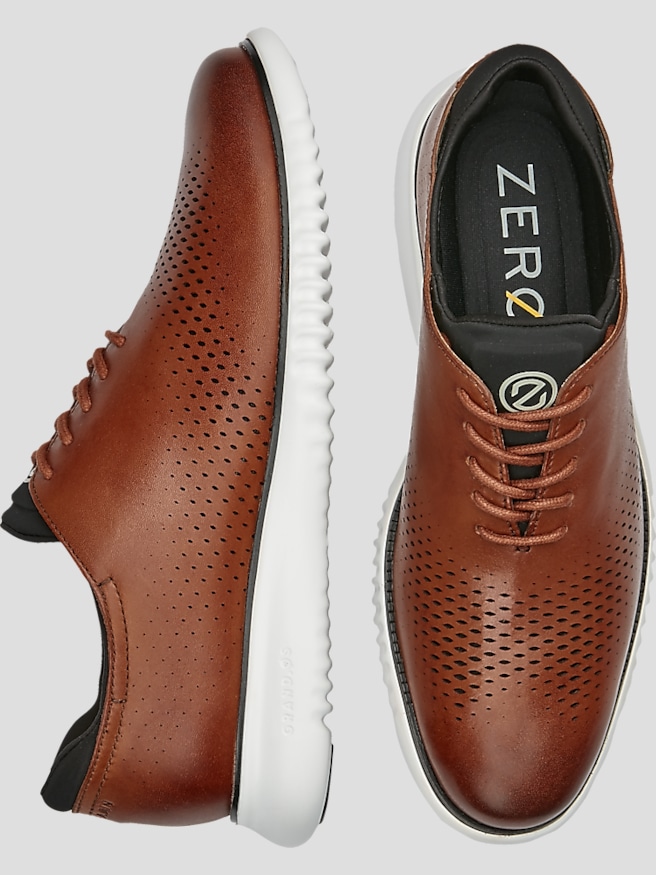
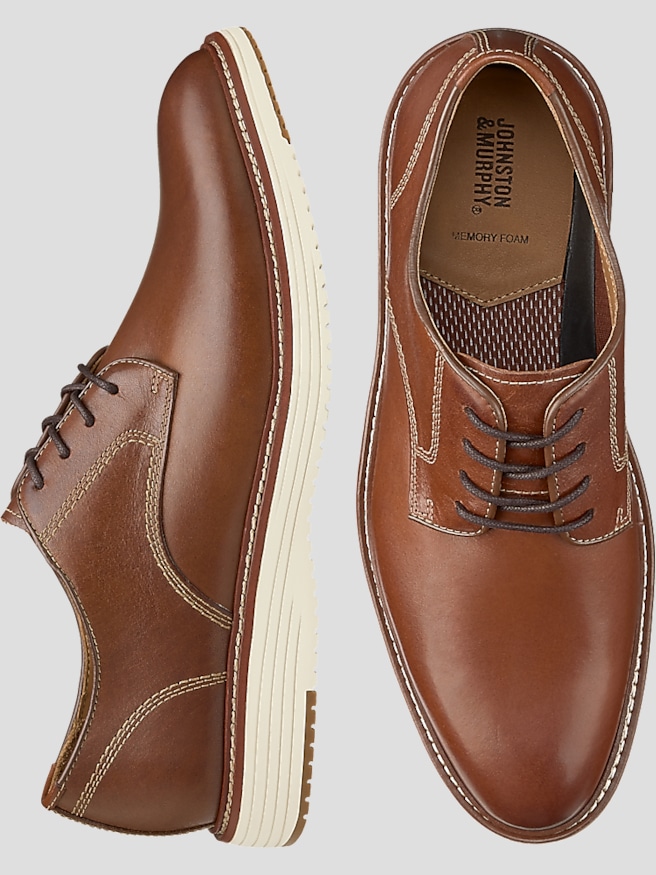
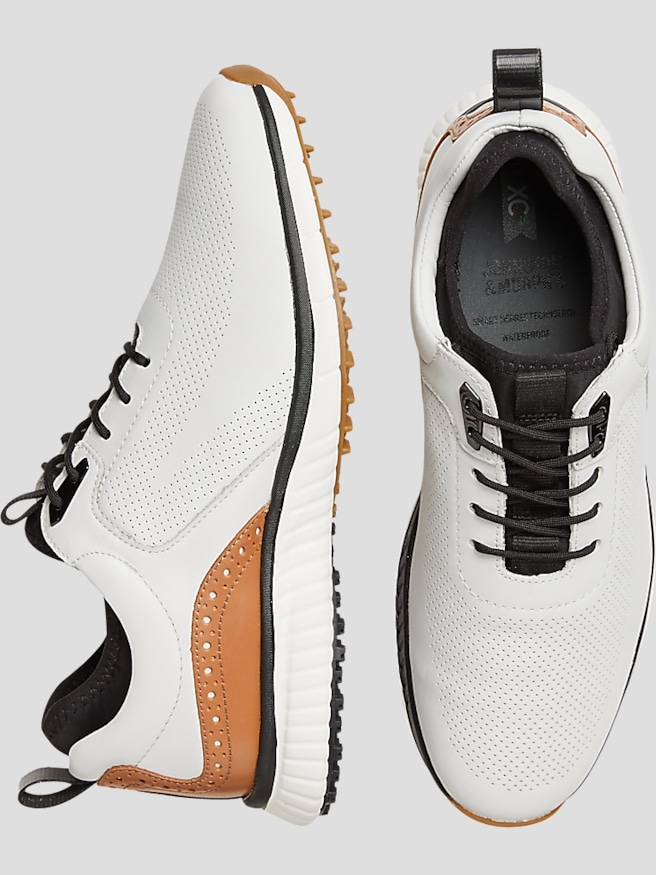
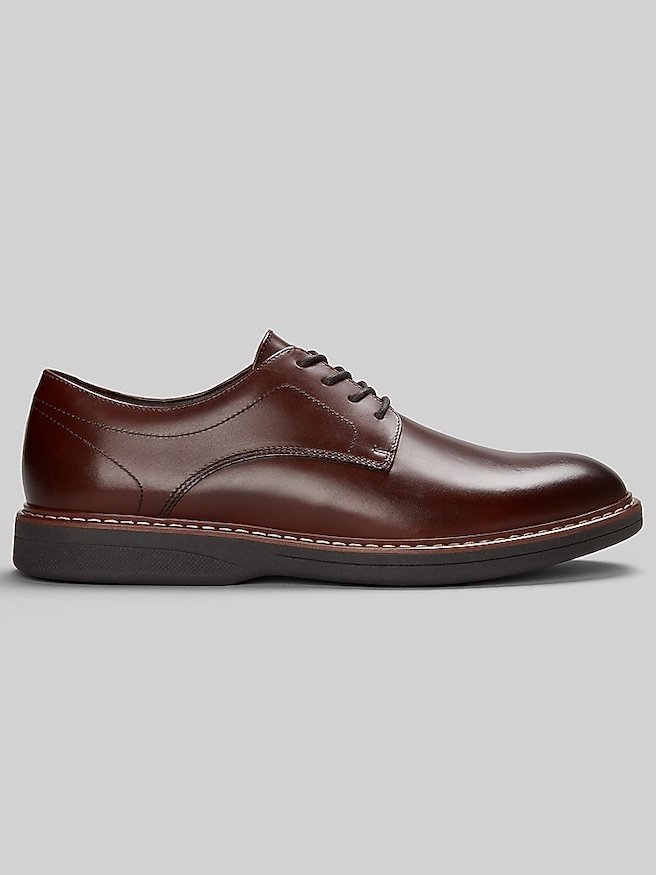
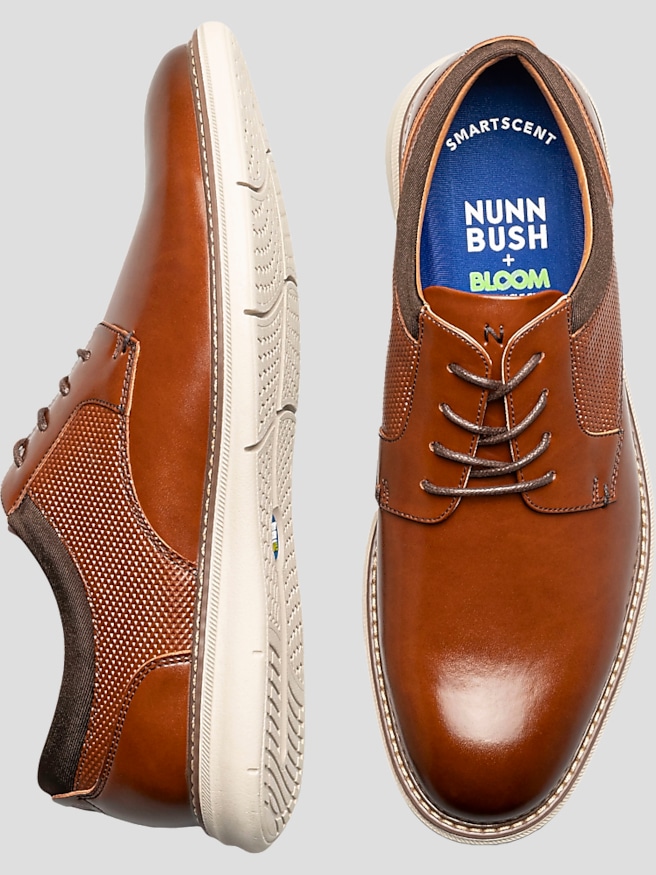
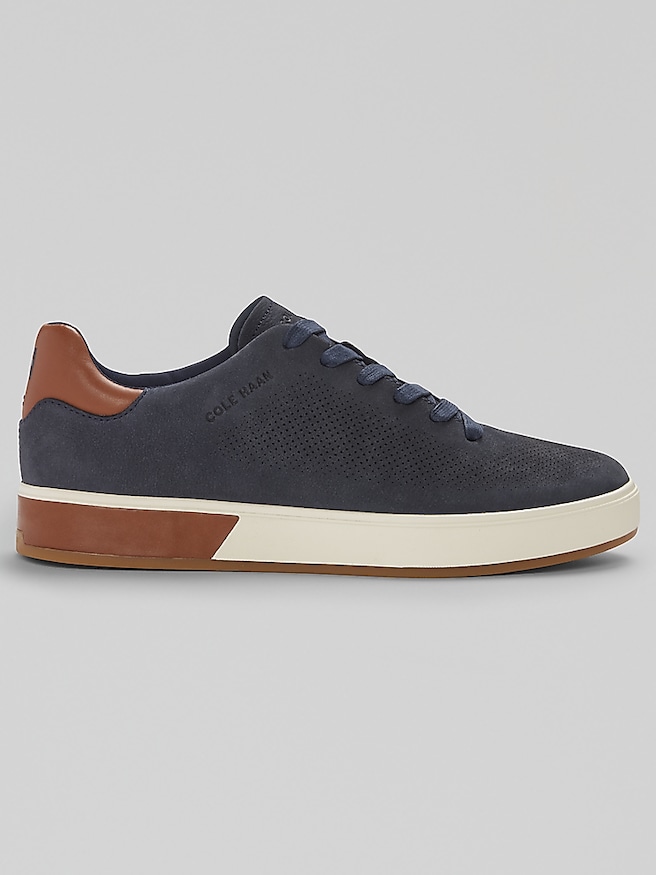
Black sneakers with a suit bring a relaxed edge to tailored clothing without abandoning a polished appearance. The combination works best when the footwear has a streamlined shape, the suit fits cleanly, and the occasion allows some flexibility in dress. Low-top sneakers in smooth black leather are a particularly natural match: their understated finish echoes the look of dress shoes, while their shape keeps the outfit from feeling strictly business. Minimal logos, neat stitching, tonal laces, and a relatively slim sole help maintain that balance. An all-black upper and outsole create an uninterrupted line beneath dark trousers; a white or off-white sole introduces more contrast and makes the casual element more noticeable. Neither approach needs an elaborate outfit to work. A charcoal suit with a fine-gauge knit polo has enough texture and structure to complement simple leather sneakers, while a navy suit with an open-collar shirt offers a familiar option for an office that welcomes smart-casual clothing. Black tailoring can also work well with black sneakers, especially when the shirt or knitwear keeps the overall palette restrained. The important distinction is between looking deliberately relaxed and looking as though workout shoes were added at the last minute. Bulky running shapes, prominent performance details, and heavily patterned uppers generally pull attention away from the tailoring. A quieter sneaker lets the jacket, trouser line, and footwear feel connected. For a broader view of silhouettes that complement tailored clothing, the sneakers to wear with a suit collection offers another way to explore the pairing. Black remains an especially versatile choice because it provides a dark, understated foundation across several suit colors. Its appeal is less about replacing every dress shoe than adding a useful option for settings where a full suit feels appropriate but traditional footwear is not essential. At a creative workplace, an evening reception with a relaxed dress code, or dinner after a presentation, that balance can feel comfortable and considered.
Materials and proportions make a substantial difference in how black dress sneakers look alongside a suit. Smooth leather typically delivers the sharpest visual connection to tailoring, although leather quality, finish, and construction vary. Supple uppers can become more comfortable with wear, but a shoe should not need a painful break-in period to feel wearable. Suede offers a softer, more textured effect that complements brushed fabrics and less structured jackets, though it needs different cleaning methods from smooth leather. Canvas and mesh read as more casual and usually create a stronger contrast with a suit. Inside the shoe, lining materials, cushioning, and footbed shape influence comfort as much as the appearance of the upper. Soft padding alone does not guarantee support during a day of standing, walking between meetings, or spending several hours at an event. A secure heel, adequate room through the forefoot, and a sole that flexes comfortably near the ball of the foot are useful qualities to assess. Toes should have space to move without the foot sliding forward, and laces should hold the midfoot without excessive pressure. Fit is best evaluated with the socks intended for the outfit, since thickness can change how snugly a sneaker sits. The trouser hem deserves equal attention. A slight break or a clean finish near the top of a low-profile sneaker keeps fabric from collecting over the laces. Slim and straight-leg trousers can both work; the aim is a balanced relationship between the width of the opening and the size of the shoe. Very narrow hems can exaggerate a substantial sole, while overly long trousers may hide the sneaker entirely. Softer jacket construction and fabrics with some texture tend to make this combination feel more cohesive than highly formal tailoring. A simple shirt, understated knit, or refined polo reinforces that relaxed character without requiring every element to be casual. Socks close to the trouser color preserve a continuous line, while no-show socks create a more informal finish when the setting permits it.
Intended use matters just as much as appearance when choosing black sneakers for a suit. For someone who moves between a desk, client visits, and an informal dinner, a restrained leather style can support several outfits without drawing attention to the footwear. For a celebration, the same pairing depends on the invitation and the expectations of the hosts. Sneakers may suit a relaxed wedding dress code, but they are not the default choice for black-tie events, ceremonial dress, or conservative professional settings. Traditional dress shoes remain the more appropriate option when formality is explicit or uncertain. Within a flexible dress code, clean condition is what helps sneakers hold their own beside tailoring. Dust along the sole edge, worn laces, and visible scuffs stand out against neatly pressed trousers, even when the shoe itself is well designed. Smooth leather generally benefits from gentle cleaning with a soft cloth and a leather-appropriate cleaner, followed by conditioning when recommended by the manufacturer. Suede needs a suitable brush and products intended for its nap; treatments for smooth leather can alter its texture or color. Care directions should take priority, particularly with mixed-material uppers, coated finishes, and bonded details. Excessive soaking, machine washing without approval, and direct heat can damage materials or weaken construction. Letting shoes dry naturally and giving them time to air between wears helps manage moisture inside. Durability also depends on how the shoes are made and used: outsole wear, stitching integrity, lining abrasion, and the condition of the heel counter all affect how long a pair remains comfortable and presentable. A sneaker worn frequently for long walks may show wear differently from one reserved for dinners and office days. As a gift, black sneakers can be a thoughtful choice for someone who enjoys tailoring but prefers less formal footwear, provided their size, width, and style preferences are known. The strongest match combines a neat profile, dependable fit, and manageable care with the recipient’s actual routine. Those practical details give the polished appearance staying power beyond the first wear.