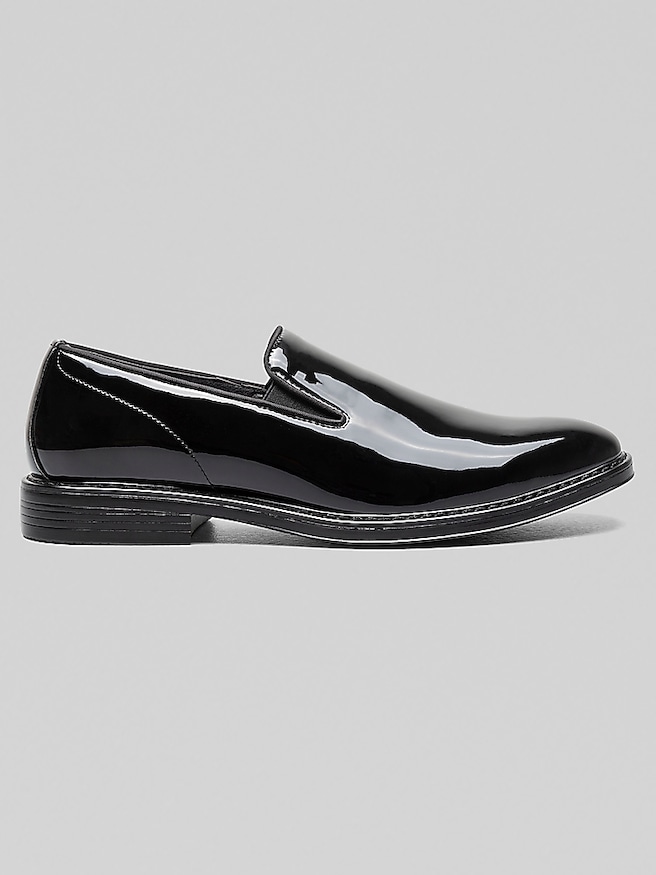
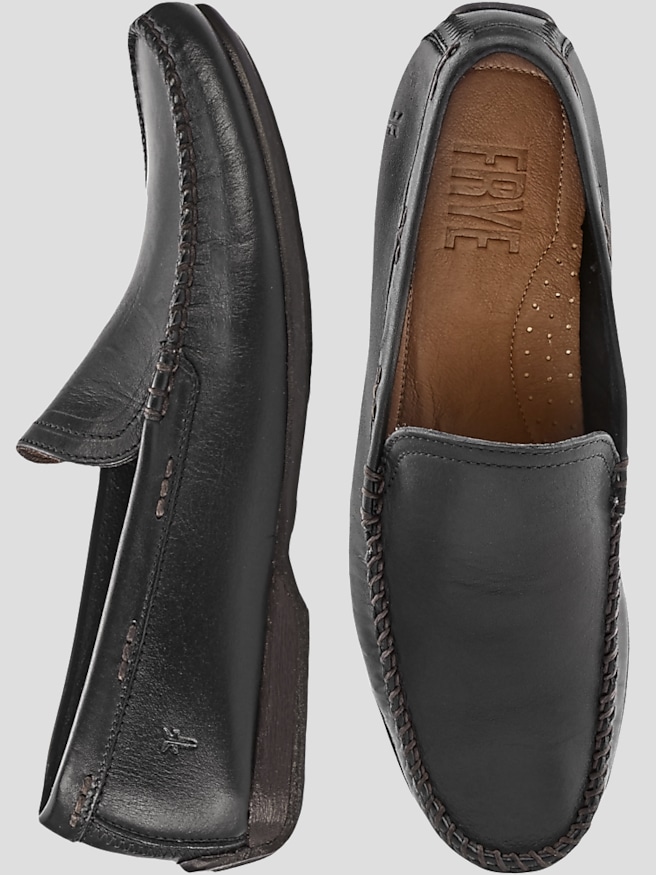
Men’s black slip-on dress shoes combine a lace-free design with the polished appearance of dress footwear, making them a practical choice for offices, weddings, dinners, and other occasions that call for a tailored outfit. Their defining feature is a low-cut opening that allows the foot to slide in without laces, while the shape of the toe, finish of the upper, and profile of the sole determine how formal they look. Penny loafers have a strap across the instep with a small opening, giving them a restrained, familiar appearance. Tassel loafers add decorative movement, while bit loafers use metal hardware to bring a distinct focal point to the shoe. Plain-vamp designs keep the upper uncluttered, allowing the leather and silhouette to carry the look. When comparing Men's Black Slip On Shoes, dress-focused styles generally have a sleeker shape and less visible bulk than casual slip-ons. Smooth black leather pairs naturally with charcoal or navy suits, gray dress trousers, and tailored separates. A modest heel and a sole that sits close to the upper help maintain a clean line beneath the trouser hem. For a client presentation, a simple penny loafer with dark socks can feel composed without drawing attention away from the outfit. For a wedding reception, a refined tassel or bit style can add personality while remaining appropriately dressed up. Formality still matters: not every black loafer is suitable for a tuxedo, and a black-tie dress code may call for traditional formal footwear, such as patent leather evening shoes or opera pumps. Trouser length also affects the finished appearance. A hem with little or no break keeps the shoe visible and prevents fabric from bunching over the vamp. Fine-gauge dress socks provide a smooth transition between trousers and footwear; coordinating them with the trousers usually creates a more continuous line. The result is a shoe category that can support several kinds of dressed-up wardrobes without requiring the same styling approach for every occasion.
Materials and construction influence how black slip-on dress shoes feel, how they age, and how much attention they need. Smooth leather can develop creases and character with wear, while its surface can usually be cleaned and polished according to the maker’s instructions. Patent leather has a glossy finish associated with evening attire and requires care suited to that coating rather than a standard polishing routine. Suede offers a softer, matte appearance that generally reads less formally than polished leather, making it useful with tailored separates when the setting allows. Leather linings can help manage moisture, while textile or synthetic linings vary in breathability and feel. Underfoot, cushioning may soften contact with hard floors, but comfort also depends on the shoe’s shape, support, flexibility, and fit. Leather soles often create a slim dress profile, while rubber soles may offer more grip and cushioning; performance depends on the sole design and the surface underfoot. Neither material alone determines the quality of the finished shoe. Even stitching, secure attachments, a stable heel, and neatly finished edges are useful details to examine. Some stitched constructions can be resoled, although repair options depend on the individual design. Fit deserves particular attention because a slip-on relies on its shape and contact around the foot rather than adjustable laces. The heel should feel secure without painful rubbing, the instep should feel comfortably held, and the toes should have room without sliding forward. A small amount of heel movement can occur in some new leather shoes, but repeated lifting or gripping with the toes can signal a poor fit. Sizing down simply to stop slipping may crowd the forefoot; another width or shape may work better. Trying shoes with the socks intended for wear gives a more useful impression than trying them barefoot. Walking, turning, and standing for several minutes can reveal pressure that is not obvious while seated. Leather may soften with use, but shoes should not require a painful break-in period to become wearable.
The intended use helps narrow the details that matter most. Someone who spends a workday moving between a desk, meeting rooms, and appointments may prioritize a secure heel, comfortable lining, and a sole that bends naturally at the ball of the foot. A guest attending an evening celebration may care more about how the finish looks beside a dark suit and whether the shoe remains comfortable through dinner and dancing. A frequent traveler may appreciate the convenience of a lace-free design, although easy removal should never come at the expense of a secure fit while walking. Black slip-on dress shoes can also make a thoughtful gift for a graduate entering a professional setting, a father refreshing his dress wardrobe, or a partner preparing for an important occasion. Knowing the recipient’s usual width, preferred silhouette, and fit needs is more useful than relying on shoe size alone. Once a suitable pair becomes part of a wardrobe, consistent care helps preserve its appearance. Dust and grit should be removed with a soft brush or cloth before they build up along seams and edges. Smooth leather benefits from occasional conditioning and an appropriate polish, used sparingly and tested in an inconspicuous area first. Patent finishes and suede need their own cleaning methods, so material-specific instructions take priority. Unfinished cedar shoe trees can help absorb moisture and maintain shape between wears, while a shoehorn helps protect the heel counter when putting shoes on. Allowing footwear to air out between uses can reduce lingering moisture inside the shoe. Storage away from direct heat and prolonged sunlight helps protect leather and finishes. Periodic attention to worn heel tips, thinning soles, or loose stitching can address small problems before they affect comfort or appearance. With a balanced shape, an appropriate finish, and dependable fit, black slip-on dress shoes can become a familiar part of getting dressed for work and special occasions alike.