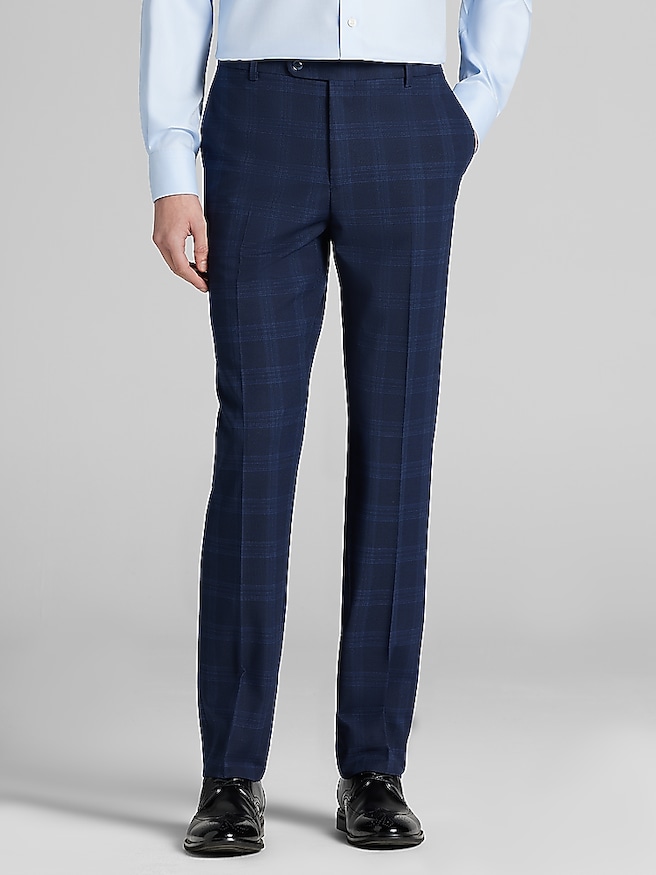
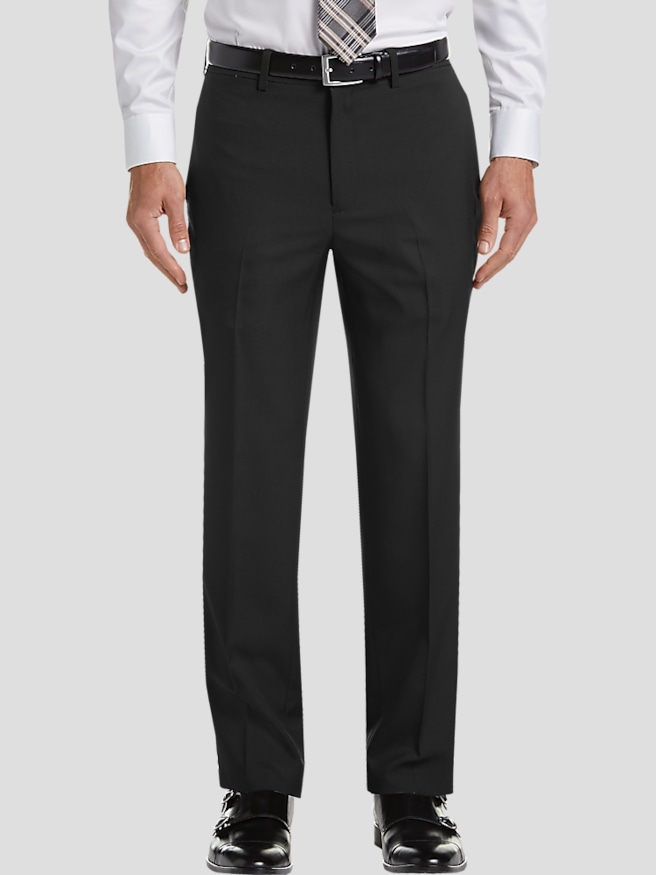
Black patterned pants bring depth to a familiar wardrobe staple, combining the versatility of a dark base with the character of stripes, checks, textured weaves, or more expressive motifs. The effect can be quiet enough for an office or bold enough to anchor an evening outfit. A fine charcoal windowpane on black often reads nearly solid from across a room, revealing its intersecting lines up close. Pinstripes create a more linear look, while small checks and houndstooth introduce a compact, repeating rhythm. Paisley, floral, and geometric designs make a stronger impression, especially when the pattern contrasts sharply with the background. Pattern scale matters as much as the motif itself: a tiny repeat adds surface interest without dominating an outfit, whereas a larger design becomes its focal point. Tonal patterns are especially useful for someone who likes black trousers but wants more dimension than a flat, solid fabric provides. Black-and-gray combinations stay restrained, while black-and-white patterns create clearer contrast and a more graphic appearance. These distinctions help explain why patterned trousers can suit such varied settings, from a client presentation to a restaurant dinner or a celebration with friends. Their suitability depends on the fabric, cut, and dress expectations as well as the pattern. A tailored pair with a discreet check can work naturally with a dress shirt and blazer in many business settings; a pronounced abstract motif has a more expressive, social character. For an occasion with a defined dress code, the required level of formality still takes priority over visual impact. Patterned dress pants are not automatically a substitute for formal evening attire. For everyday dressing, their appeal is straightforward: they give a simple combination more personality without requiring several competing accessories. A solid shirt, clean shoes, and a well-proportioned jacket can leave the pattern visible while keeping the overall look composed.
Fabric and fit determine how black patterned pants feel through a full day and how clearly their design appears when worn. Wool can provide fluid drape and a refined surface, with subtle woven patterns lending depth rather than a printed-on effect. Cotton twill generally has a more structured, casual character, while cotton blends can balance that familiar feel with added resilience. Polyester blends may offer useful wrinkle resistance, although the hand, breathability, and finish vary by construction. A small amount of elastane can add give when sitting, walking, or bending, but stretch does not replace enough room through the waist, seat, and thighs. Fabric weight also changes the impression of a pattern. A substantial cloth can hold the outline of a straight leg neatly, while a lighter, more fluid material may let a wider silhouette move more freely. Woven and printed designs have distinct characteristics, too: a woven motif is formed through the arrangement of yarns, while a printed motif is applied to the fabric surface. Neither method alone determines quality; the fabric, finishing, construction, and care requirements all matter. In the fit itself, the waistband should sit securely at its intended position without digging in or depending on a tightly cinched belt. Pockets that pull open, horizontal strain lines across the hips, or a fly that does not lie flat can indicate insufficient room. A slim cut follows the leg closely, a straight cut gives a more consistent line, and a relaxed cut allows more ease and movement. Rise affects where the waistband rests and how comfortably a shirt stays tucked. Length deserves equal attention because excess fabric gathering above the shoes can interrupt the pattern and obscure the intended silhouette. A slight break creates a traditional finish, while little or no break gives a cleaner outline. When alterations are needed, preserving the balance of the leg and the placement of prominent checks or stripes helps maintain a considered appearance.
Styling black patterned pants works best when the surrounding pieces give the design enough space. A white or pale blue dress shirt creates a crisp contrast with a restrained dark pattern, while a solid black knit produces a more continuous line that lets texture become the main distinction. Gray, cream, navy, and muted earth tones can also complement a black base, depending on the colors within the motif. The most cohesive combinations often repeat one of those secondary colors elsewhere rather than introducing several unrelated shades. For outfits that include men's black patterned shirts, differences in pattern scale can help keep the two pieces distinct; a small shirt motif beside a broader trouser check is generally easier to read than two equally prominent repeats. Leaving the jacket and accessories solid adds breathing room. Footwear then establishes the tone, with polished lace-ups supporting a dressier appearance, loafers offering a less formal finish, and understated sneakers fitting genuinely casual combinations. Care is just as important as coordination, particularly because dark fabrics can show lint, pale residue, and uneven fading. The garment’s care label should determine whether washing or professional cleaning is appropriate. For washable fabrics, turning the pants inside out and using the recommended cycle can help limit surface abrasion; avoiding unnecessary heat is also important when the label calls for a cooler setting. A lint brush can lift visible fibers, while an appropriate hanger helps preserve the trouser shape between wears. Pressing requires attention to both fiber content and surface texture, since excessive heat or pressure can leave unwanted shine on dark cloth. Durability also depends on secure stitching, well-finished seams, and a comfortable fit that does not place constant tension on pockets or closures. For gifting, black patterned pants make the most sense when the recipient’s measurements and preferred cut are known. A subtle motif can feel familiar to someone who usually wears solid trousers, while a distinctive pattern suits someone who already enjoys expressive tailoring. In either case, comfort and personal style give the pattern its lasting value.