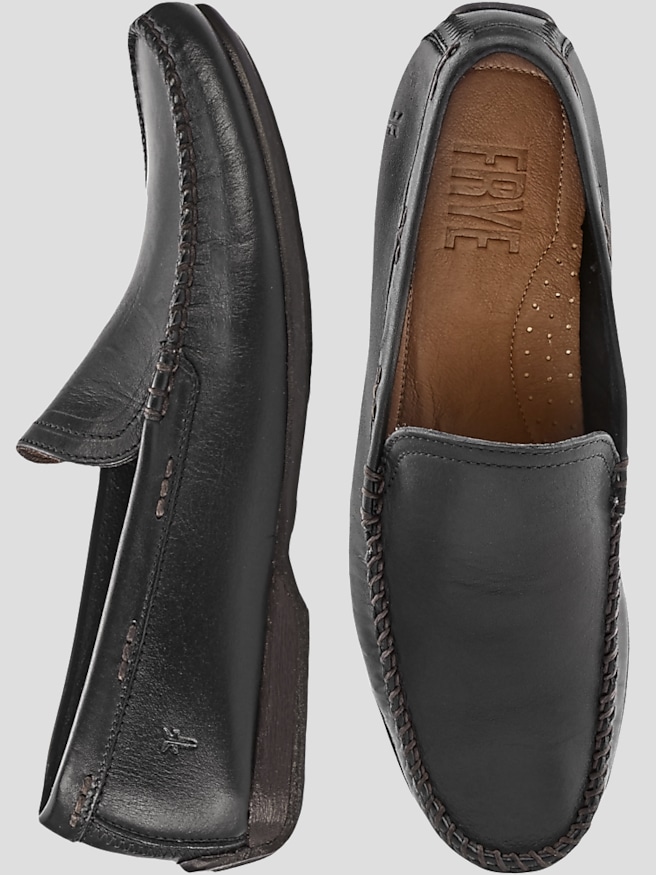
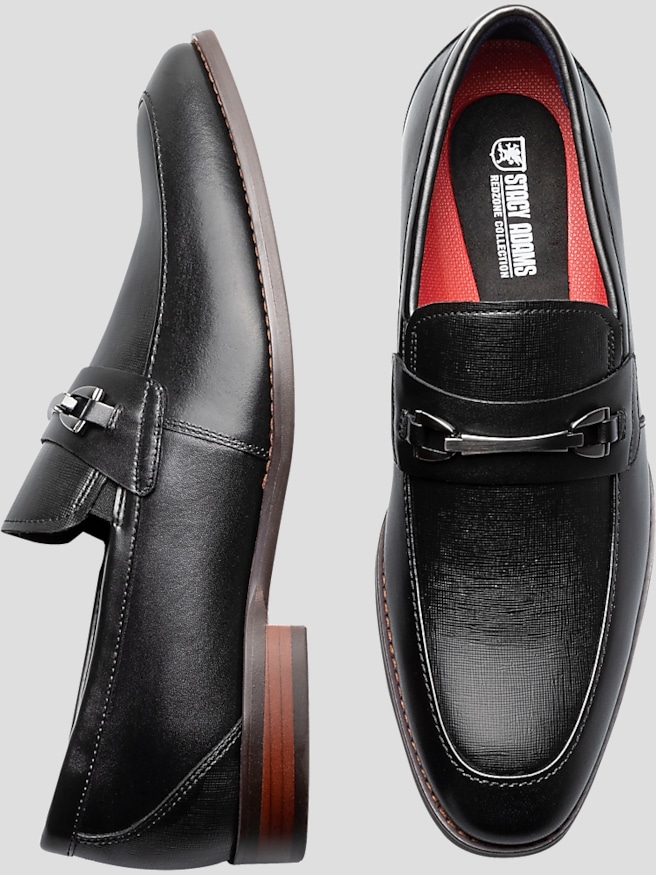
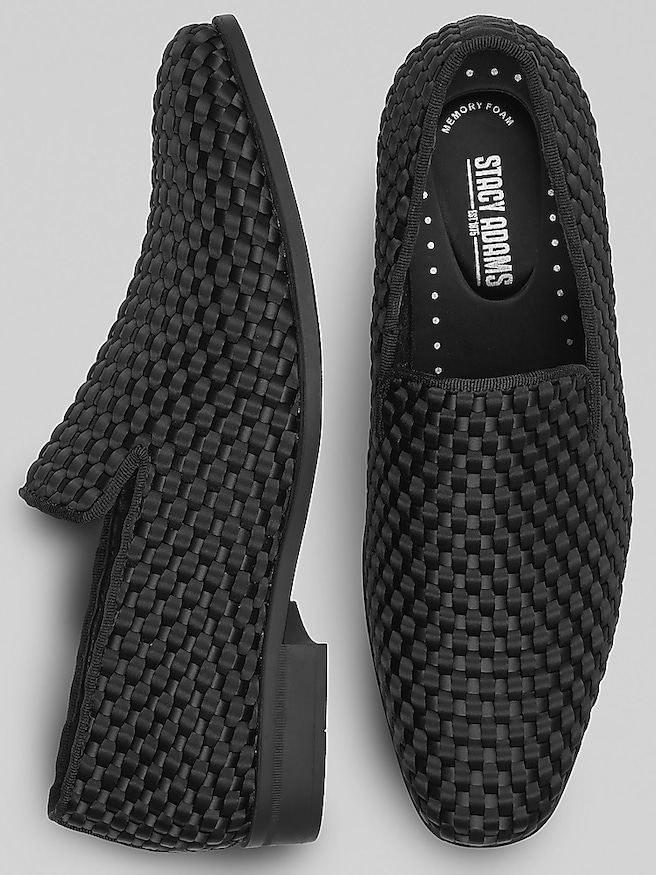
Black loafers are slip-on shoes that combine an upper without laces with a shape suited to both polished and relaxed outfits. Their appeal starts with the color: black creates a clean visual line with dark trousers, grounds lighter chinos, and works easily with charcoal, navy, and gray tailoring. The details determine how dressy the finished look feels. Penny loafers feature a strap across the vamp, usually with a small cutout, and have a restrained appearance that fits naturally into office wardrobes. Tassel loafers add movement and texture without the structure of a lace-up dress shoe. Metal-bit loafers introduce a distinctive accent, while simpler slip-on designs keep the focus on the shape and material. Driving loafers typically have flexible soles with rubber pods and a more casual character; they are better suited to relaxed outings than occasions requiring traditional formal footwear. Smooth leather generally looks more polished than suede, whose soft, napped surface gives black a quieter, less reflective finish. Patent leather has a pronounced shine and a dressier character, though the event’s dress code still matters. A rounded or almond-shaped toe tends to work across a broad range of outfits, while a heavier sole creates a more substantial silhouette. With slim trousers, a streamlined loafer helps maintain balanced proportions; with fuller pants, a slightly weightier shape can hold its own beneath the hem. Black loafers also pair naturally with dark denim and a tucked-in shirt for a dinner reservation or an informal business gathering. Trouser length makes a noticeable difference: a clean hem that rests lightly above or against the shoe shows its shape without excessive fabric bunching. Fine-gauge dress socks create a continuous line with tailored pants, while no-show socks can suit more relaxed combinations. For strictly formal occasions, the invitation’s footwear expectations take priority over everyday versatility. That distinction makes black loafers especially useful for wardrobes that move between business casual, smart casual, and less rigidly formal settings.
Material, construction, and fit matter as much as appearance when black loafers become part of a regular routine. Smooth leather can develop gentle creasing where the foot bends, and its finish benefits from appropriate conditioning and polishing. Suede requires a separate care approach, while synthetic uppers should be maintained according to their specific instructions rather than treated automatically with leather products. Linings, seams, and the edge around the opening all influence how a shoe feels against the foot. Because loafers have no laces to adjust, a secure fit across the instep is particularly important. The upper should hold the foot comfortably without pressing sharply into it, and the toes should have room to lie naturally rather than curl or crowd together. The widest part of the foot should sit comfortably within the shoe’s widest area. A small amount of heel movement may occur in some designs, but repeated slipping that makes the wearer grip with the toes can indicate a fit problem. Leather may soften with wear, yet that is not a reliable solution for a shoe that feels too short or painfully narrow. Trying loafers with the socks intended for everyday use gives a more useful impression than trying them with an unusually thick or thin pair. When comparing black comfortable loafers, cushioning, arch shape, flexibility, and width are worth evaluating together rather than relying on softness alone. A cushioned footbed may feel inviting at first, but its support and placement also need to suit the wearer’s foot. For a workday that includes standing presentations, hallway walks, and a commute, the outsole deserves attention. Rubber soles often provide flexibility and practical traction, although tread and surface conditions affect grip. Leather soles offer a traditional dress-shoe appearance but can feel slippery on smooth flooring. Durability depends on the quality of the materials, how the sole is attached, and how the shoes are used and maintained. Some constructions can be repaired or resoled by a qualified cobbler; others are less adaptable, so that possibility should not be assumed.
Regular care helps black loafers retain the details that make them look sharp: an even finish, a defined toe shape, and clean edges around the sole. For smooth leather, removing surface dust with a soft brush or cloth before applying a suitable care product prevents grit from being rubbed into the upper. Conditioner should be appropriate for the leather and used sparingly, while black cream or polish can help maintain color and address minor surface scuffs. Testing a product on an inconspicuous area is sensible, particularly when the finish is unfamiliar. Suede needs a suede brush and products intended for its napped texture; ordinary shoe polish can flatten that texture and alter its appearance. Patent finishes generally call for gentle cleaning with a soft cloth and suitable patent-leather care rather than the routine used for matte leather. Decorative hardware can be wiped carefully, keeping cleaning products away from surrounding material unless the care instructions allow them. A shoehorn helps protect the heel structure when putting loafers on, and taking them off by hand avoids repeatedly crushing the back with the opposite foot. Between wears, shoe trees can help support the shape, and allowing the interior to dry naturally helps manage everyday perspiration. Direct heat can damage materials, so radiators and other concentrated heat sources are poor drying shortcuts. Rotating footwear also gives each pair time to air out. These small habits are especially useful for someone wearing loafers to the office several days a week or relying on them for frequent dinners and professional gatherings. For travel, protecting the uppers from hard objects inside a bag helps prevent avoidable scratches and flattened sections. Black loafers can also make a thoughtful gift for a graduate building a professional wardrobe, someone starting a new role, or a recipient who prefers easy slip-on footwear. Knowing the recipient’s size, width, usual sock choice, and preferred toe shape makes that gift more personal and more likely to fit comfortably. The strongest everyday choice is one whose proportions, support, finish, and care requirements match how the wearer actually dresses and moves.