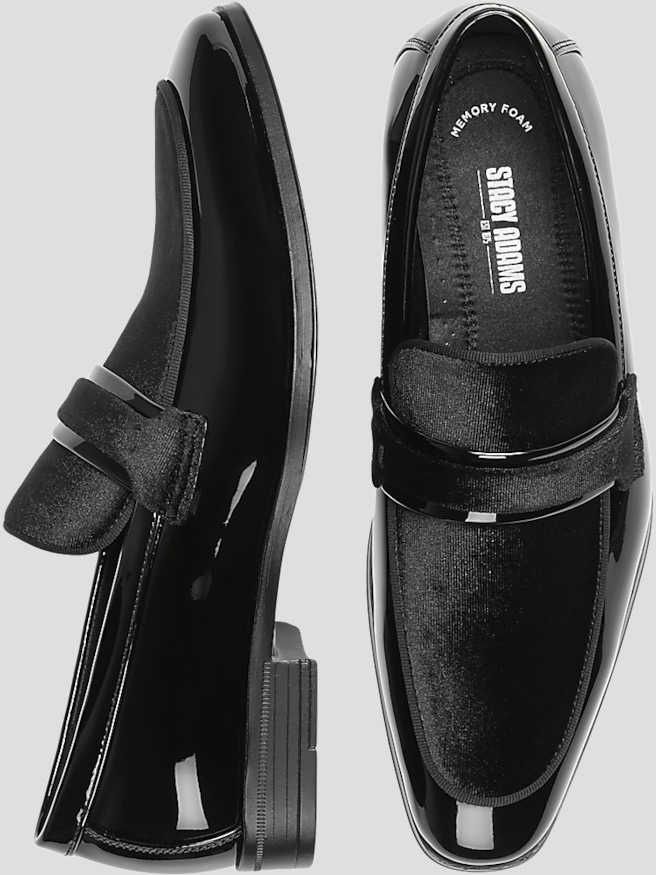
Comfortable black loafers bring a clean, polished finish to an outfit without the extra structure of a lace-up dress shoe. Their slip-on shape works especially well for men who move between desk time, meetings, dinner plans, and occasions that call for something sharper than sneakers. Black keeps the look understated, while details such as a penny strap, tassels, apron stitching, or a plain vamp give each style its character. A streamlined penny loafer can sit neatly beneath tailored trousers, while a slightly fuller shape feels at home with chinos or dark denim. Smooth leather creates a crisp impression alongside a navy or charcoal suit when the dress code allows; suede has a softer, more relaxed appearance that suits a sport coat and open-collar shirt. Neither finish has to feel overly formal. The shape of the toe, thickness of the sole, and amount of visible stitching all influence how dressed up the shoe appears. An almond-shaped toe and slim sole generally look more refined, while a rounded toe and substantial sole give the silhouette a more casual presence. Black comfortable loafers are particularly useful when an outfit needs to carry through several parts of the day: a presentation in the morning, lunch across town, and a restaurant reservation afterward. The most useful pair for that routine balances a neat exterior with room for the foot to move naturally. Trouser length matters, too. A hem with little or no break lets the upper remain visible instead of gathering over the shoe, and dark dress socks can maintain a continuous line from pants to footwear. For a more relaxed outfit, no-show socks can provide a barrier between the foot and lining without covering the ankle. With their familiar shape and restrained detailing, Classic Black Loafers offer a natural foundation for this kind of versatile dressing.
Comfort comes from the relationship between the upper, footbed, sole, and fit—not simply from a soft first impression. Leather uppers can gradually conform to the foot, although their flexibility depends on the hide, finish, thickness, and construction. Supple leather may feel accommodating across the forefoot, while a firmer upper can hold a more structured profile. Suede often feels pliable, but it still needs the correct width and volume; softness cannot compensate for a shape that squeezes the toes. Inside the shoe, a smooth lining helps reduce rubbing, especially around the heel and instep. Breathable materials can help manage moisture, while cushioning under the heel and ball of the foot can soften contact with hard surfaces. Arch contour and cushioning serve separate purposes: a plush footbed may feel soft without providing the shape a particular foot needs. For someone who uses an insert, a removable footbed and sufficient interior depth may be important, provided the shoe is designed to accommodate them. The outsole also changes the experience. Rubber can add flexibility and traction, depending on its tread and compound, while leather soles tend to create a slimmer, more traditional dress profile. A flexible forefoot allows the shoe to bend where the toes bend, but the shoe should still feel stable through a normal stride. Because loafers have no laces to adjust, the fit across the instep is especially important. The upper should hold the foot securely without pressing hard across the top, and the heel should not lift excessively with each step. Toes need enough space to rest naturally rather than curl or press against the front. Trying loafers with the socks intended for regular wear gives a more useful impression than trying them barefoot if dress socks will usually be part of the outfit. Walking a few steps can reveal pressure at the little toe, rubbing at the heel, or slipping that is easy to miss while seated. Some leather softening is normal, but a painful fit should not be treated as a necessary break-in stage.
Lasting comfort also depends on how black loafers are used and cared for. A pair worn mainly between an office, car, and restaurant faces a different workload from one used for long stretches of walking or standing. For a workday with frequent trips between buildings, sole grip, secure heel fit, and moderate cushioning may matter more than an especially sleek profile. For presentations, celebrations, and seated dinners, a refined upper and lighter silhouette may take priority, without making fit any less important. Consistent care helps preserve both appearance and structure. Smooth leather benefits from regular dust removal and occasional cleaning with products suited to its finish. Conditioner may help maintain suppleness when recommended for the material, while an appropriate black cream or polish can refresh color and reduce the visibility of minor surface scuffs. These treatments are not interchangeable with suede care: suede generally needs a dedicated brush and suitable cleaner rather than conventional shoe polish. Following the maker’s care directions helps protect specialty finishes, coated surfaces, and decorative details. After wear, allowing the interior to air out before putting the shoes away helps manage moisture, and rotating pairs gives linings and footbeds time to dry fully. Properly sized shoe trees can help support the shape; direct heat can damage leather and adhesives. Wear at the heel edge, thinning tread, loose stitching, or a compressed footbed can signal that attention is needed. Some constructions allow professional sole or heel repairs, while others are less practical to rebuild. As a gift, comfortable black loafers make the most sense when the recipient’s usual size, width, and preferred style are already known. A man who wears tailored pants most days may appreciate a restrained leather silhouette, while someone whose wardrobe centers on chinos may favor a softer, more casual shape. The strongest choice is not necessarily the dressiest one, but the pair whose materials, proportions, support, and intended use suit the way he actually gets dressed.