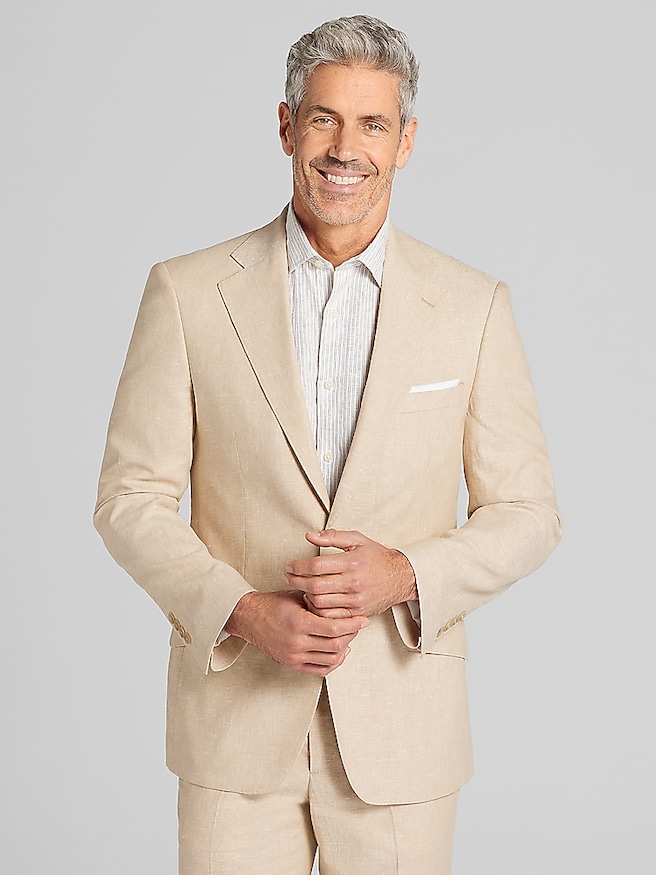
A big and tall linen suit pairs a linen or linen-blend jacket with matching pants in proportions suited to broader builds, greater height, or both. The appeal is a tailored outline with the natural texture and easy drape that distinguish linen from smoother suiting fabrics. Made from flax fibers, linen is known for its strength, breathability, and ability to absorb moisture, while its characteristic creasing gives the cloth a less rigid appearance. A pure linen suit generally shows that texture more clearly; a blend can change the fabric’s softness, weight, stretch, or resistance to wrinkles, depending on the other fibers and the weave. Cotton can contribute a softer hand, while polyester can help with shape retention and wrinkle resistance. Stretch fibers may add flexibility, although the fabric’s construction also affects how freely it moves. Neither pure linen nor a blend is automatically the better choice: the finish, feel, and level of structure all contribute to how a suit looks and wears. An unstructured jacket has a relaxed outline, while a jacket with more internal support creates a firmer line through the chest and shoulders. Lining and fabric weight also influence the drape, so the fiber label tells only part of the story. For a courthouse ceremony, a family celebration, or a workplace gathering with a tailored dress code, linen offers a distinctive alternative to a smooth, formal-looking suit. It can suit a groom, a wedding guest, or anyone who prefers visible fabric character to a perfectly flat surface. Within the broader category of Men's Linen Suits, big and tall proportions address a separate need: enough length and room in the appropriate places without losing the intended shape of the jacket and pants. That balance makes the suit look considered rather than simply oversized.
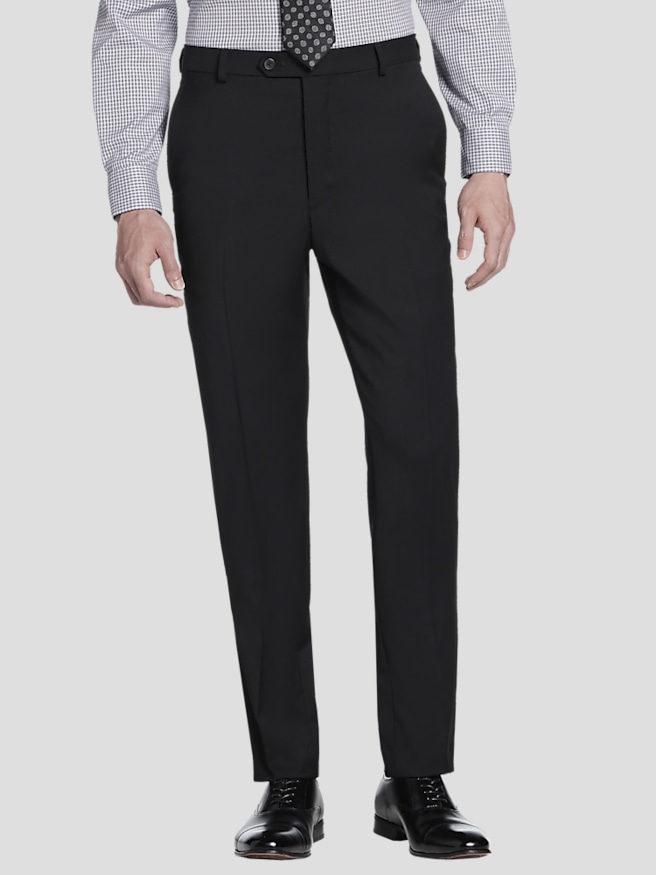
Big and tall sizing describes related but distinct fit needs. A broader build may require additional room through the chest, upper arms, waist, seat, or thighs, while a taller frame may need a longer jacket body, longer sleeves, and a longer inseam. Height alone does not determine jacket length, and a chest measurement does not explain every aspect of fit. Torso length, shoulder width, posture, and the relationship between waist and seat measurements all affect how the fabric settles. A well-proportioned linen jacket rests cleanly across the shoulders, allows the lapels to lie flat, and closes without pronounced pulling around the button. The back should have enough ease for ordinary movement without a large pocket of excess cloth at the waist. Sleeves that reveal a small amount of shirt cuff and a jacket hem that generally covers the seat help establish balanced proportions, though the precise effect depends on the cut. Pants contribute just as much to the finished silhouette. An appropriate rise lets the waistband sit comfortably at its intended position, while sufficient room through the seat and thighs supports a clean drape when standing and comfort when sitting. A tapered leg need not feel tight, and a straight leg need not look loose. For someone seated through a ceremony or moving between a presentation and a reception, that distinction matters more than a fit label. Suit separates can accommodate a jacket and pants size that do not follow a standard pairing, provided the pieces use matching fabric and color. Chest, waist, sleeve, and inseam measurements are useful reference points alongside the relevant size chart. Alterations can refine sleeve length, pant hems, and some waist shaping, but they cannot easily correct every shoulder or rise issue. Linen’s natural creases are expected; strong diagonal tension lines, gaping lapels, or pockets that pull open usually point to a fit concern rather than the character of the cloth. Adequate ease also reduces unnecessary strain on seams and high-movement areas.
Color, texture, and finishing details determine how a big and tall linen suit fits into an existing wardrobe. Tan, stone, and other light neutrals emphasize linen’s woven character, while navy and charcoal create a more understated impression. A white or pale blue dress shirt gives either direction a familiar foundation. A fine-patterned tie and leather lace-up shoes can make the same suit feel appropriate for an occasion that calls for traditional tailoring, while an open-collar shirt and loafers create a less formal combination when the dress code permits. Linen’s relaxed texture does not make it a substitute for black-tie attire, so the invitation or setting still establishes the level of formality. Subtle details can help keep the proportions cohesive: lapel width, tie width, and shirt collar shape work best when they complement one another rather than compete. A pocket square adds contrast without needing to match the tie exactly. For repeat wear, durability depends on more than fiber strength. A suitable fit, sound seams, and care that follows the garment label all help preserve the suit’s shape and appearance. Some linen garments require professional cleaning because of their lining, construction, or finishing, even when the outer fabric itself might otherwise be washable. Washing without checking those instructions can cause shrinkage or affect the jacket’s internal structure. Between cleanings, a broad, supportive hanger helps maintain the shoulders, and neatly hanging the pants prevents unnecessary folds. Giving the suit space in the closet lets the fabric hang freely instead of remaining compressed. Steaming or pressing, when permitted by the care label, can soften creases; careful heat control helps avoid shine or damage. Empty pockets before hanging so keys and a phone do not weigh down the cloth. A few gentle wrinkles belong to linen’s appearance, and the goal is a clean, well-kept suit rather than an unnaturally rigid finish. With thoughtful proportions and appropriate care, linen brings distinctive texture to tailored dressing without sacrificing a composed silhouette.