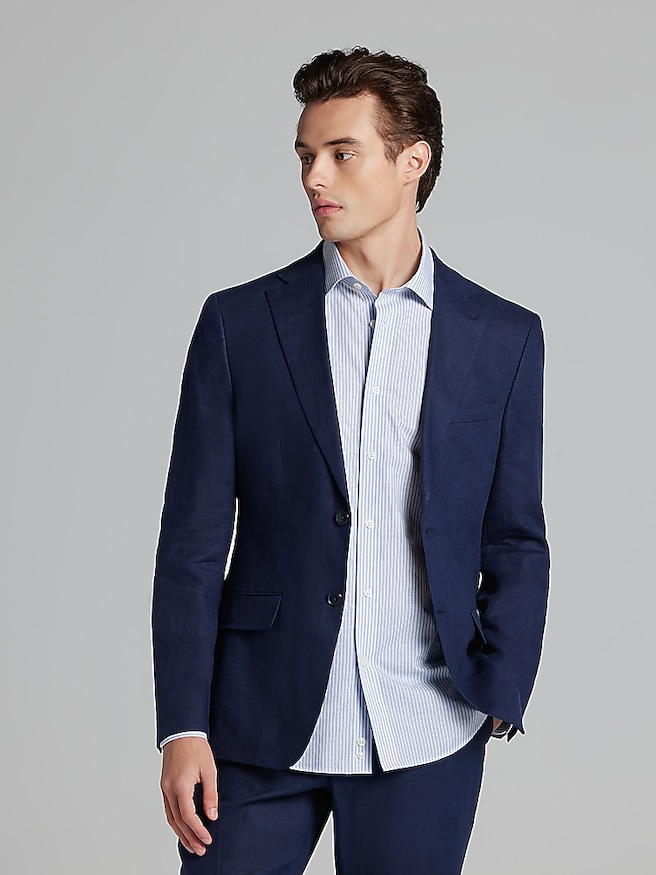
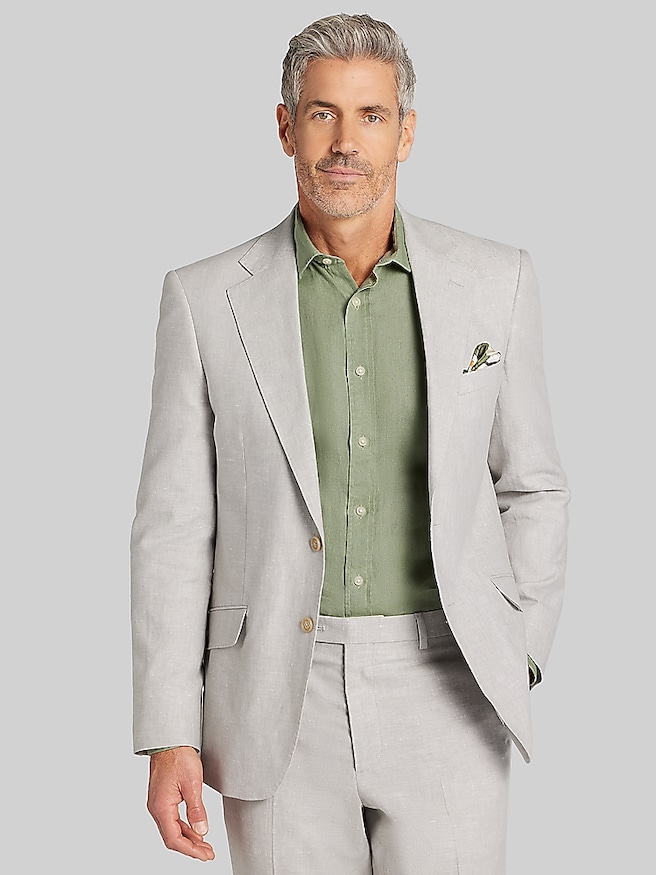
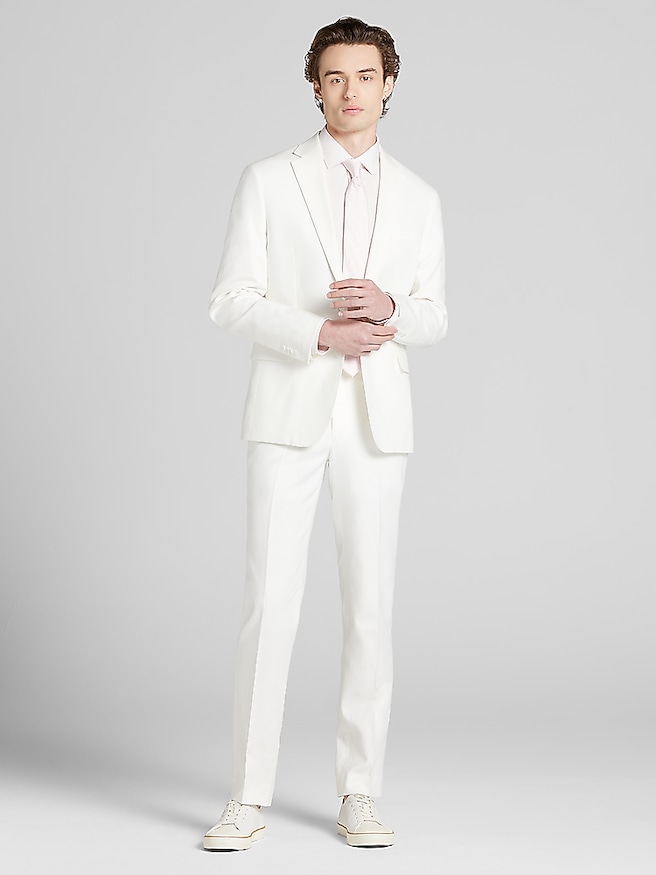
Men’s linen suits bring a distinctive texture to tailored dressing, pairing the clean lines of a suit with a fabric that has visible character. Made from flax fibers, linen often has subtle variations in the weave that give it depth without relying on a bold pattern. Its appeal is partly in that balance: polished enough for a celebration or a client lunch, yet less rigid in appearance than many traditional suiting fabrics. A linen suit can make sense for a wedding with a relaxed dress code, a destination celebration, a graduation, or an evening at a restaurant where a jacket feels appropriate. The right choice depends on the occasion and the overall construction, not simply the fiber name. Pure linen tends to develop a recognizable, gently rumpled surface, while blends with cotton, wool, or other fibers can change the fabric’s drape, softness, and resistance to creasing. The fabric composition label helps explain those differences, but lining and structure matter, too. A fully lined jacket may feel more substantial, while a partially lined design can allow more of the fabric’s natural movement. Neither is automatically better; each creates a different wearing experience. Color also changes the impression. Navy and deeper neutral shades can feel familiar in professional settings, while beige, stone, and pale gray emphasize linen’s texture and lend themselves to less formal occasions. For a crisp, light-colored option, Men's White Linen Suits create a distinctive foundation for an outfit, provided the color suits the event and any stated dress code. Light fabrics deserve a careful check for opacity, especially in the trousers, because weave density and lining can affect coverage. Across colors, the most convincing linen tailoring does not try to hide every natural crease. It uses proportion, fabric quality, and thoughtful finishing to make that texture look intentional rather than untidy. A slight fold at the elbow or across the lap is part of the fabric’s personality, not necessarily a sign that the suit needs attention.
Fit gives a linen suit its shape, particularly because the fabric’s relaxed surface can make excess material more noticeable. Start with the shoulders: the jacket should sit cleanly across them without pulling at the upper back or extending far beyond the natural shoulder line. With the jacket buttoned as intended, the front should lie comfortably rather than forming a pronounced X around the closure. A little room through the chest and waist allows movement, but too much can make the jacket look disconnected from the trousers. The collar should rest near the shirt collar, and the sleeves should leave a modest glimpse of shirt cuff when the arms are relaxed. Jacket length also contributes to balance; a cut that is too short can exaggerate the torso, while excessive length can overwhelm the wearer. Linen trousers benefit from a similarly measured approach. They should sit securely at the intended waist position, with enough ease through the seat and thighs for sitting, walking, and climbing stairs. A cleaner hem with a slight break, or little break at all, often complements linen’s texture, though the best length depends on the trouser cut and footwear. Extremely narrow legs can restrict movement and pull at the knees, while an overly loose cut may lose the tailored outline that makes a suit useful. When assessing fit, sit down, reach forward, and take several steps instead of judging only a still reflection. Those everyday movements reveal tension that a standing pose can miss. Styling can then support the level of formality. A smooth dress shirt and a restrained tie keep the outfit composed for a ceremony or business gathering. An open-collar shirt and understated loafers can work when the invitation allows a more relaxed approach. Textured fabric already gives the outfit interest, so accessories do not need to compete for attention. A simple pocket square, coordinated belt, and well-kept shoes are often enough. For events that specifically call for a tuxedo or another prescribed dress code, linen suiting should not be treated as an automatic substitute.
Care is an important part of choosing linen tailoring, because a suit includes more than the visible outer fabric. Linings, shoulder construction, interfacing, and finishing details can require different treatment from an unstructured linen shirt. Follow the care label rather than assuming every linen garment can go into a washing machine. Some pieces call for professional cleaning, and others may permit a different method; treating the jacket and trousers appropriately helps preserve their shape and finish. Between cleanings, let the suit air out, gently brush away surface dust, and give it space in the closet instead of pressing it tightly between other clothes. A broad, shaped hanger supports the jacket’s shoulders, while trousers can hang straight from a suitable hanger to reduce unnecessary folds. Address spills promptly according to the care instructions, avoiding vigorous rubbing that can spread a mark or disturb the fabric’s surface. Pressing and steaming also require care. Check the permitted settings, use a pressing cloth when appropriate, and be cautious around constructed areas that may react poorly to moisture or excessive heat. The goal is a neat outline, not an unnaturally flat finish that removes every trace of linen’s texture. For travel, a garment bag can help protect the suit from abrasion, and packing with fewer sharp folds may reduce the amount of pressing needed on arrival. Unpack and hang the pieces when practical, leaving time to address creases before the occasion. Linen fibers are generally strong, but the longevity of a finished suit also depends on its weave, seams, fit, and care. Persistent pulling across the seat or elbows puts unnecessary stress on any tailored garment, which is another reason to choose comfortable proportions. A linen suit can also be a thoughtful gift for someone with an upcoming milestone or a preference for textured tailoring, though accurate measurements and an understanding of personal style are essential. For the wearer, its lasting value is in versatility: a coordinated outfit for meaningful occasions, with the option to wear the jacket or trousers separately when their cut and finish suit the rest of the wardrobe.